
Agentisk Læring (Agentic Learning)
Last week I had the incredible opportunity of visiting students on the island of Sørøya. The northern, Norwegian island is only accessible by an occasional flight (once daily) and ferry (2-3 times a day). There is one main road that runs along the island’s coast, and it connects the small fishing towns. The school that I visited had students from two additional towns and the grade-level class sizes were still less than 15 pupils.
On the first day in Breivikbotn, I was dropped off on a road that led to the sea. While I waited for public transportation to deliver the pupils, I stood in awe of the incredible landscape; mountains lightly covered with snow, rocky outcroppings, clear skies, and calm waters. This was our classroom for the day.
The pupils arrived and we ventured down the path to the meeting point. The school often uses this ‘picnic’ spot, so the students were familiar with the territory and led the way. After a short hike, we arrived at the water and dropped our bags on the picnic table.
The pupils immediately scattered. Some loped off toward the nearby grassy area while others started scaling the rocky outcropping next to the picnic table. I was a bit nervous about the climbers, so I followed them to the nearby rocks. On top of the rocks, a student was already relaxing while reading a book and another had found a heavy rope and was securing it to a rock to rappel down the rock formation.
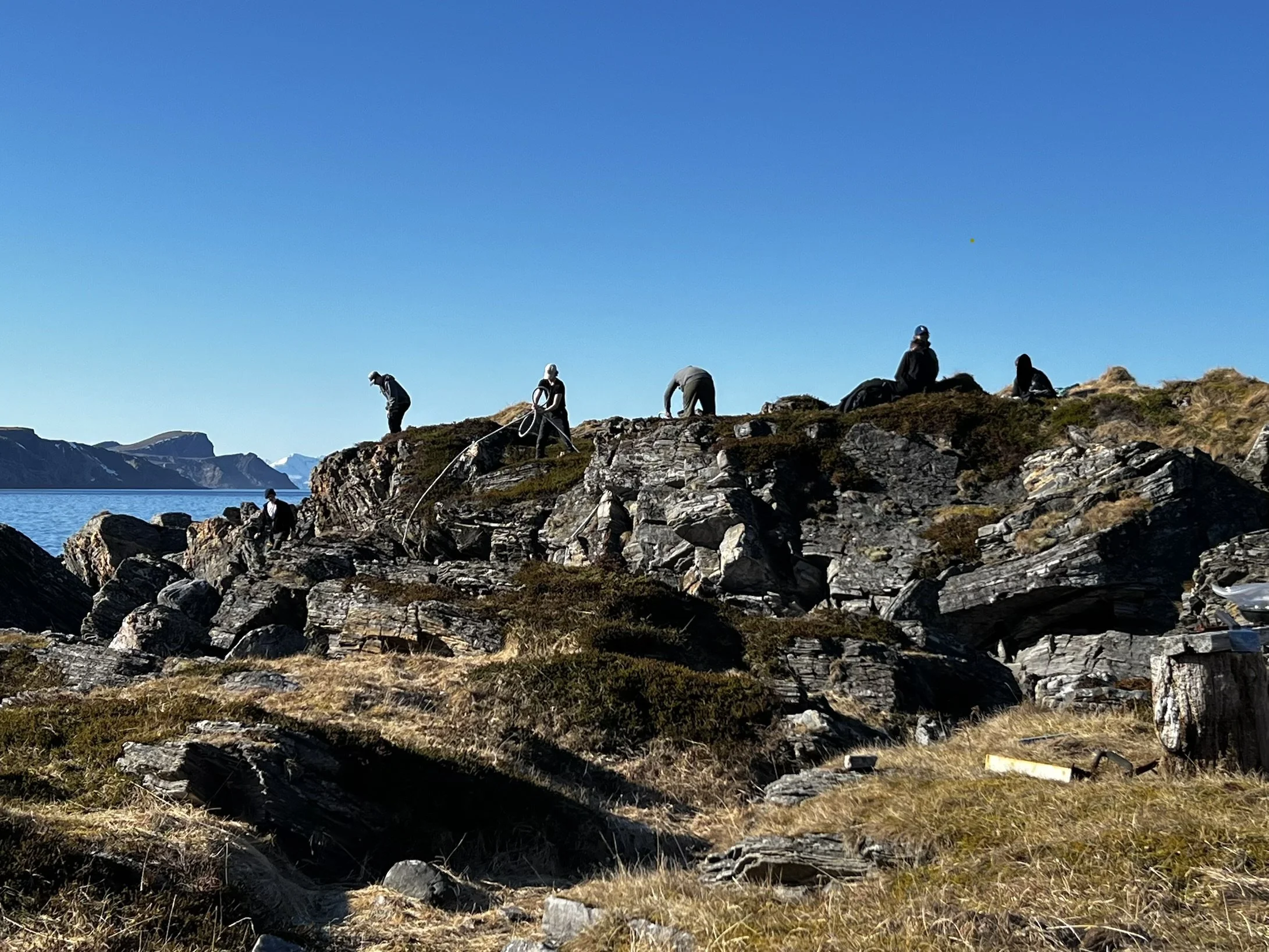
Students exploring a rock outcropping in Breivikbotn, Norway.
Everyone was busy. There were no directions, signals, or restrictions coming from teachers.
After a while, two girls started a fire and two boys found yet another rope. They placed the rope on the ground to create a circle for a game they had played the weekend before. Two other girls took out knives (yes, knives) and started whittling wood.
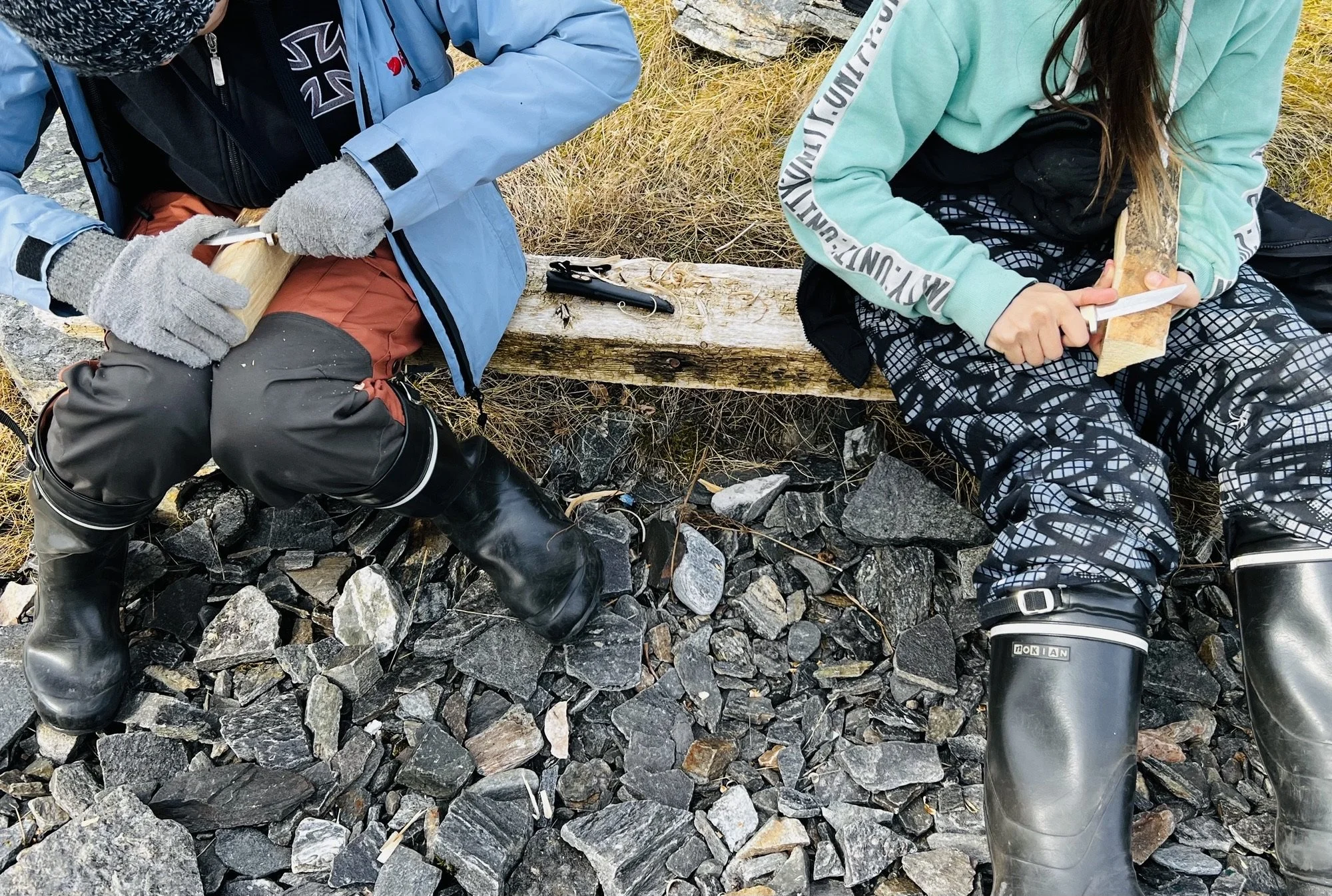
Girls whittling wood by the campfire.
The teachers brought food, but students had also packed things as well. A few students took out hot dogs and started roasting them on the fire. The teacher took out their cast-iron skillet and another student started frying hamburgers for their peers. Students came and went, eating, talking, then leaving to explore.
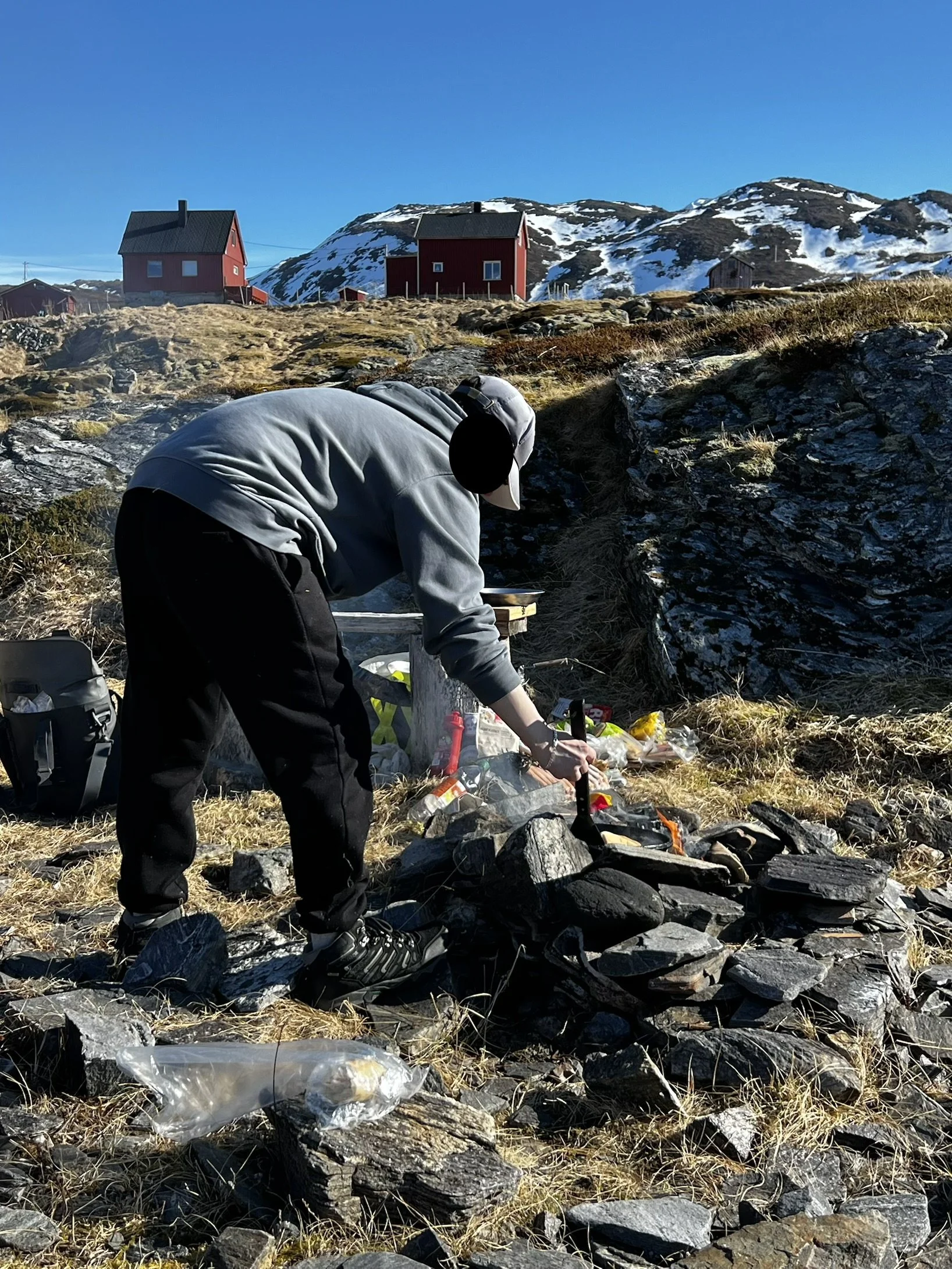
A student helps cook items for lunch.
Everyone was busy. There were no directions, signals, or restrictions coming from teachers.
People often emphasize shortcomings of small schools by noting lack of resources, lack of opportunities, lack of…. What small schools certainly don’t lack is a sense of community and strong student-teacher relationships. This was evident when two girls asked their teacher if they could go fishing with them after school.
The teacher didn’t hesitate in response and gave the girls time for families to bring them their sea fishing attire (e.g., waterproof bibs, coats, hats, life jacket). After the necessary supplies were delivered, we headed out in an aluminum fishing boat. One of the girls had recently passed her boating exam and asked to drive the boat. Again, without hesitation, the teacher allowed her to navigate the boat away from the crowded docks and nearby boats and out into the sea.
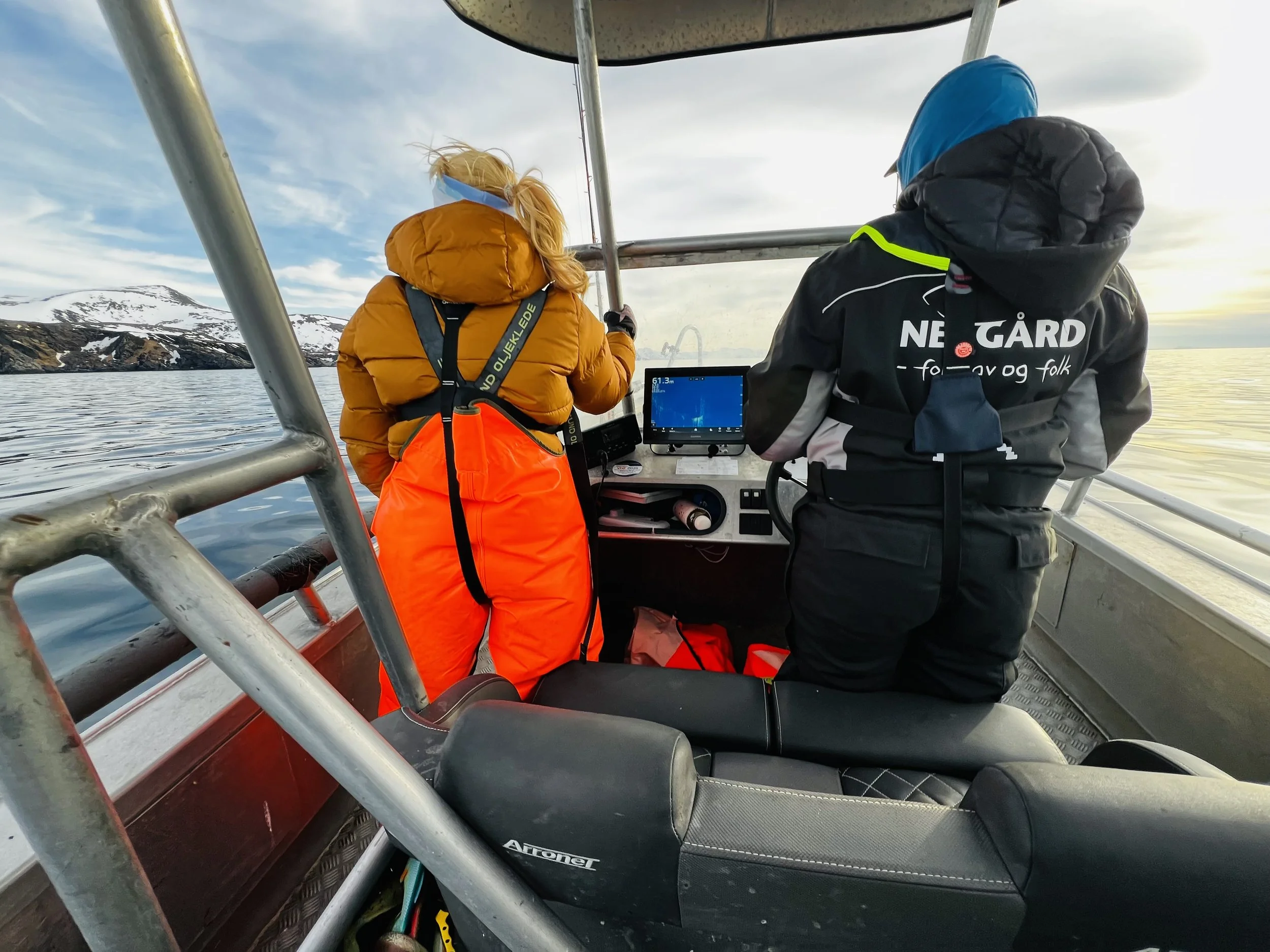
Two students navigating a boat in the Breivikfjord/ Norwegian Sea.
The girls wanted to catch some big fish and thought the best place to fish would be further away from the shore. The teacher whispered to me that we wouldn’t find fish there, at this time of the year, but didn’t say anything to the girls as they drove out to sea. The girls steered around, back and forth, trying to find fish on the Garmin fish finder. With no fish in sight, they piloted the boat closer to the coast. The teacher never said a word.
Nearer to shore, the girls found a better fishing spot, and I was fortunate to catch a nice sized cod fish. As I was reeling it in, one of the girls grabbed a stick to smack the fish’s head, then took it to the back of the boat. There, the two girls cut off the fish head, cut out the fish’s tongue, and removed the organs- throwing the guts to the gulls.
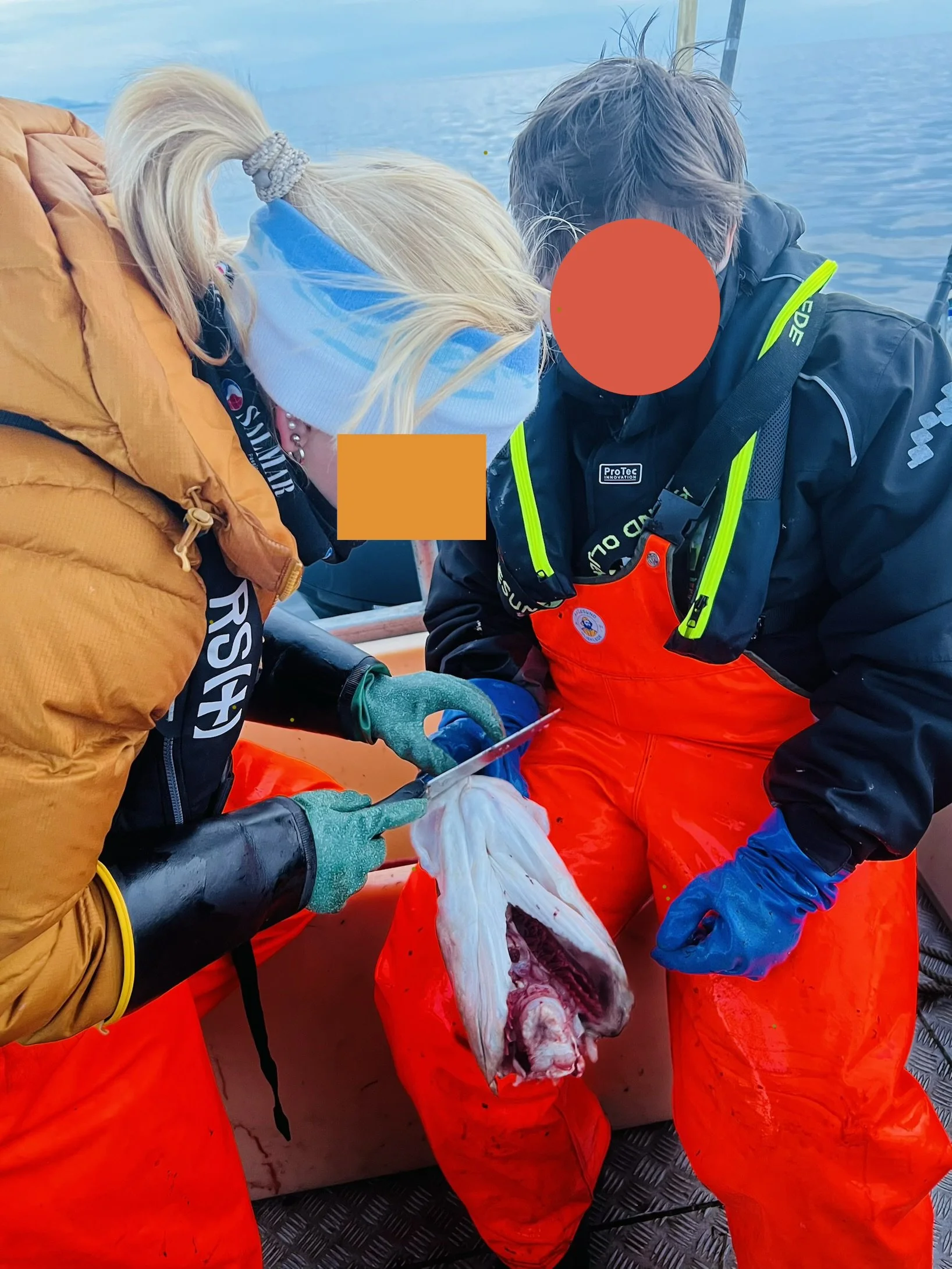
The girls are cutting out the cod fish’s tongue.
Everyone was busy. There were no directions, signals, or restrictions coming from teachers.
These experiences have impacted me deeply and have me thinking about teaching back in the United States. Are we providing too much direction and structure in our instruction and learning activities? Are we offering too much support? Are we limiting creativity and exploration by hovering or constantly interrupting with, “wait”, “oh, but”, “I think you should”… When do we just let students explore, inquire, and fail? Are we really encouraging agentic learning?
These experiences drive home the idea that rural schools are incredible resources for students. Small schools might not be able to offer a multitude of courses or extra curriculars, but they do foster strong teacher-pupil connections and present unique learning opportunities. The pupils at Breivikbotn Skole are fortunate to have dedicated teachers who empower them to make their own choices, work collaboratively, and learn by doing. The learners are also lucky to live in a close-knit community and have an incredible geographical landscape at their disposal that connects nature, wellness, and life-long learning.
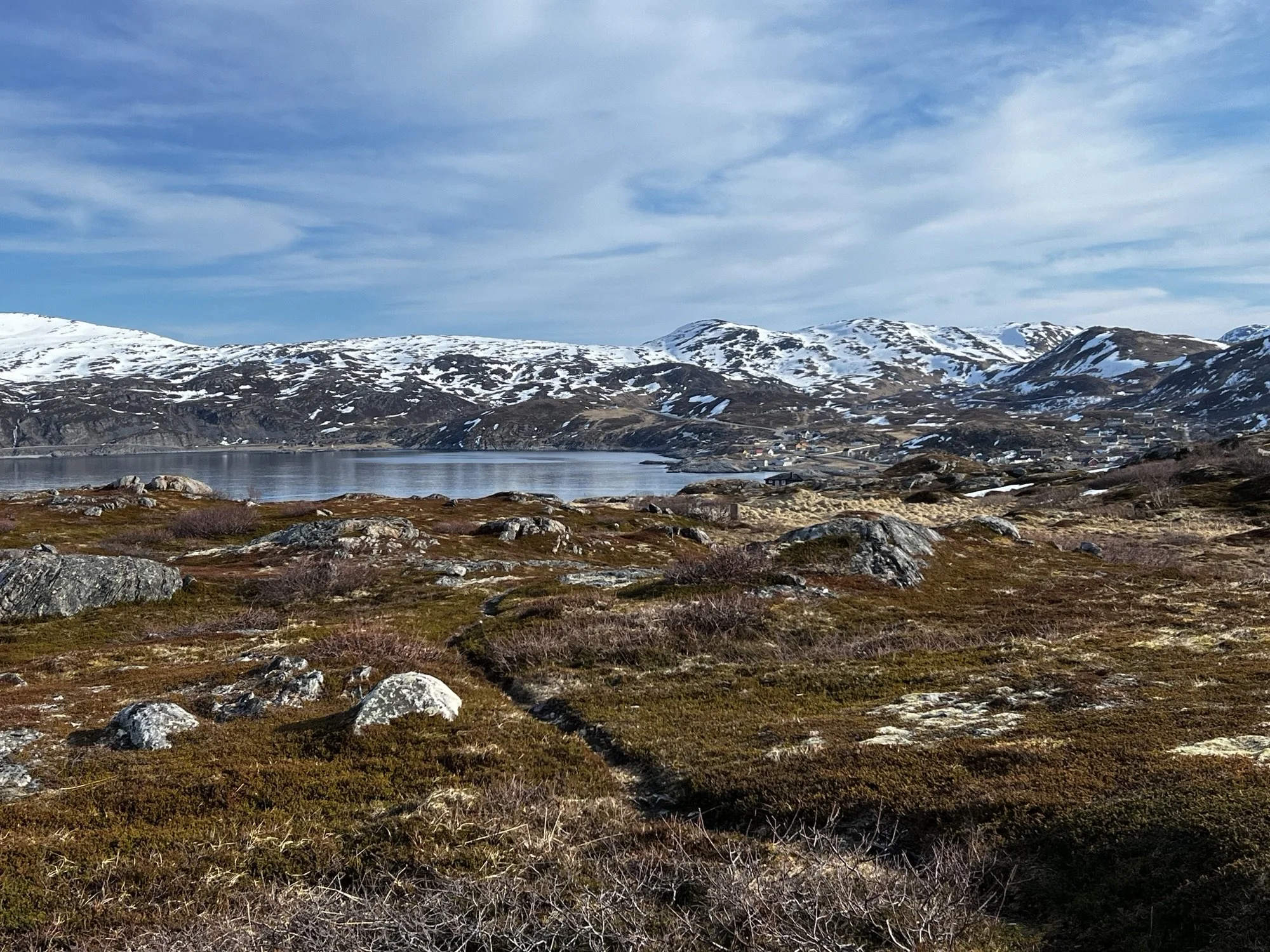
Scenic Breivikbotn, Norway.
