
Bøker (Books)
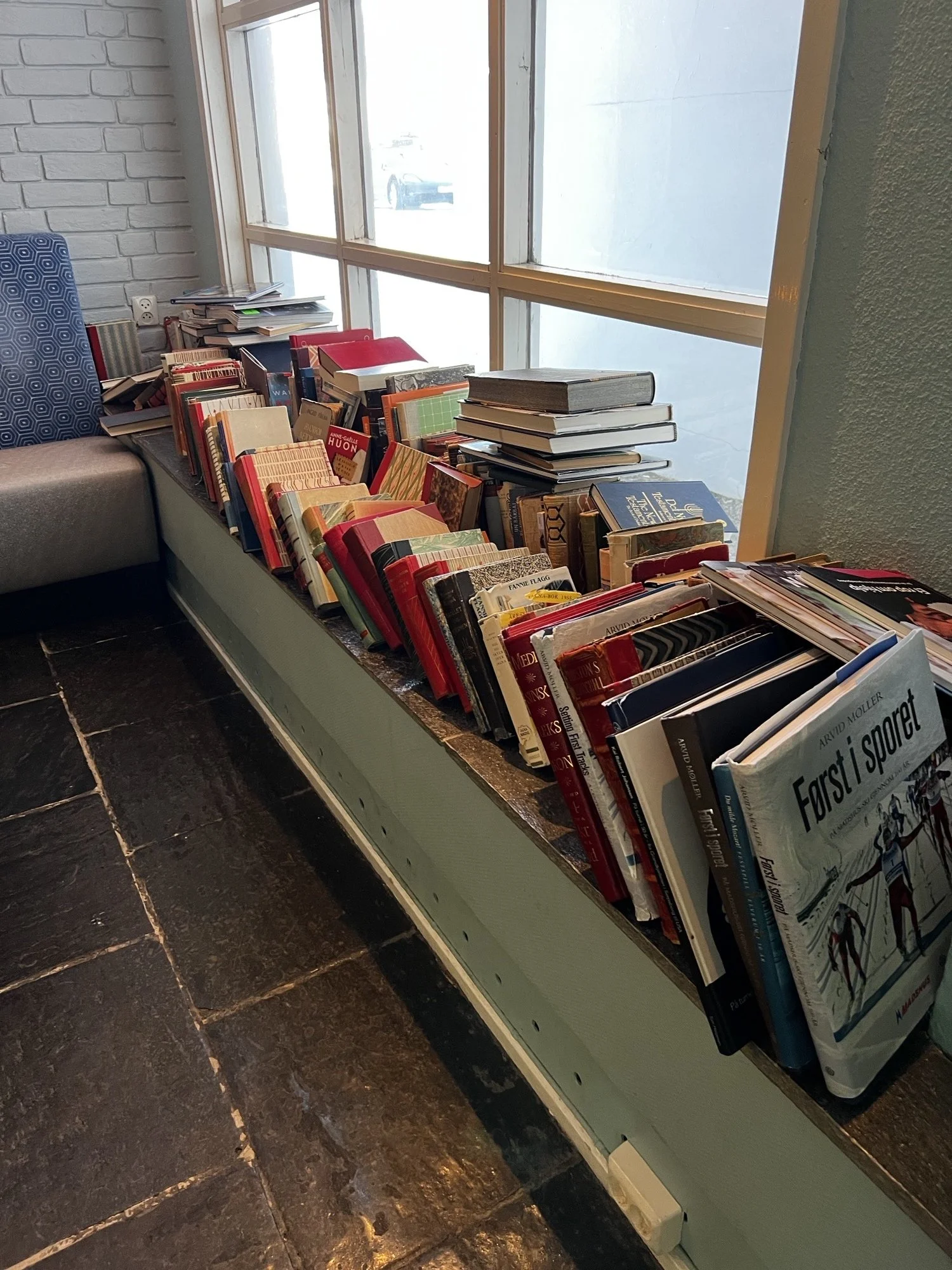
Books left for hotel guests at Skikampen Resort, Norway.
As a literacy professor, I’m always on the lookout for books and people enjoying books. So, you can imagine my delight to find books EVERYWHERE in Norway. There are book sharing spaces in restaurants, cafes, and train stations. There are also books at secondhand stores, cheap book kiosks in shopping centers, and old telephone booths repurposed as little urban libraries.
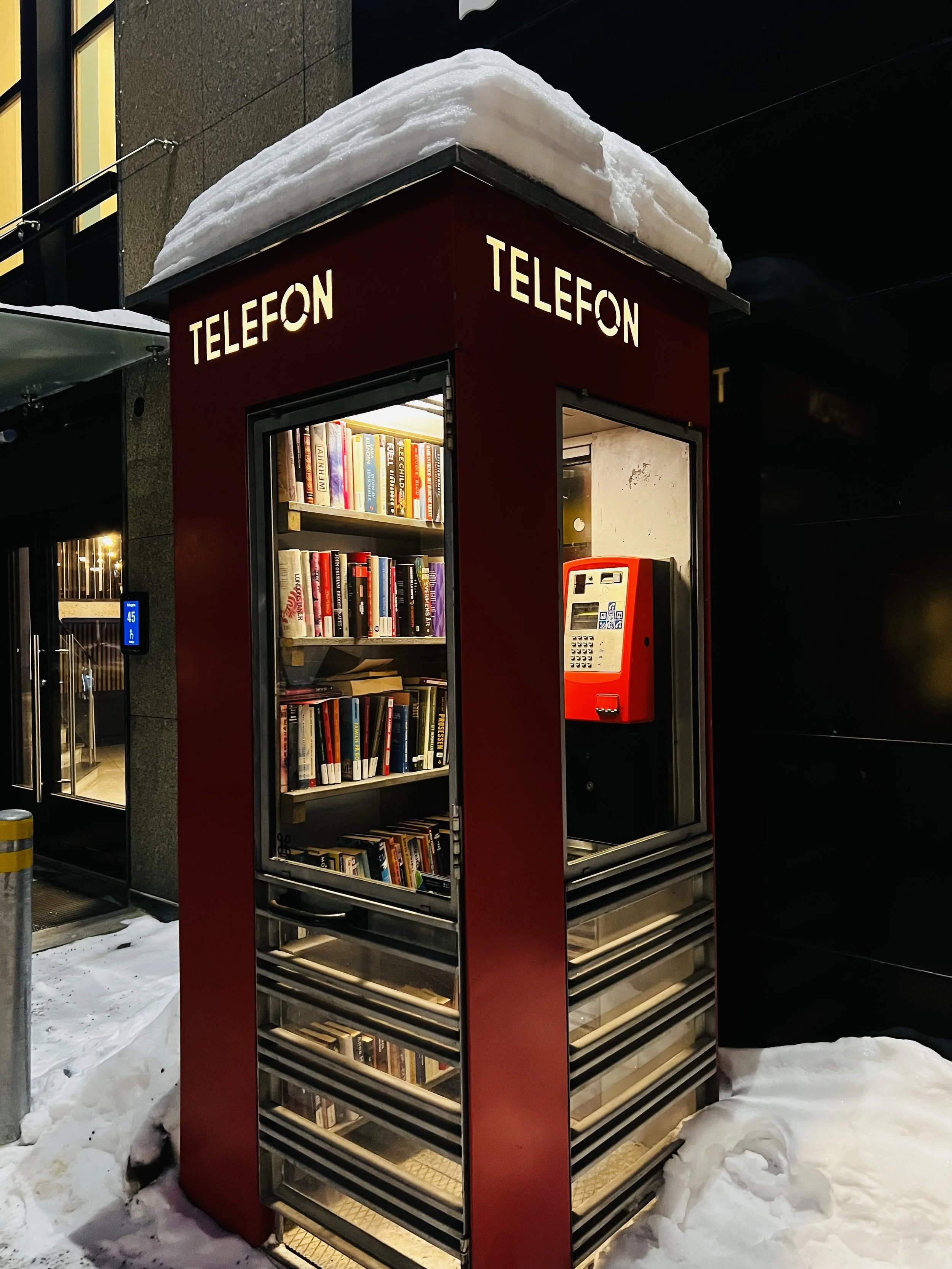
Little free library in Lillehammer, Norway.
People can also be seen reading everywhere in Norway. I’ve witnessed adults and children reading in expected places like in cafes and airports and on buses and trains. However, I’ve been surprised to see children reading on rocks while waiting for the trolley and relaxing under a tree absorbing rays of the warm sunshine and enjoying a good book.
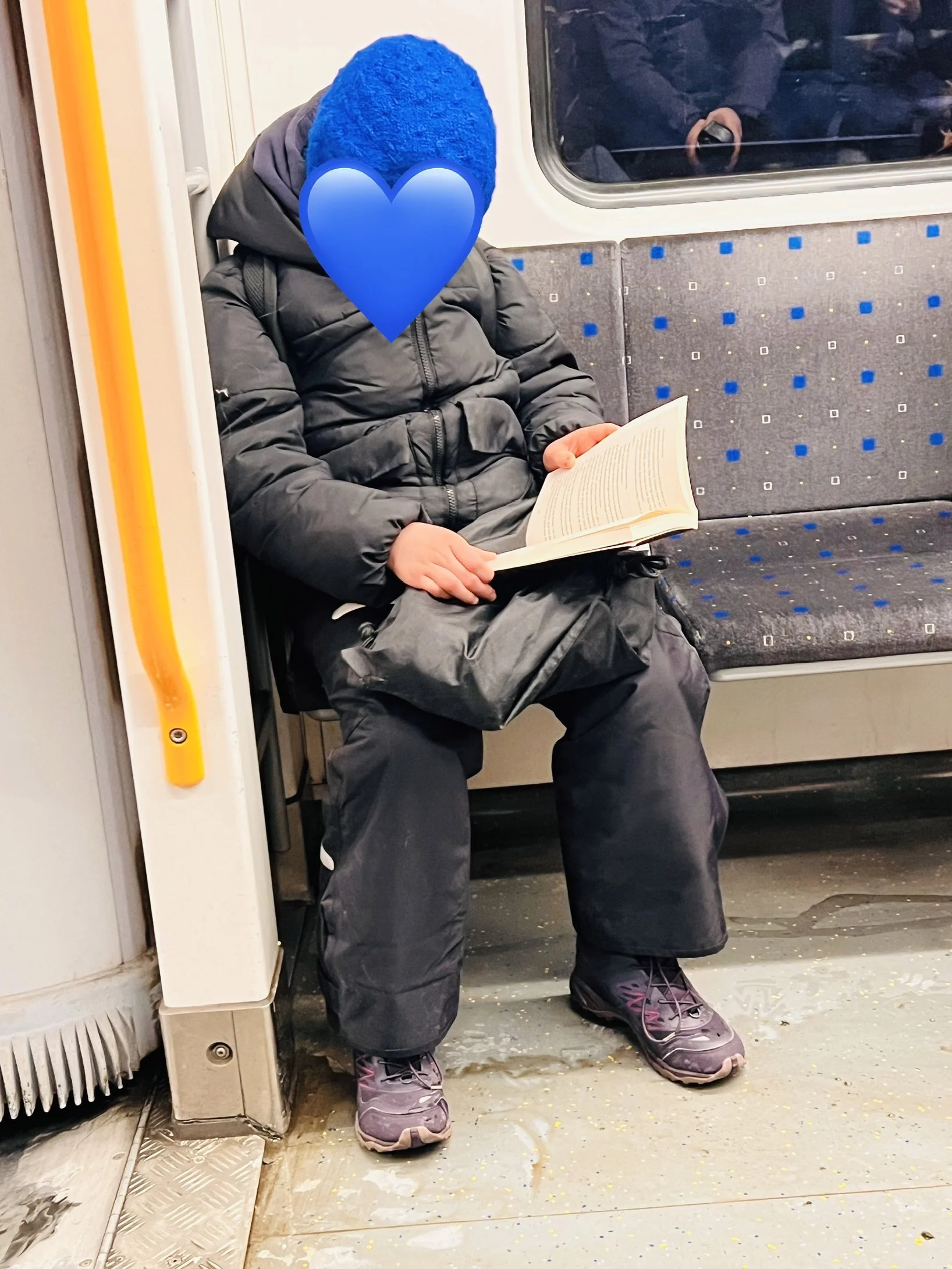
A young student reading a book while taking the T-bane to school in the morning.
Each and every time I see these book spaces and reading events, it makes me smile. However, even though reading is valued and books are everywhere, teachers in Norway are noticing a decline in their students’ reading motivation. I have witnessed the same motivation decline with my students back in the United States as well.
However, reading teachers, librarians, and general fans of reading are not giving up in their pursuit of motivating readers. A great deal of my work and research focuses on equitable reading experiences that pivot around literacy enrichment students’ motivation to read. I created a summer literacy academy for middle school students (The Rural Educator | Vol 44 | No. 2) and a summer book club for rural secondary readers (www.reachingruralreaders.org).
In Norway, reading advocates are trying new approaches as well. In Lillehammer, for example, the incredible librarians at the public library promoted a reading initiative that advocated for school-wide reading each day for 15 minutes (both students and staff). The Lillehammer municipality agreed so strongly with this idea that they mandated the 15-minute reading session in all of its lower secondary schools (grades 8-10).
In addition to time devoted to reading, the Lillehammer Library’s program provides training and resources for teachers to guide students to successful book selection and reading strategies. For example, students are explicitly taught how to review a book, viewing the cover and summary and reading a short passage to determine the text’s complexity, whether the text is readable and comprehensible for the student. Students are also encouraged to read books that contain familiar topics and interest them. If a book is considered ‘easy’ but the topic interests the reader, they are still encouraged to read the text.
I learned about this program when I was visiting Åretta ungdomsskole (lower secondary school) because I happened to be giving a presentation during the students’ reading time (gasp!). The teacher reassured me that the class was going to have their reading time after my workshop session (phew!). After school, I walked to the Lillehammer Library to see if I could learn more about this reading initiative.
The library building is simply breathtaking, and I immediately saw the sign directing me to the youth section. Books, reading booths, tables, and comfy chairs filled the warm and cheerful space. There were young people reading and I desperately wanted to grab a book and cozy up in a reading nook.
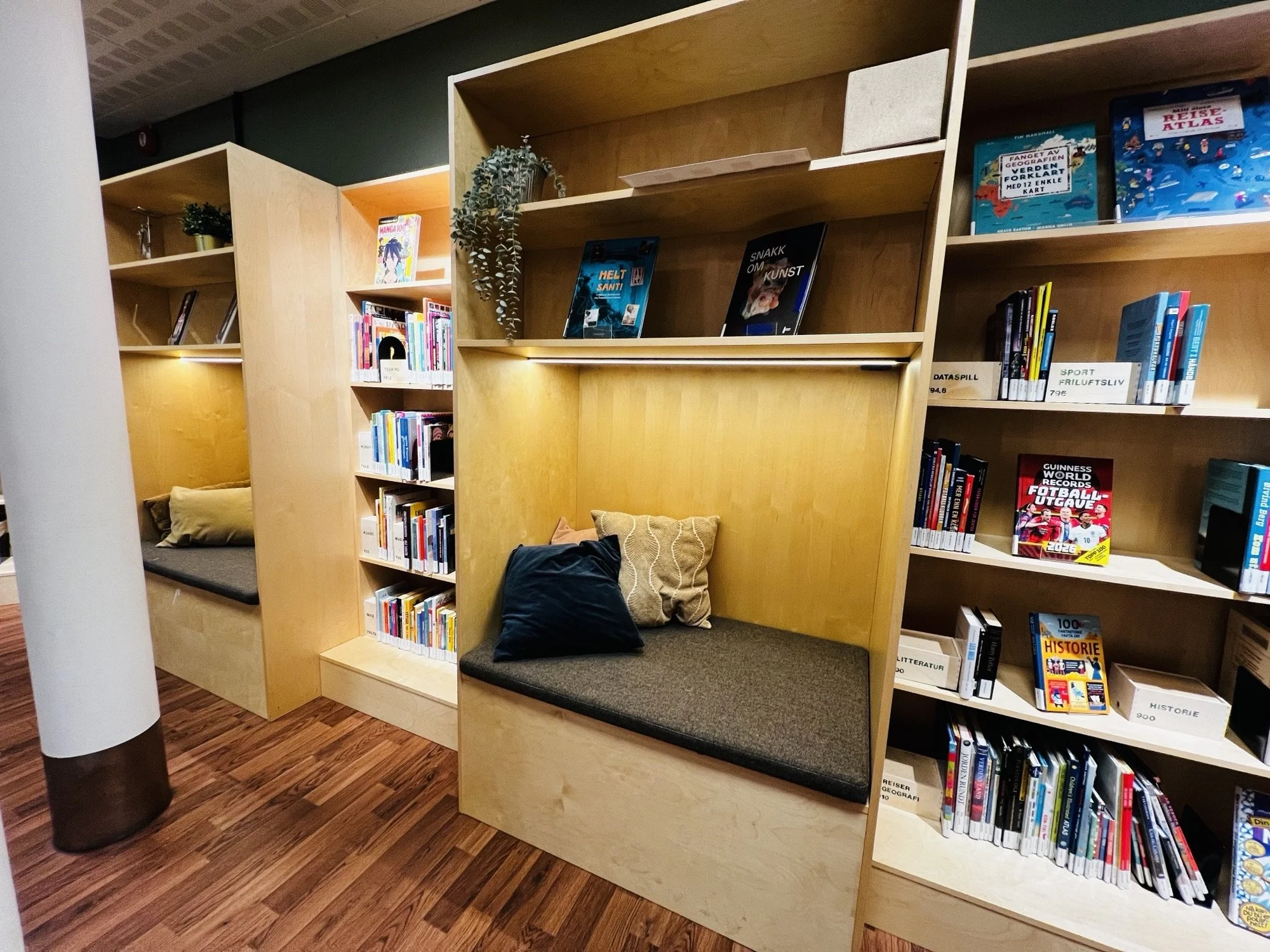
Reading nooks at the Lillehammer Library.
I meandered to the front desk and inquired about the ungdomsskole section. The librarian, Camille, the person with whom I was talking, just happened to be the youth librarian, so she walked me through the library space and explained the reading initiative. I was blown away by the materials that she and her colleagues had created, with their research connections and mindfulness of practicality for schools Lesekvart+ - forsterket stillelesning - Lillehammer bibliotek. The handbooks for teachers, informational materials, and classroom activities are all available online. They are currently only written in Norwegian, but I am on the email list for updates on their English language editions. I was also pleased to learn of the community support for the reading initiative and the librarians’ efforts to inspire other communities in Norway to adopt the reading intitiave.
It was such a joy to meet Camille and learn about the efforts to motivate teenage readers in Lillehammer. Reading motivation decline is not limited to a certain school, community, or even country. That is why it is so important to see what others are doing and work together to inspire life-long literacy practices.
This chance encounter was just another example of the value of serving as a Fulbright Scholar. I am grateful for each and every meeting with pupils and teachers (and reading advocates) in Norway.
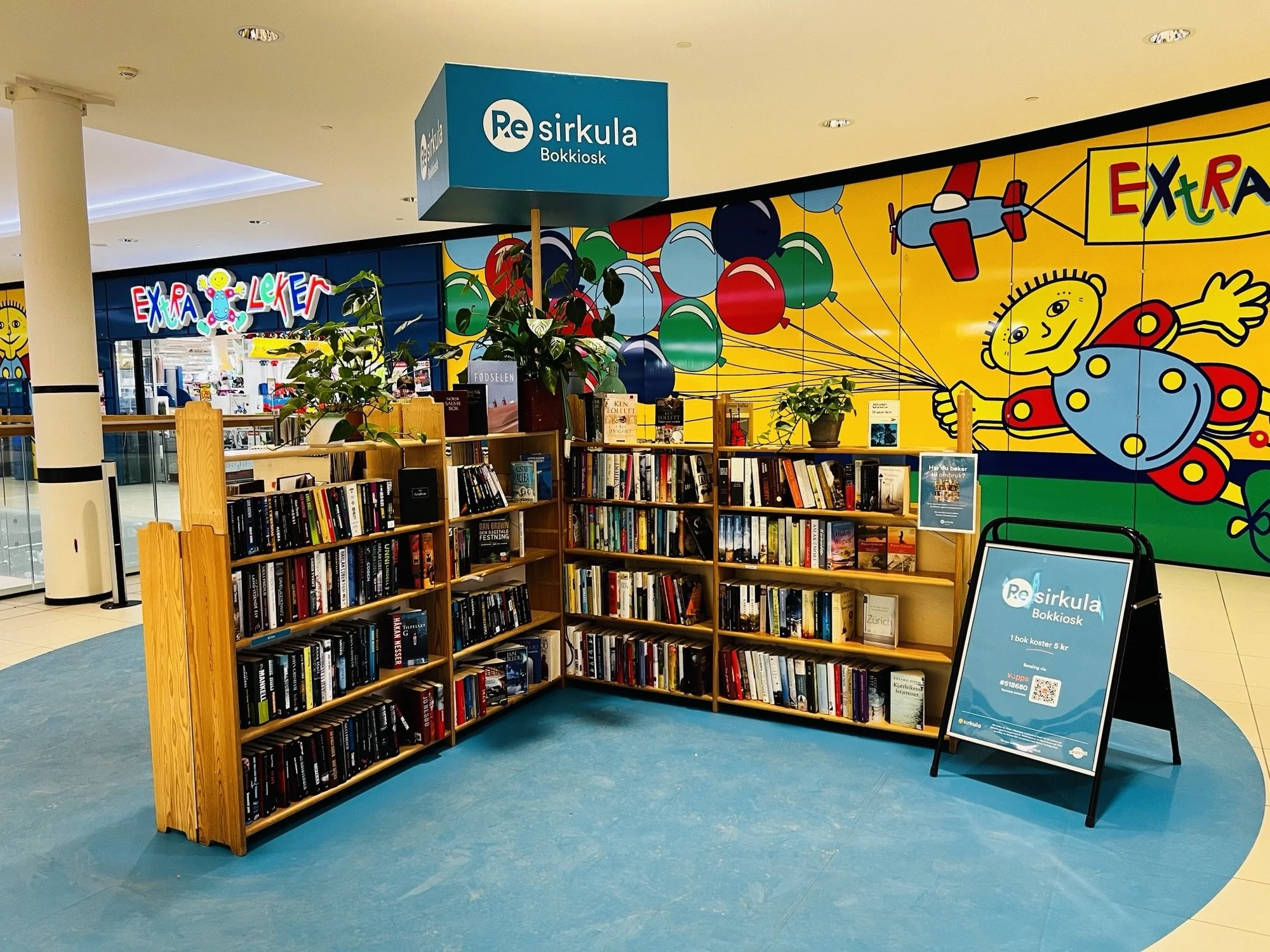
A book kiosk in the Hamar shopping mall. A secondhand book costs 5 kroner (less than $0.50USD).
