
Food in the Fridge
Planning is a theme you’ve no doubt identified from my posts, so here is another way in which planning is helpful when living in Norway as a Fulbright Roving Scholar- stocking the fridge so that there is food when I return from travels. I’m not talking about hoarding food or filling my little fridge but strategically planning what I will eat while I am in Oslo and what I will need when I return.
I’m accustomed to planning for meals because I live in a rural community and drive 20 minutes to buy fresh produce and the majority of my groceries. However, in Minnesota, refrigerators and freezers are larger and I have more storage space for nonperishables. I plan meals and buy groceries accordingly, but there’s always extra food thrown in the cart for snacks and unexpected meal requests. The downside of the extra food is excess waste.
Food is much more expensive in Norway and portion sizes are smaller. While food waste is burned as a heat source, I really try not to waste food. Since my family isn’t here and I’m rarely planning for guests or unexpected meals, and it’s much easier to strategize food needs and avoid food waste.
For example, I had four days in-between two teaching trips, but that first day back in Oslo, I didn’t need to dash out to the grocery store. I had strategically left food in the fridge, so I could stay in the apartment, start the laundry, and relax upon my return. Those items included hummus, sliced Norvegia cheese and Snøfrisk (goat cheese) for crackers, eggs, and yogurt. Not only are the items are regular part of my diet here in Norway, but they have a long fridge life. In the freezer, I always keep a small container of salmon and a bag of frozen vegetables.
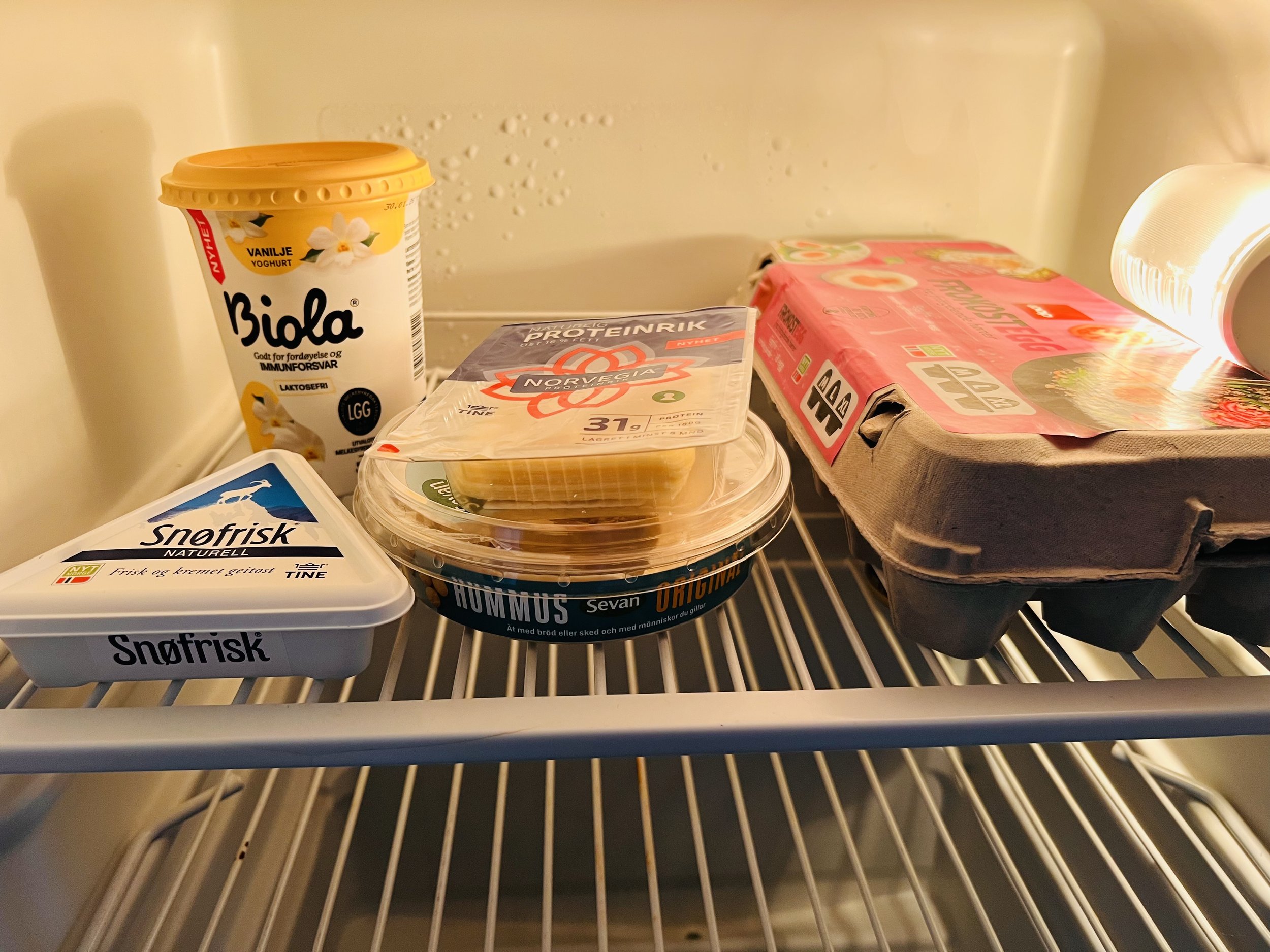
Staple items in my refrigerator.
For dried goods, I always have muesli (granola) to be eaten with yogurt, and knekkebrød (whole-grain crackers) that I eat with the earlier mentioned hummus and cheese. This might not sound like much, but truthfully, this is what I see EVERY DAY in the staff lounge of schools. Teachers typically have some variation of knekkebrød + butter/mayo + cheese…maybe a slice of meat. The crackers, and sometimes bread, are eaten open-faced. So, a teacher may eat 2 crackers with mayo and cheese for lunch. That’s it.
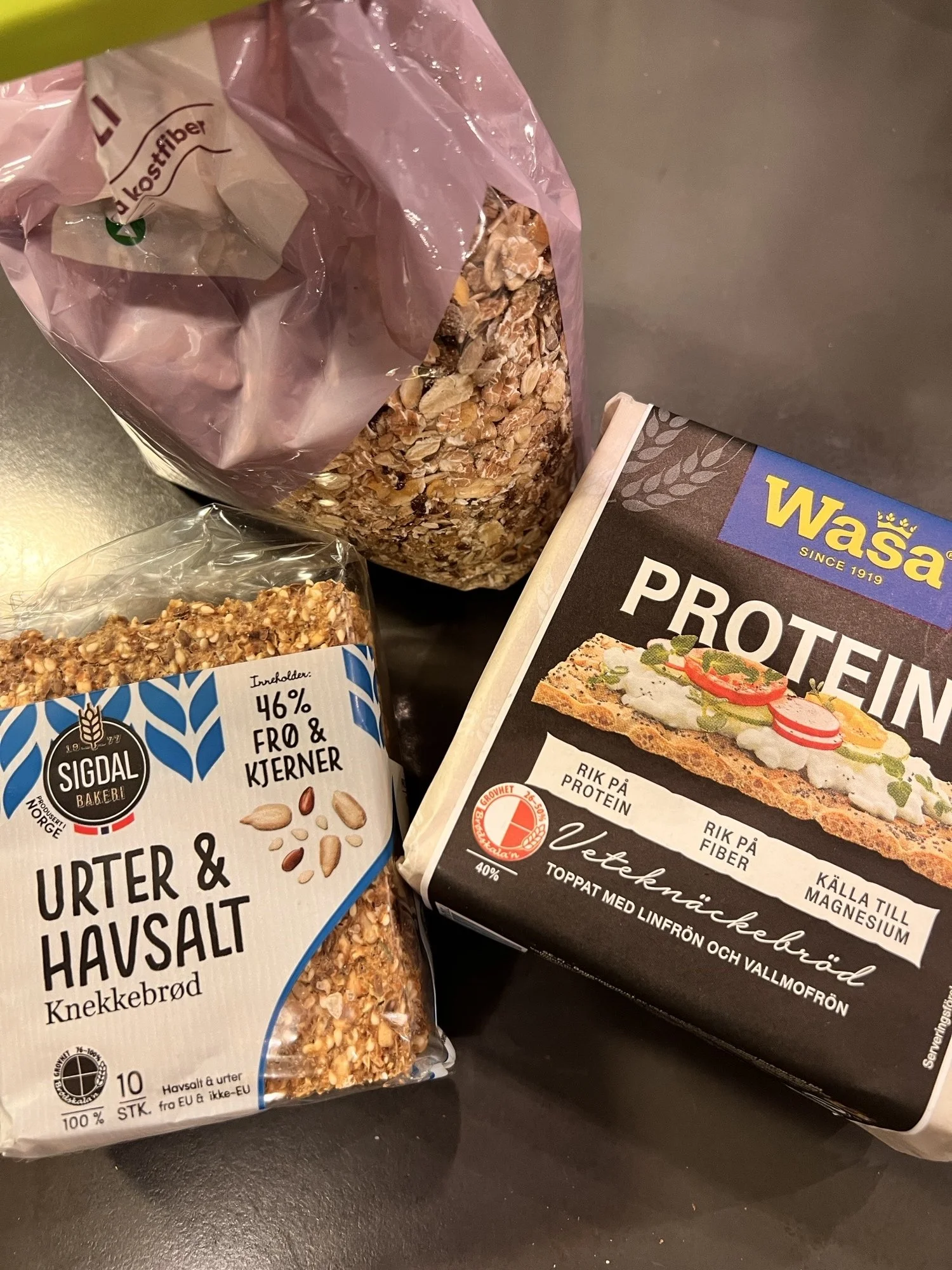
Musli and knekkebrød.
I marveled at a drawer overflowing with packages of knekkebrød at one school. A teacher told me that knekkebrød doesn’t go bad, unlike bread, so teachers keep a pack of knekkebrød in the drawer and a pack of cheese in the fridge. Easy, simple lunch.
My travels are anything but simple; a recent travel schedule looked like this:
· Travel: Sunday-Wednesday
· Oslo: Thursday-Sunday
· Travel: Monday-Saturday
Most grocery stores are not open on Sundays, and I don’t want to navigate the narrow aisles of a grocery store while lugging a suitcase. In addition, I don’t want to carry grocery bags while trudging through the snow on the way back to my apartment. Instead, I calculate meals that I will eat while in Olso, then figure out what I will need when I get back from the next trip. I always make sure that I have the fridge and pantry staples on hand, then I don’t worry about food on my way back
For example, before traveling to Vadsø this past week, I was in Oslo for four days. I bought a loaf of fresh bread and ate sandwiches every day to be sure the bread was consumed before I left. I had salmon and vegetables for suppers and bought more coffee and coffee creamer.
When I arrive at my destinations, I go to a grocery store and buy clementines or bananas for a portable snack. This is a significant change from my US habit of packing ‘healthy’, high-protein granola bars. My gut definitely prefers this healthier Norwegian snacking strategy!
Yes, planning ahead to reduce food waste is far easier for one person than it is for a family. However, I recognize how careful planning reduces spoiling, overconsumption, and waste. When I go back to the US, I strive to be more strategic with my meal planning and shopping to reduce food waste and increase healthier food choices.
