
Foreldrepermisjon (Parental Leave)
While not directly connected to classroom instruction, paternity leave in Norway certainly has an impact on the lives and success of children’s academic studies. When I first arrived in Norway, I was surprised to see so many dads pushing young babies in strollers…alone. They did their shopping with their little ones and ran on trails and in the parks with their children, with no partner in sight. Throughout my eleven months in Norway, it never ceased to amaze me how many fathers were out with their children.
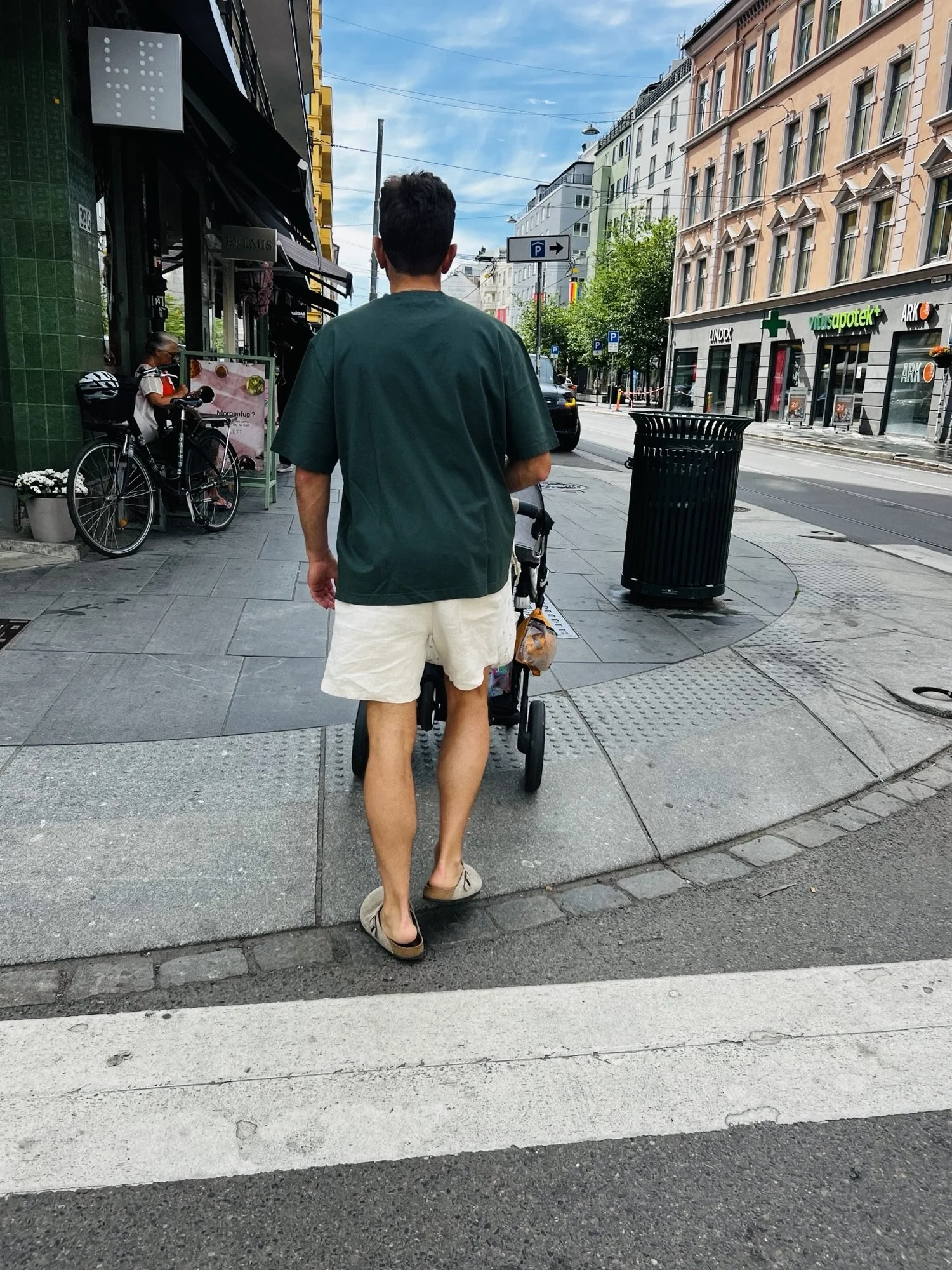
Father pushing their child in a stroller in Oslo.
When I was a young mother and my husband was home with our boys while I was grocery shopping, people commented on how nice it was that he was ‘babysitting’ the kids. What a minute, they’re his children. It’s parenting, not babysitting!
However, in Norway, fathers and spouses have an incredible opportunity to stay home with their children as part of the country’s parental leave. It provides parents who live and work in Norway, with the opportunity to stay home with their child and be free from work responsibilities or studies (Nordic Co-operation, n.d.). Twelve months can be granted to the parents of a child in connection with and after the birth. Up to twelve weeks prior to the birth and six weeks after the birth are dedicated for the birth mother (Arbeidstilsynet, n.d.). Fifteen weeks are awarded to fathers and co-mothers with the remaining 18 weeks divided among the parents as they wish. All 48 weeks are provided at full pay.
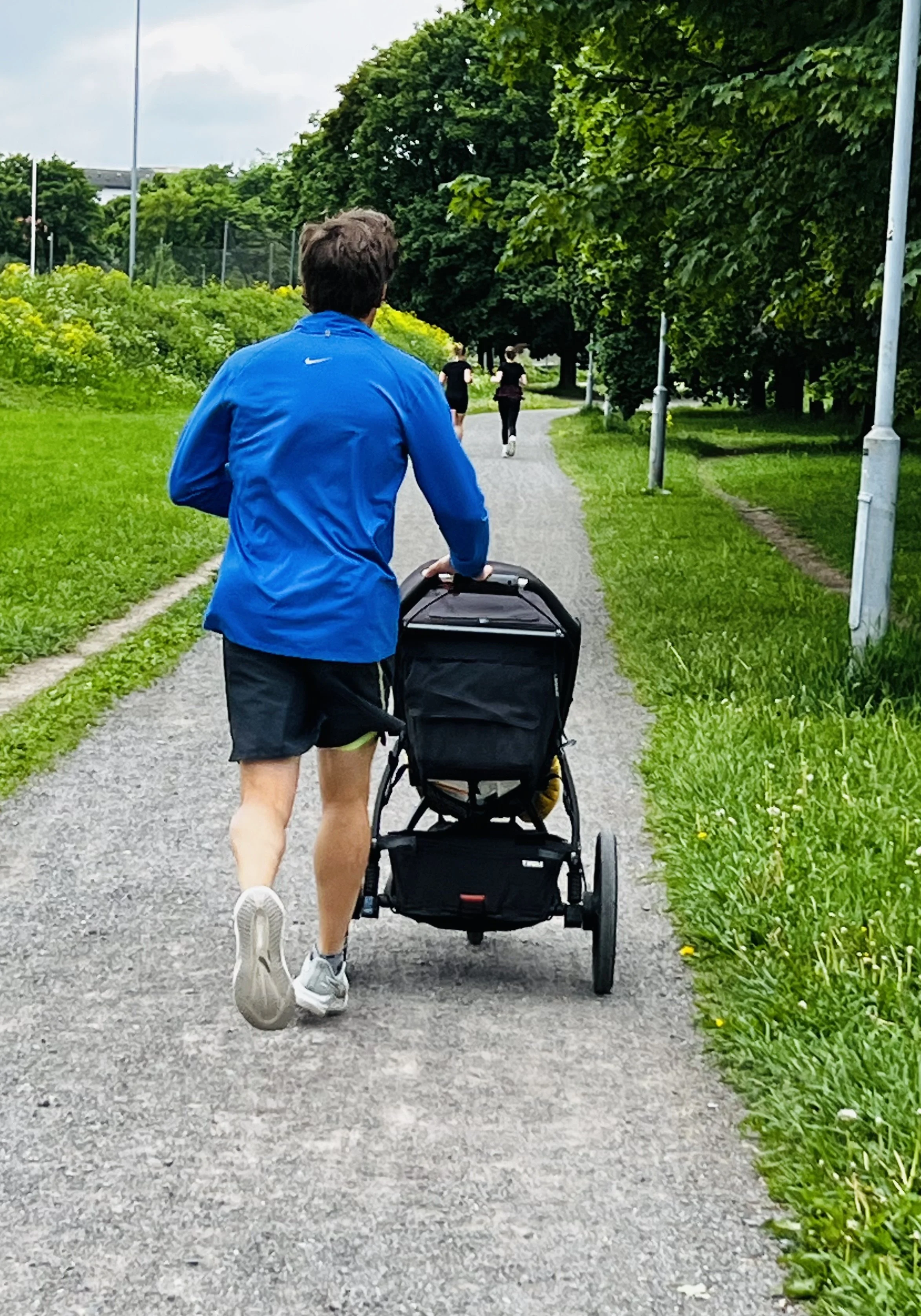
Jogging in the park in Oslo.
In order for the father/co-mother to participate in the shared paternity leave, the birth mother must be actively working or attending school prior to the birth. The partner is entitled to parental benefits if the birth mother worked at least six of the ten months prior to the start of the parental benefit (Nordic Co-operation, n.d.). In addition to the first 12 months, each parent is entitled to 12 months of additional leave for each birth, used directly after the first 12 months (Arbeidstilsynet, n.d.), at a reduced rate of pay.
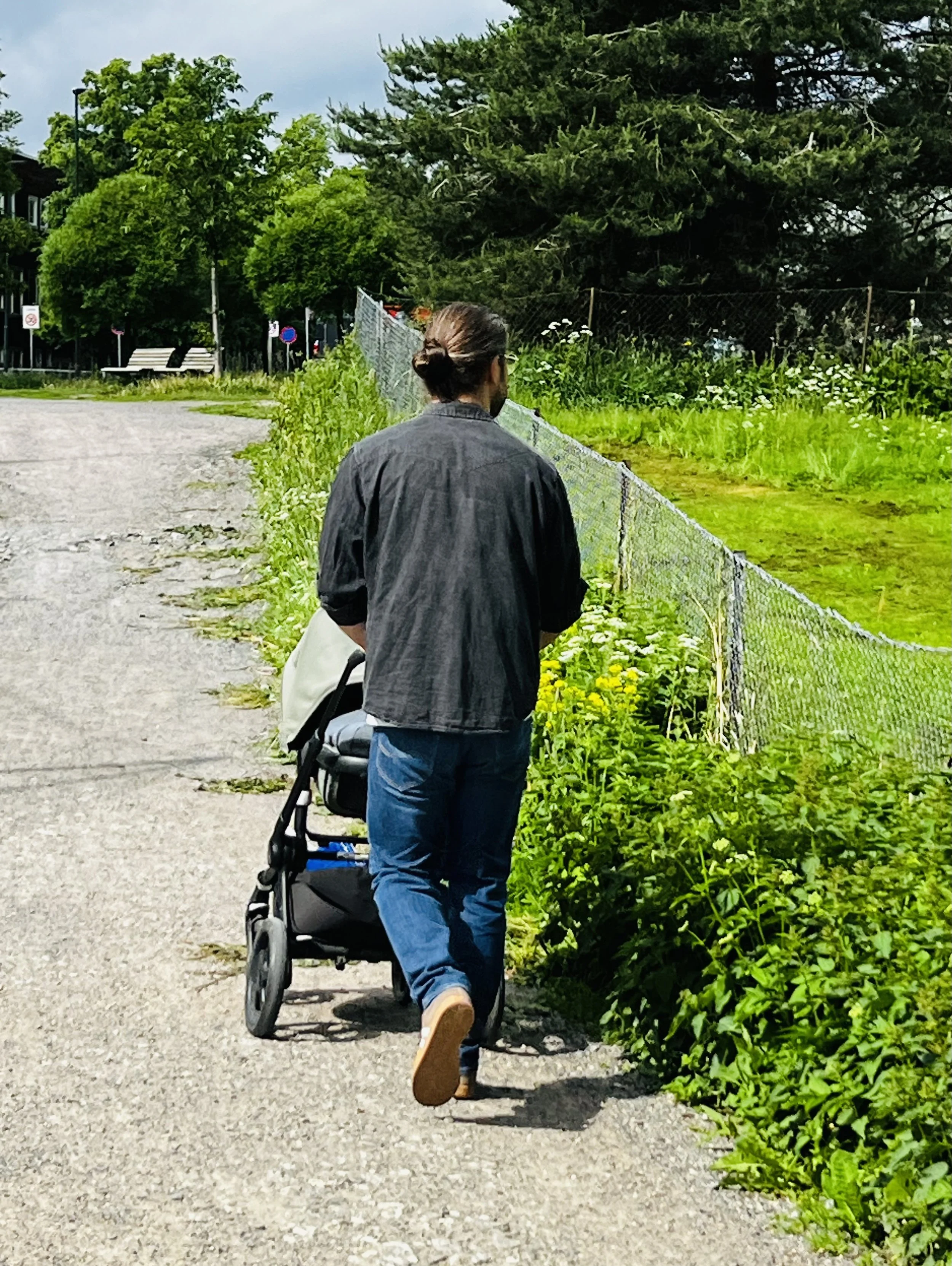
Walking in a park outside of Oslo.
Another option to support family well-being is working a reduced schedule at a reduced pay rate. For example, one teacher that I met worked 80% time at 80% pay so that she could stay home with her child for three days on the weekend instead of two. Another teacher worked 80% but chose to work a shortened day so that she could spend more time with her children each day during the week.
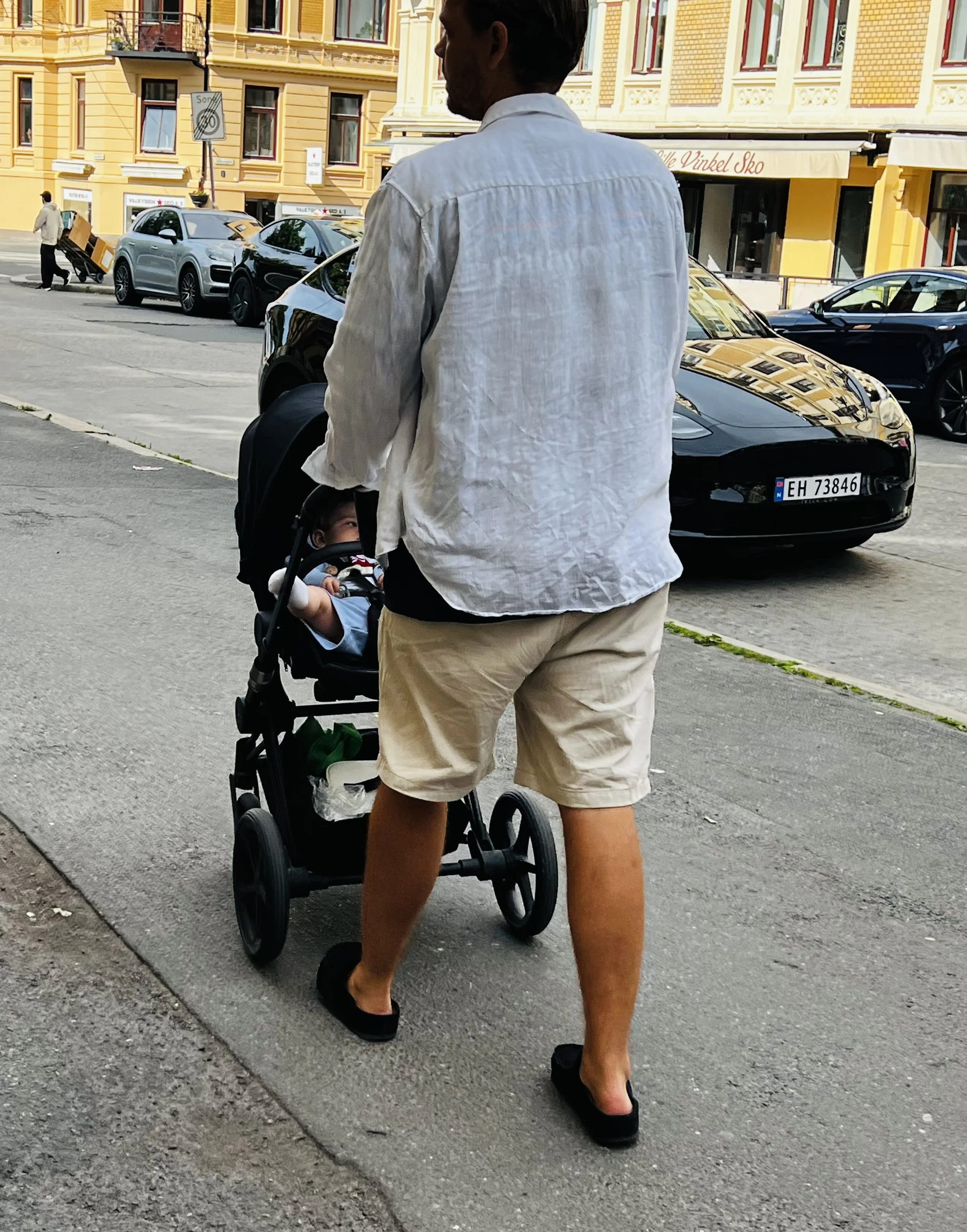
Strolling the streets of Oslo.
With these parental benefits, it’s easy to see why fathers are frequently seen meeting friends for coffee or joining them at the park with their little ones. While this might not seem unusual in Scandinavia, it certainly isn’t common in the United States. New parents are provided with 12 weeks of unpaid leave through the Family and Medical Leave Act of 1993 (FMLA), though individual states may provide more specific benefits. In 2026, for example, Minnesota started a 20-week shared medical and parental paid leave that provides about 80% paid leave (Murphy & Christy, 2025).
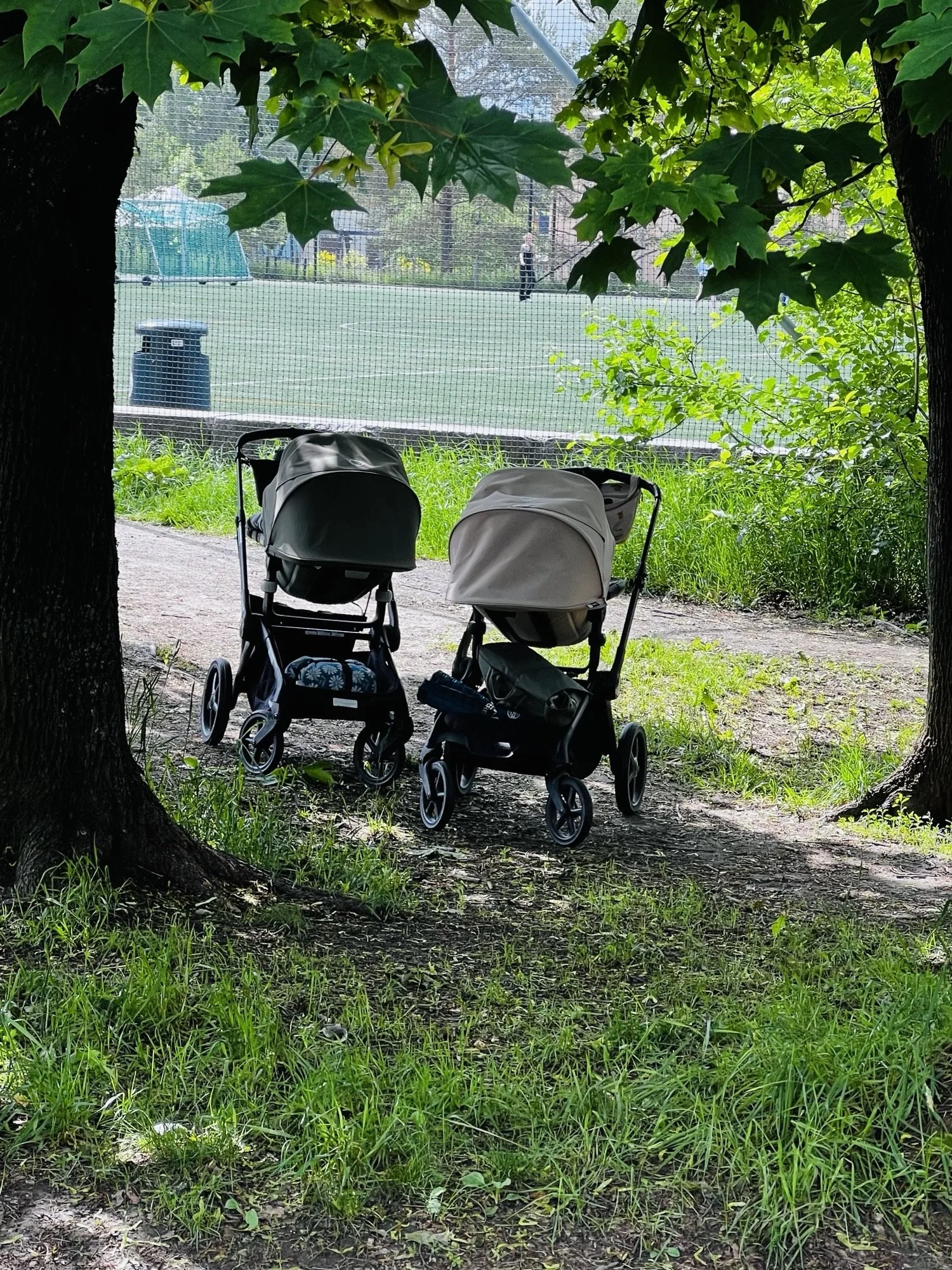
Strollers parked in the shade while parents play futball (soccer) on the nearby pitch.
As an outsider, I observed significantly positive parent interactions in Norway. Fathers were frequently seen alone with their children in grocery stores, clothing stores, parks, subways, and airplanes. They appeared to be happy or content and were always calm when interacting with their children. Most importantly, they were loving. They talked with their children and openly showed affection with hugs, holds, and kisses. I can’t help but wonder if this open affection was due to the time afforded them with their children when they were infants. Parents take active and equal roles as a family unit, which perhaps supports life-long happiness and positive social-emotional wellbeing for the child.
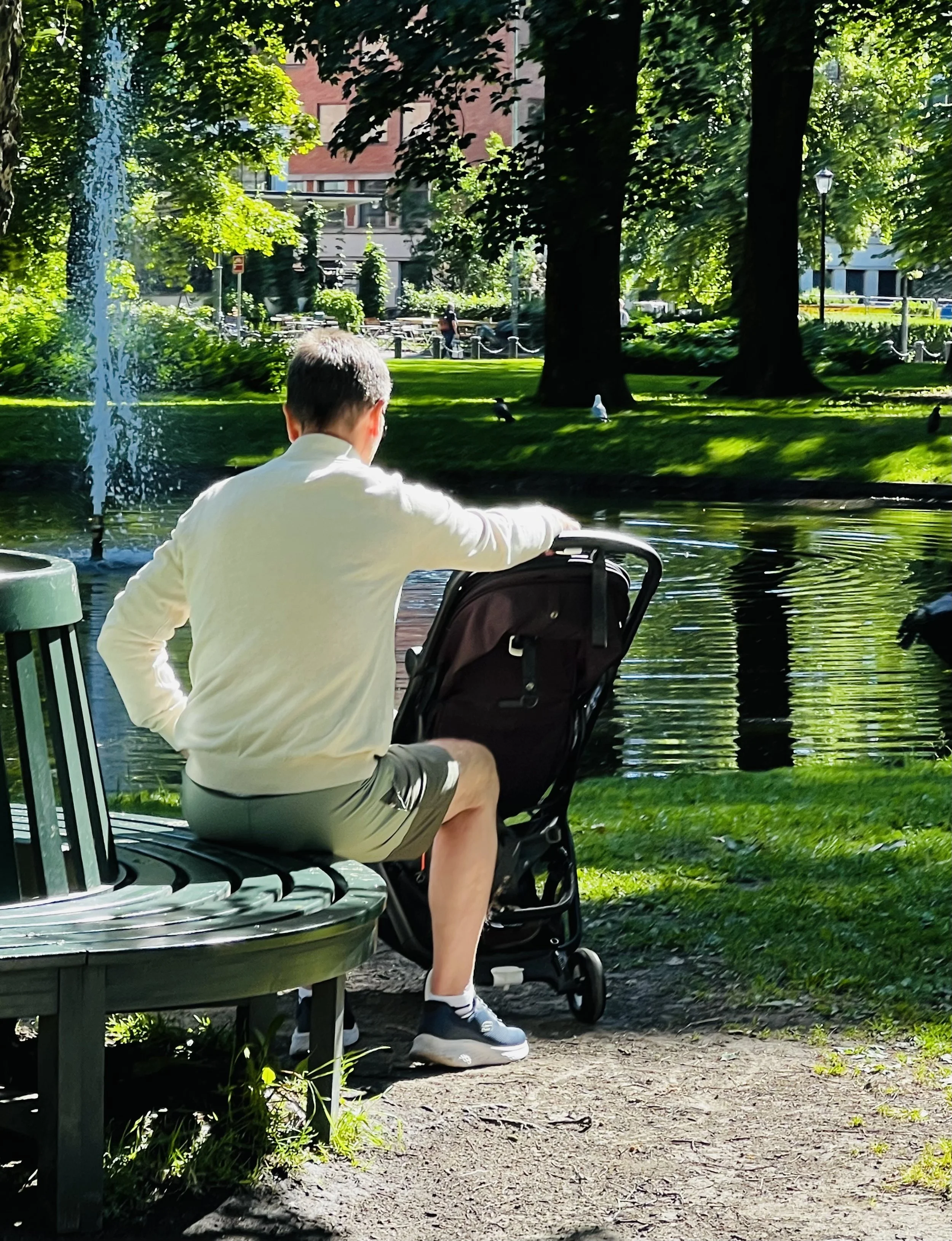
Stopping to talk to a child at the Royal Palace garden in Oslo.
At any given time walking the streets of Oslo, one can see fathers pushing babies in prams or multiple fathers chatting at a café. Parks and futball fields also serve as the meeting place for sports sessions, with strollers parked in the shade or dads jogging around the walking track. When I asked my students in Norway about this, they in turn, asked about the number of women in the US who stay home with children for extended periods of time and don’t work. Specifically, they inquired of the ‘tradwife’ phenomenon on social media. One student responded, “that puts a lot of pressure on the dads, to provide the sole source of income for the family.” In Norway, both parents work outside the home (generate family income) and contribute to the family structure by sharing the day-to-day tasks (e.g., cooking, cleaning, shopping).
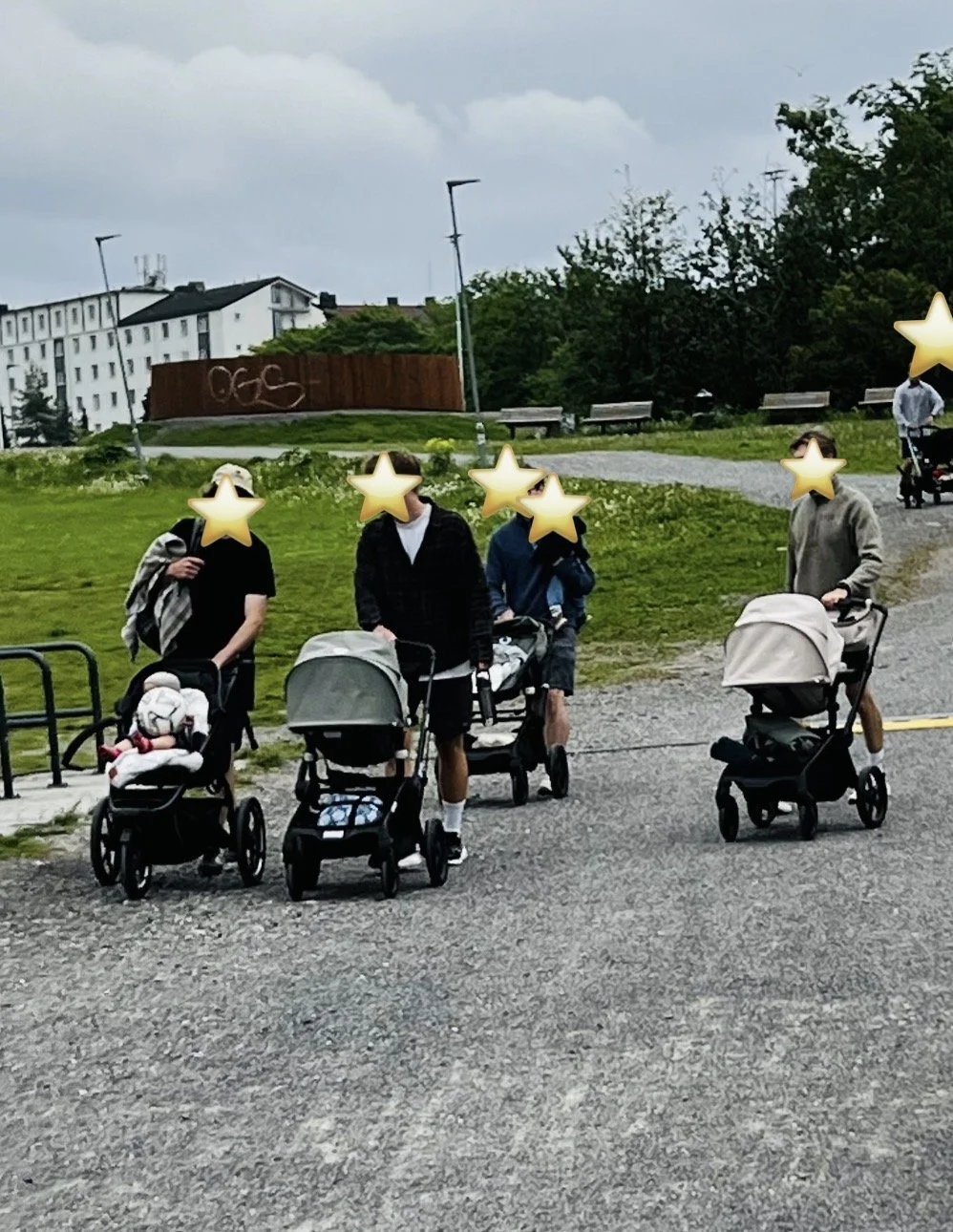
Morning scene in an Olso -area park.
What if we afforded our dads/co-mothers time away from work responsibilities and provided more time to care for and bond with their children? How would that affect the family lifestyle and structure? How would that impact children’s long-term health and overall wellbeing? How would that impact students’ school-readiness and social skills? Norway started this benefit because they recognized the many benefits for children, parents, and the family unit. There is a lot we can learn from parental leave programs in Scandinavia…
References
Murphy, E., & Christy, L. (2025). New Minnesota paid family leave could allow some new parents to “double dip” in 2026, due to timing quirk. Retrieved from: www.cbsnews.com/minnesota/news/minnesota-business-paid-family-leave-talking-points/
Nordic Co-operation. (n.d). Parental benefit and parental leave in Norway. Retrieved from: https://www.norden.org/en/info-norden/parental-benefit-and-parental-leave-norway
Norwegian Labour Inspection Authority. (n.d.). Parental leave. Retrieved from: https://www.arbeidstilsynet.no/en/pay-and-engagement-of-employees/permisjoner/parental-leave/
