
Hvile (rest)
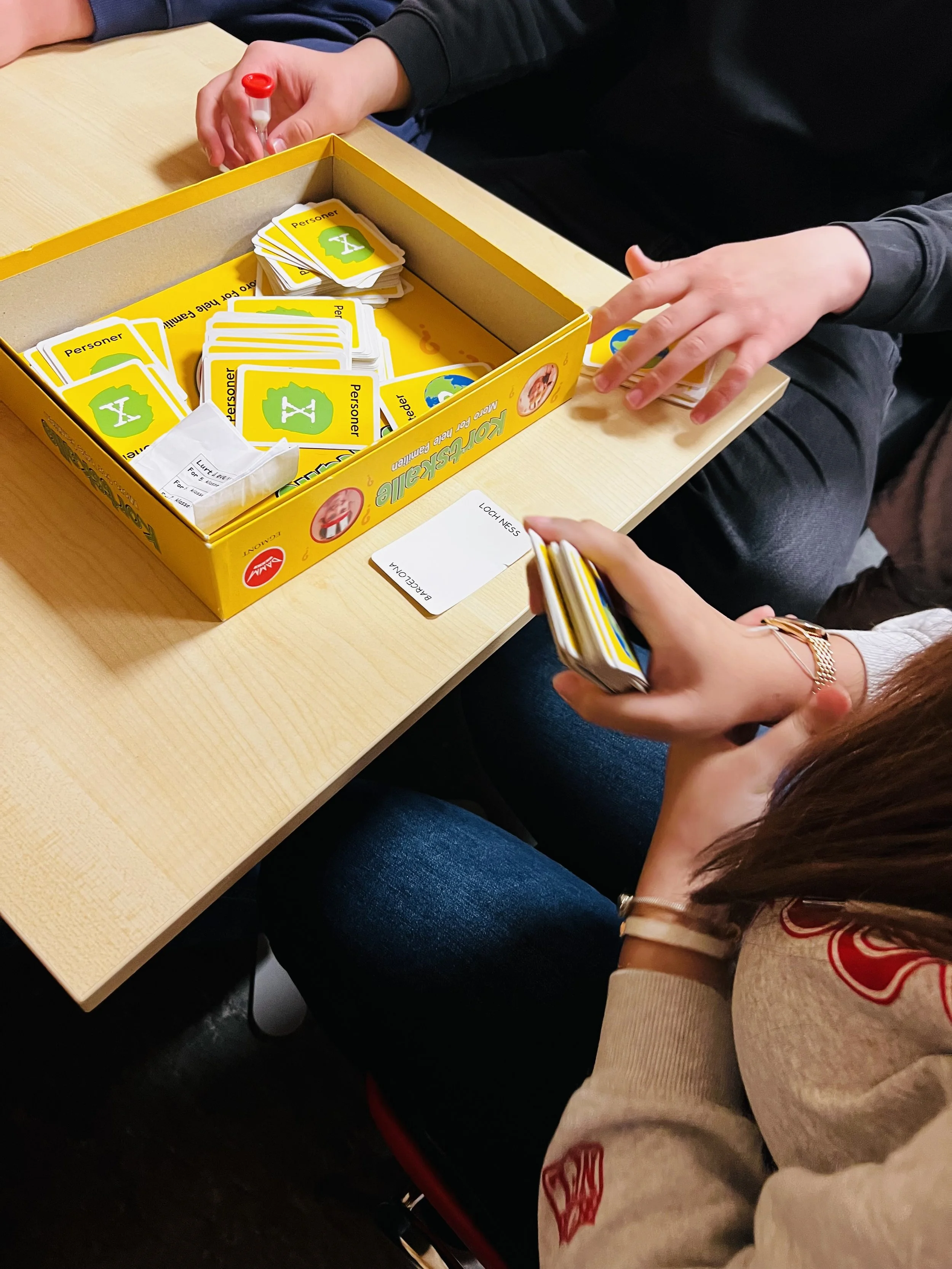
Pupils playing a game during their break.
Regular breaks are provided for ungdomsskole (lower secondary) students in Norway. There is no one set schedule, but a common practice is to provide 50-60 minutes of instruction and then a 10-15 minute break. Lunch and recess time is an additional 30 minutes. Break time is non-negotiable; it is a critical component of the day.
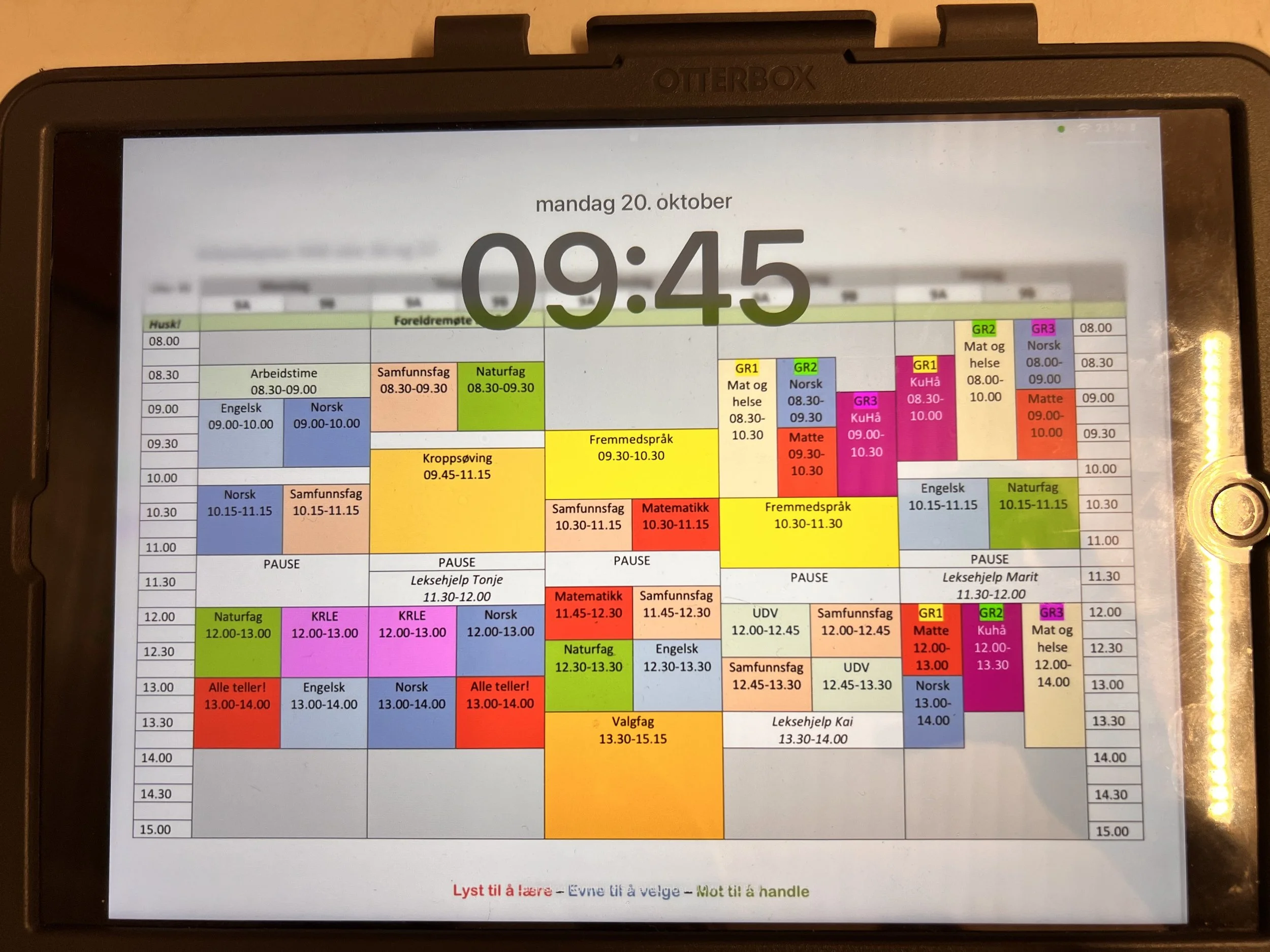
A sample student schedule in lower-secondary school.
Once, I misunderstood my teaching schedule and talked three minutes into the students’ break. The students never said a word, but the teacher, with a panicked expression, hesitantly waved her hand at me and whispered that the students needed their break.
During these breaks, pupils typically go outside and play futball (soccer) or other games and chat with their peers. When I was visiting a rural school in the middle of the country, two boys asked if I wanted to try frisbee golf. They walked me to their school track and showed me how to throw a frisbee disk. When the bell rang, we returned inside and traded our outside shoes for inside shoes.
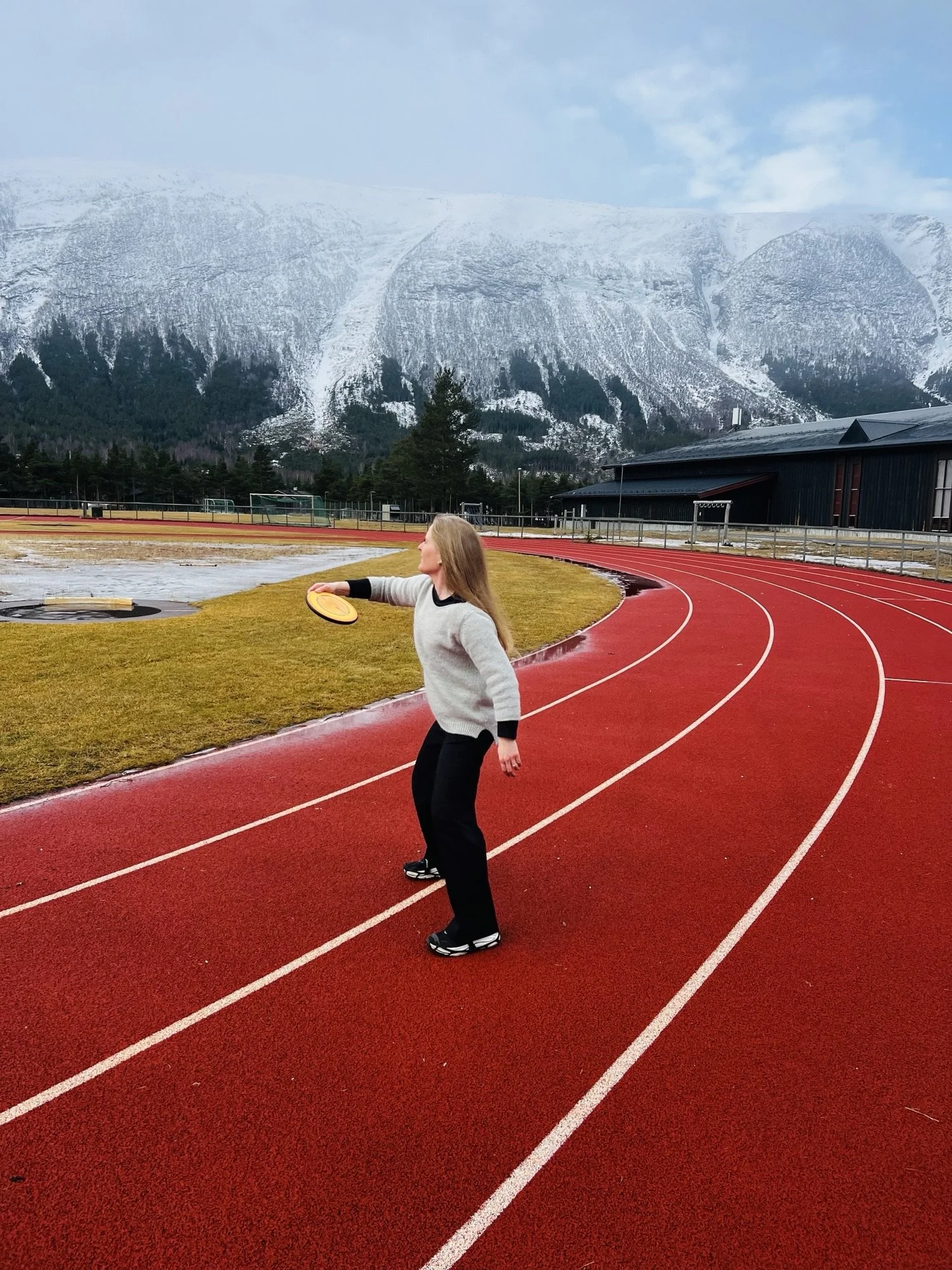
Learning how to throw frisbee discs during a break.
Ping pong is another staple fixture in ungdomskole schools, and I have yet to visit a school that does not have a ping pong table. Students play before and after school, during breaks, and during recess. In larger schools, ping pong tables are designated by grade level. The teachers even use the ping pong tables after pupils have left for the day! I witness a fierce ping pong match among colleagues, who even created a scoreboard for their playing time.
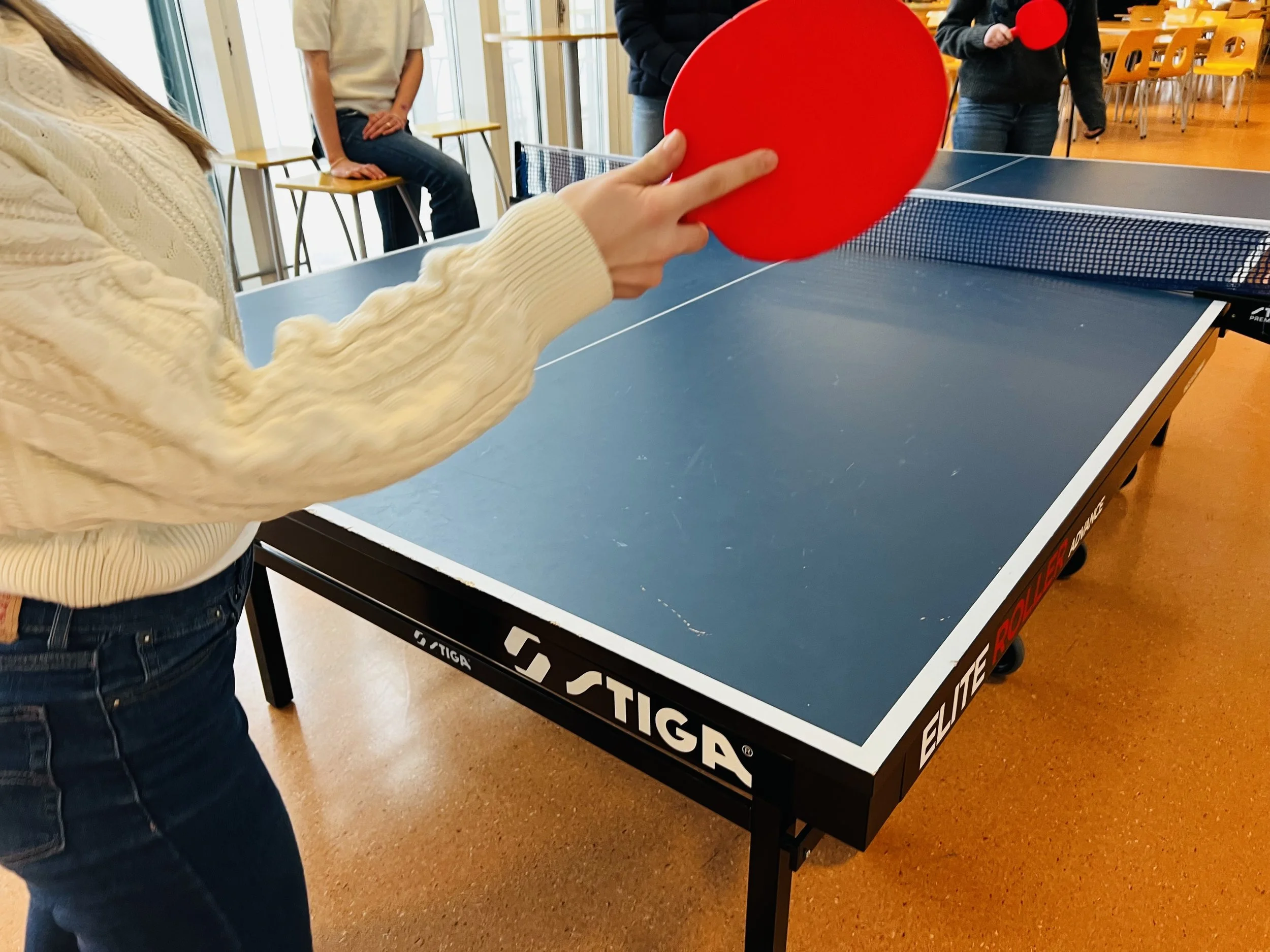
Ping pong is a favorite activity during breaks.
Cell phones are not allowed during the school day; they are locked in ‘phone hotels’ until the end of the day. The lack of screentime and social media use during the school day, encourages conversation and positive interactions. Most schools have games available in the classrooms or open meeting spaces. Chess boards, card games, and board games can all be quickly located during break time. Students keep track of the game pieces and put them away when they need to return to class.
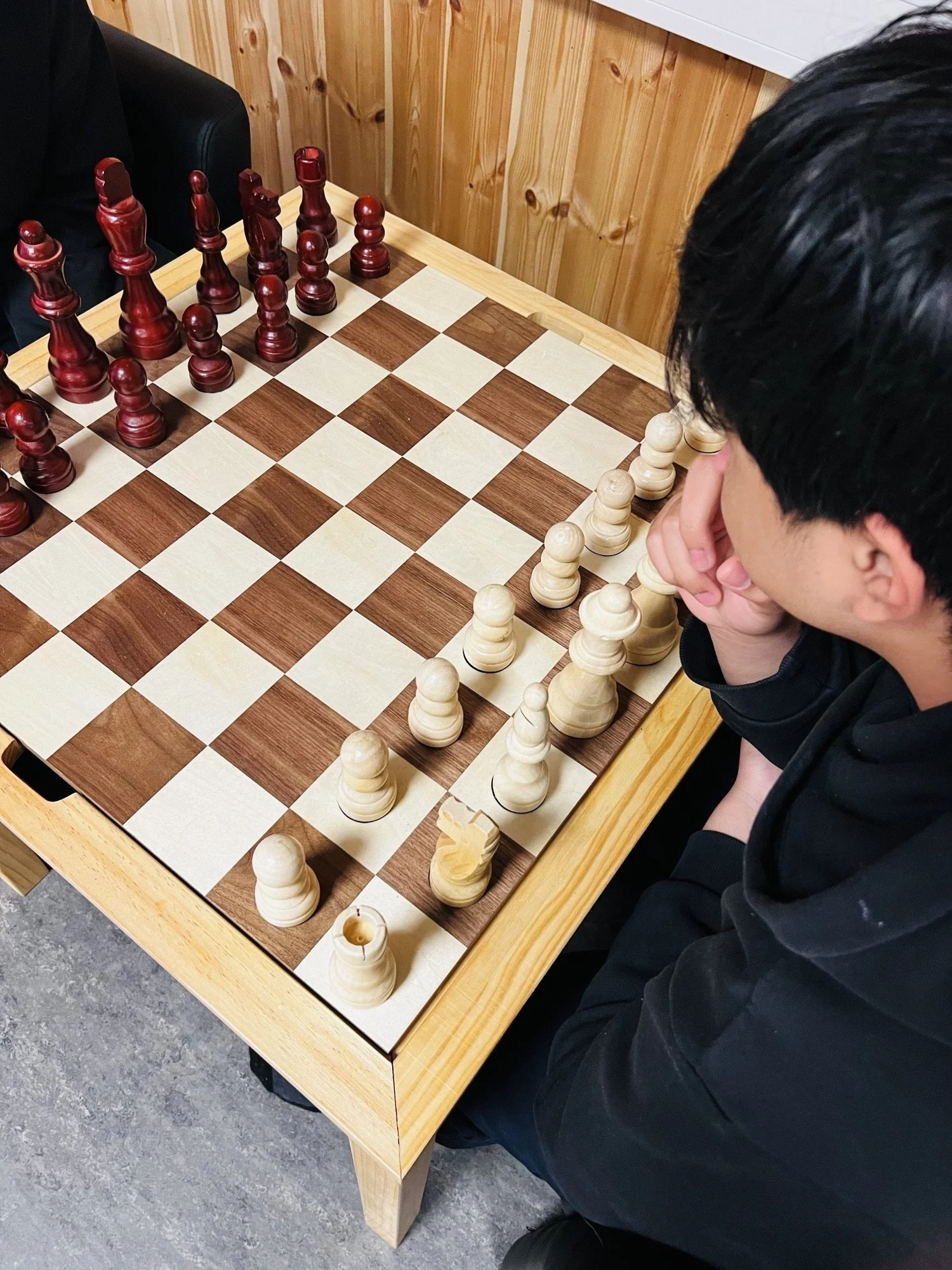
Chess is another common activity during school breaks.
During one of my school visits, two students walked into the staff area and walked out with guitars. They played the guitars together during the recess break and then returned them when the break was over. There was no check-out system, just the freedom and permission to use the instruments when desired.
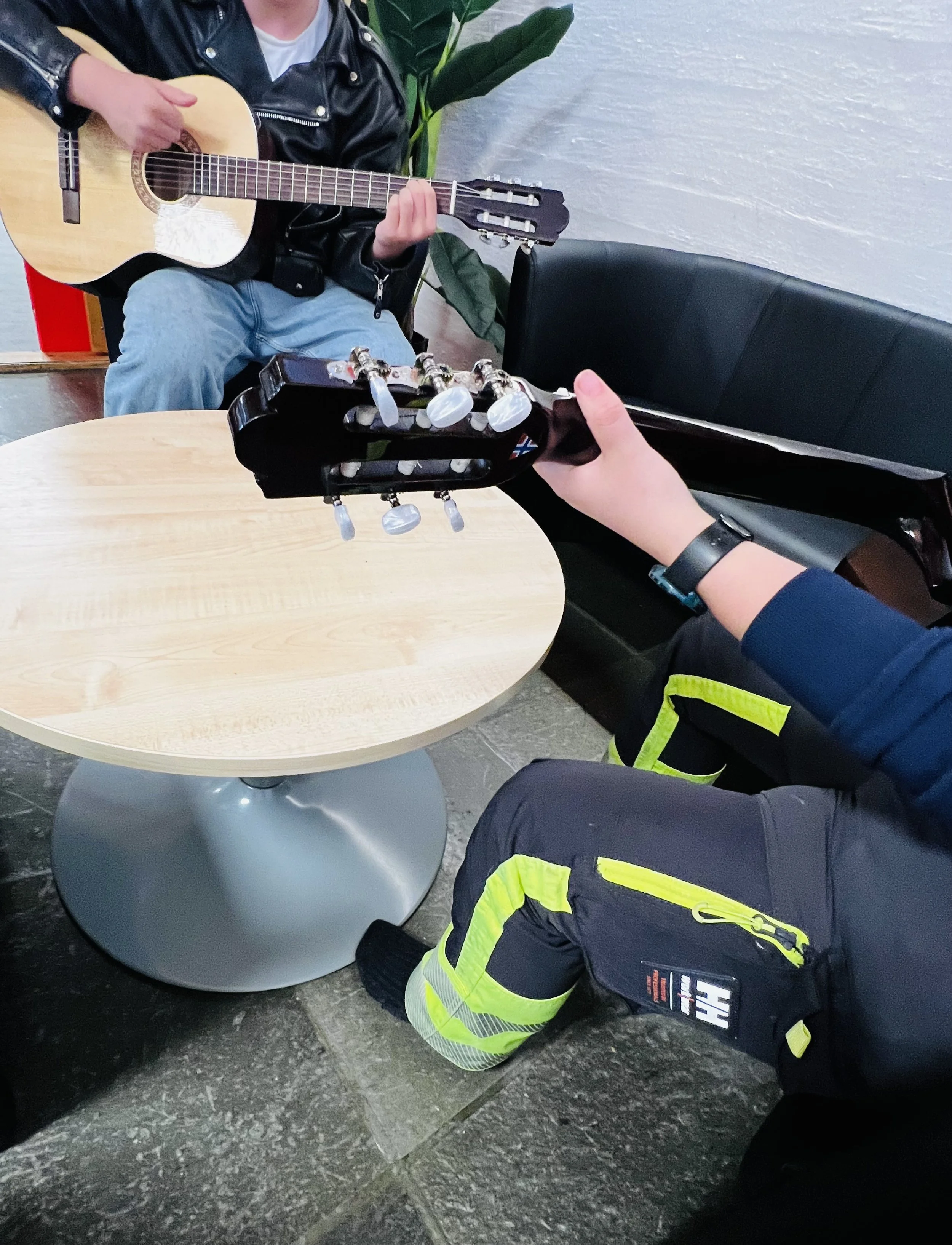
These two students played guitar during their recess break.
Another example of recess agency was a group of students who asked me to play darts with them. Of course, I agreed, thinking that we were going to play darts with plastic tips. I should have known, but the darts were the metal ones with long, sharp tips. Two students brought their own dart sets, and we played for the duration of the break. They were not concerned about missing the target and hitting the wall or floor. The supervising teacher was also not worried about us launching the metal darts across the gym stage.
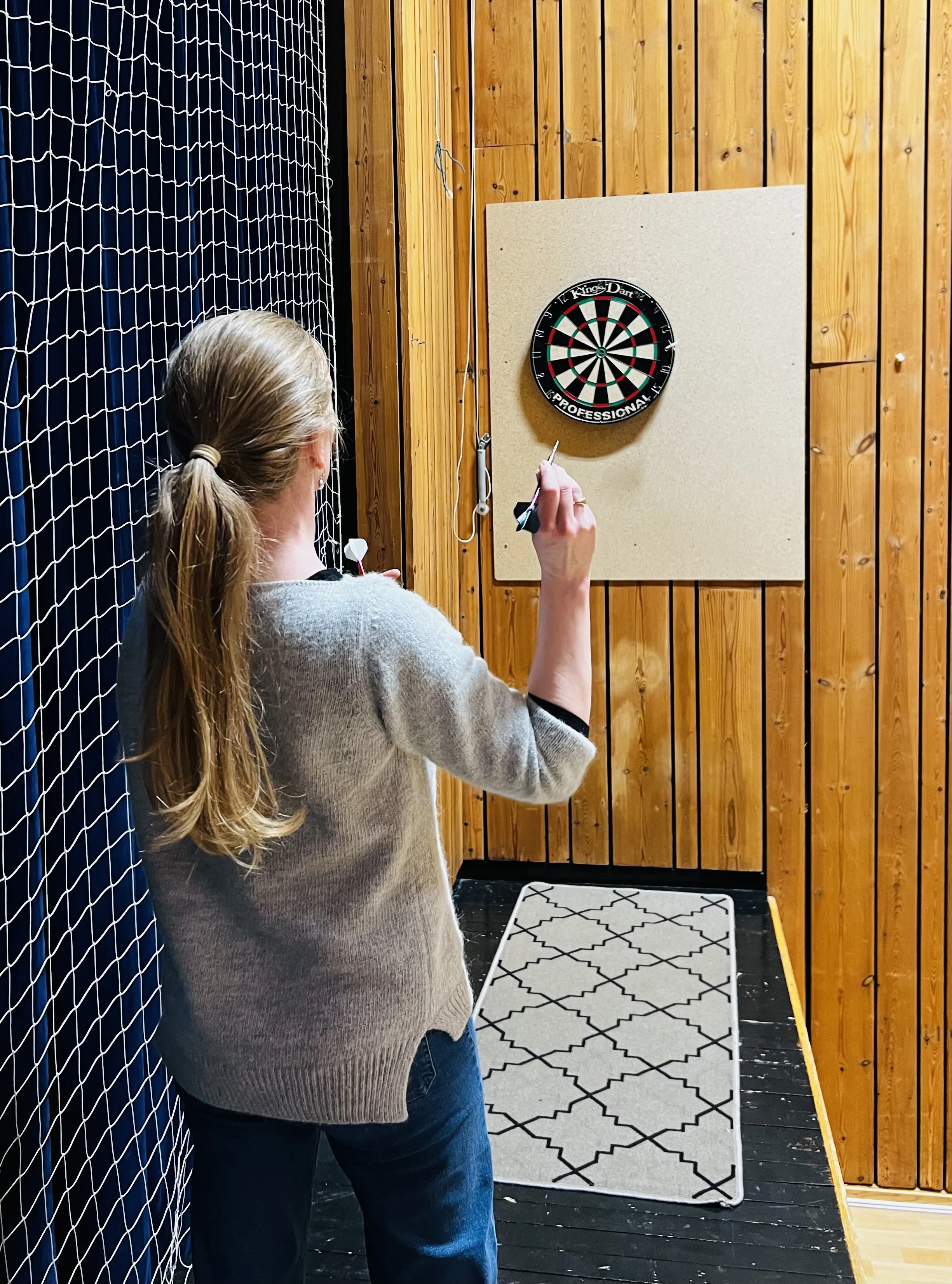
The students invited me to play darts during recess.
Norwegian pupils often ask me how students in the United States can sit for so long without breaks. They are also amazed that there is little, if any, emphasis on outside time or fresh air in the middle school grades (beyond physical education class). When I taught sixth graders, there was a school initiative to provide 2–3-minute movement breaks in the middle of math class. My students completed a movement activity and then quickly settled back into the math class. Students in Norway, however, are afforded more time for movement, conversation, and mental breaks, and the breaks occur in regular intervals. They return from their breaks alert and ready to learn.
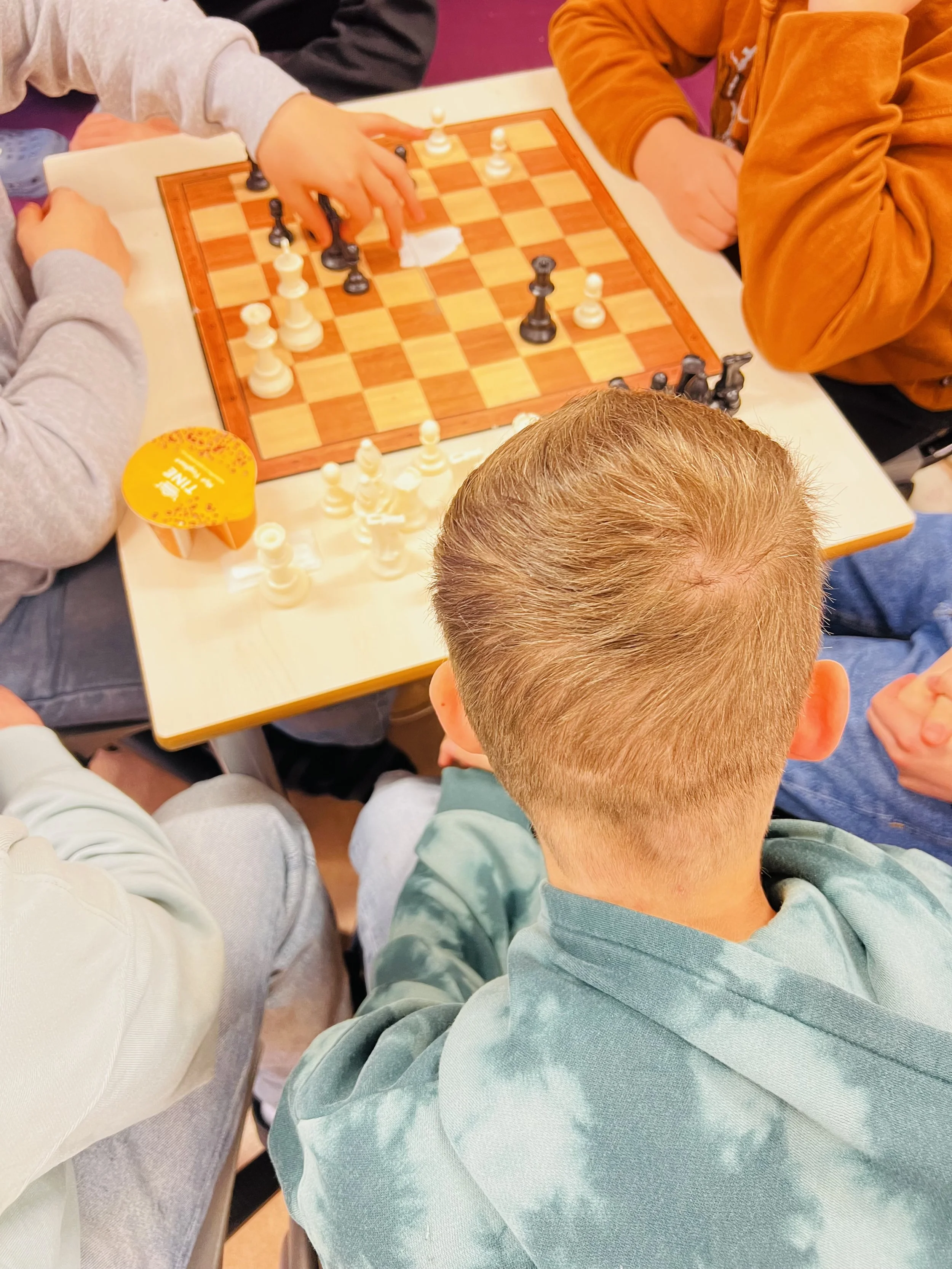
Students engaged in discussion during a chess match.
