
Matpakke (Packed food/lunch)
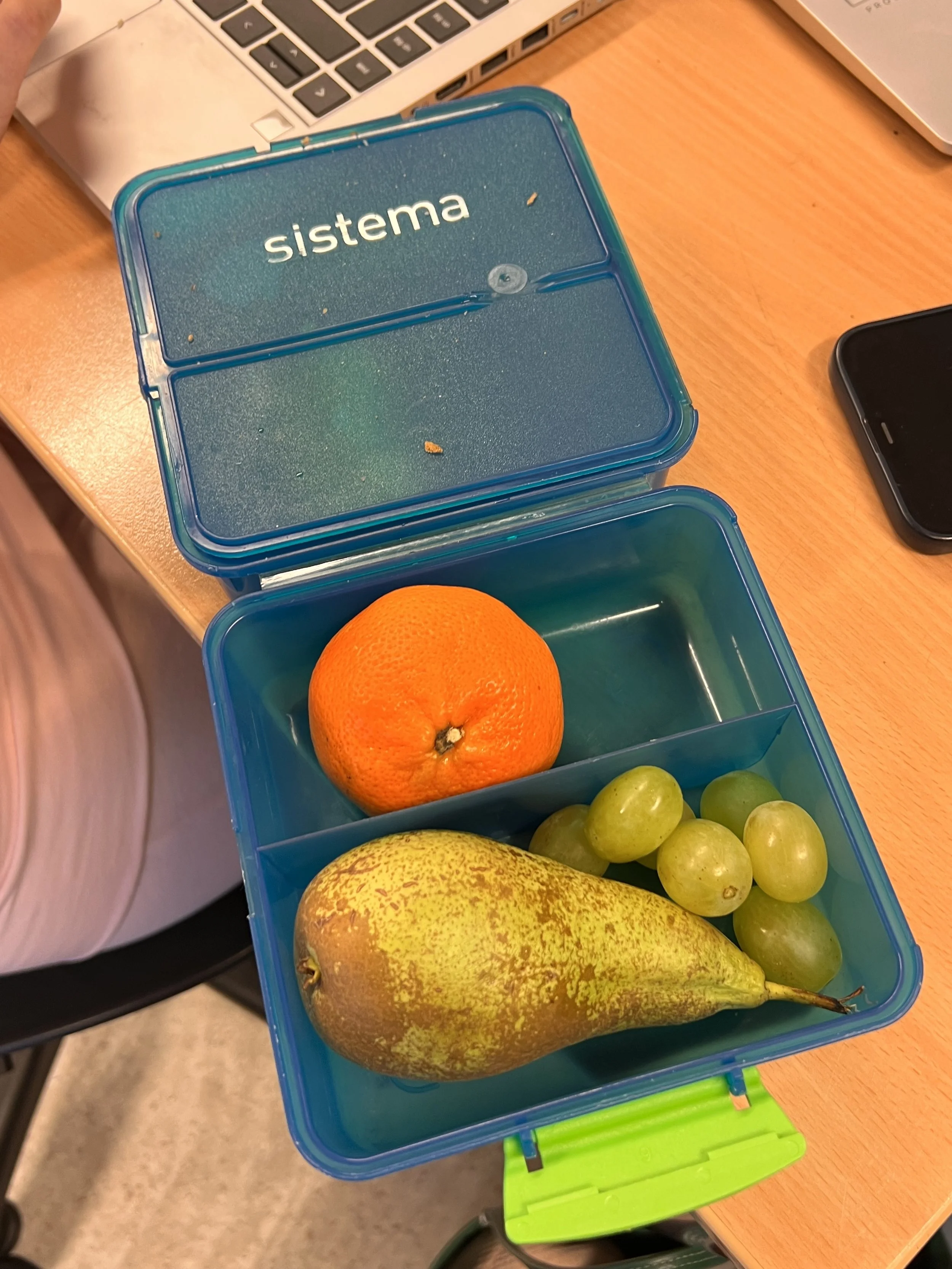
Matpakke is the traditional Norwegian lunch throughout the country. In most Norwegian schools, pupils bring their matpakke in a plastic or tin box each day. While some schools have a kantine (cafeteria) with either a meal or á la carte offerings, many schools do not offer any kind of food for purchase. A typical matpakke consists of open-faced sandwiches (often separated by parchment paper or wrapped), fruits, and vegetables. Each matpakke is unique and all are nutritious.
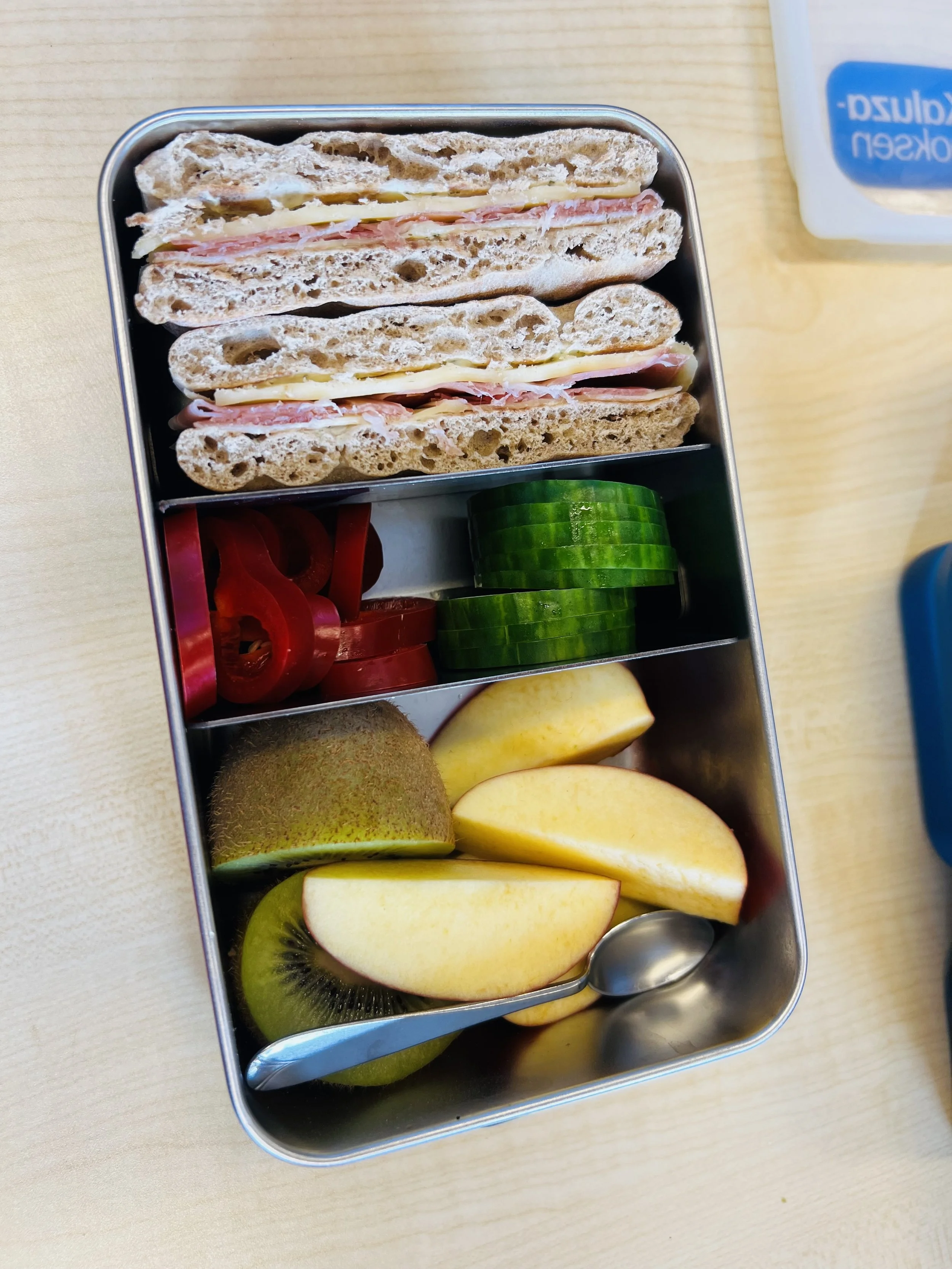
A pupil’s packed lunch.
When I first started roving, the students’ matpakke immediately caught my attention. Not because students were bringing lunch, but because the lunches were so healthy. A typical matpakke contains some kind of roll, bread, or knekkebrød (crispbread) with thin toppings of butter, tube cheese, sliced cheese, liver paté, or brunost (brown cheese that tastes like caramel). There may be a cucumber slice or red pepper slice on top. In addition, students bring fresh fruit and vegetables to include bananas, apples, grapes, peppers, and cherry tomatoes.
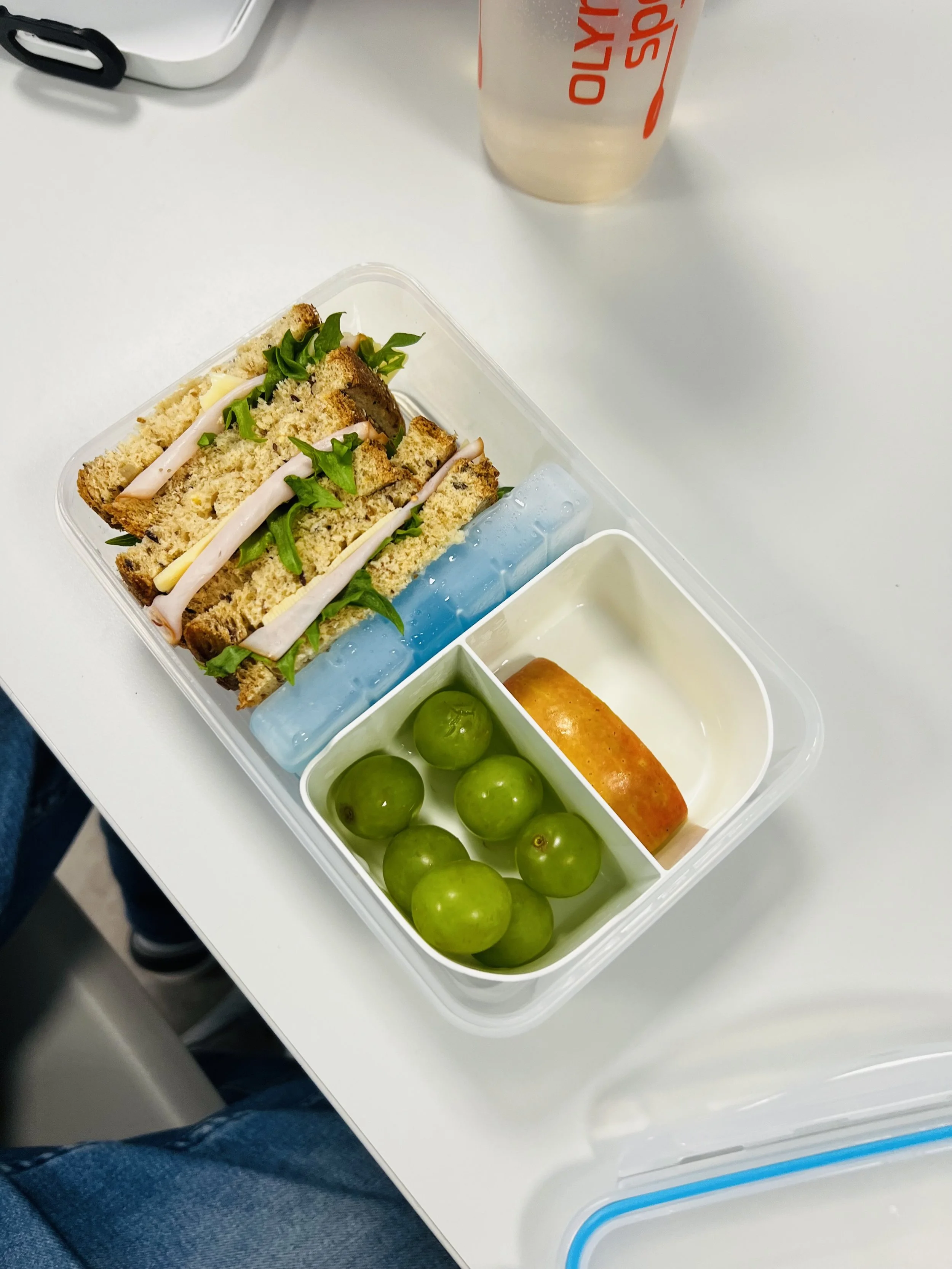
Another matpakke example with bread, cheese, meat, and fresh fruit.
I have been roving for nine months, and I have never seen potato chips, cookies, or candy in a matpakke tin. Never. Even when students take out snacks, they are always healthy. I’ve seen cartons of grapes and toast (toasted sandwich), and the sweetest ‘snack’ that I’ve seen was a small carton of chocolate milk.
Matpakke can be seen outside of school settings as well. People bring their matpakke to work and on hikes and trips. Yes, I pack a matpakke when traveling as well. Even hotels encourage guests to pack a lunch using the vast selection of food items from the breakfast buffets (for a fee).
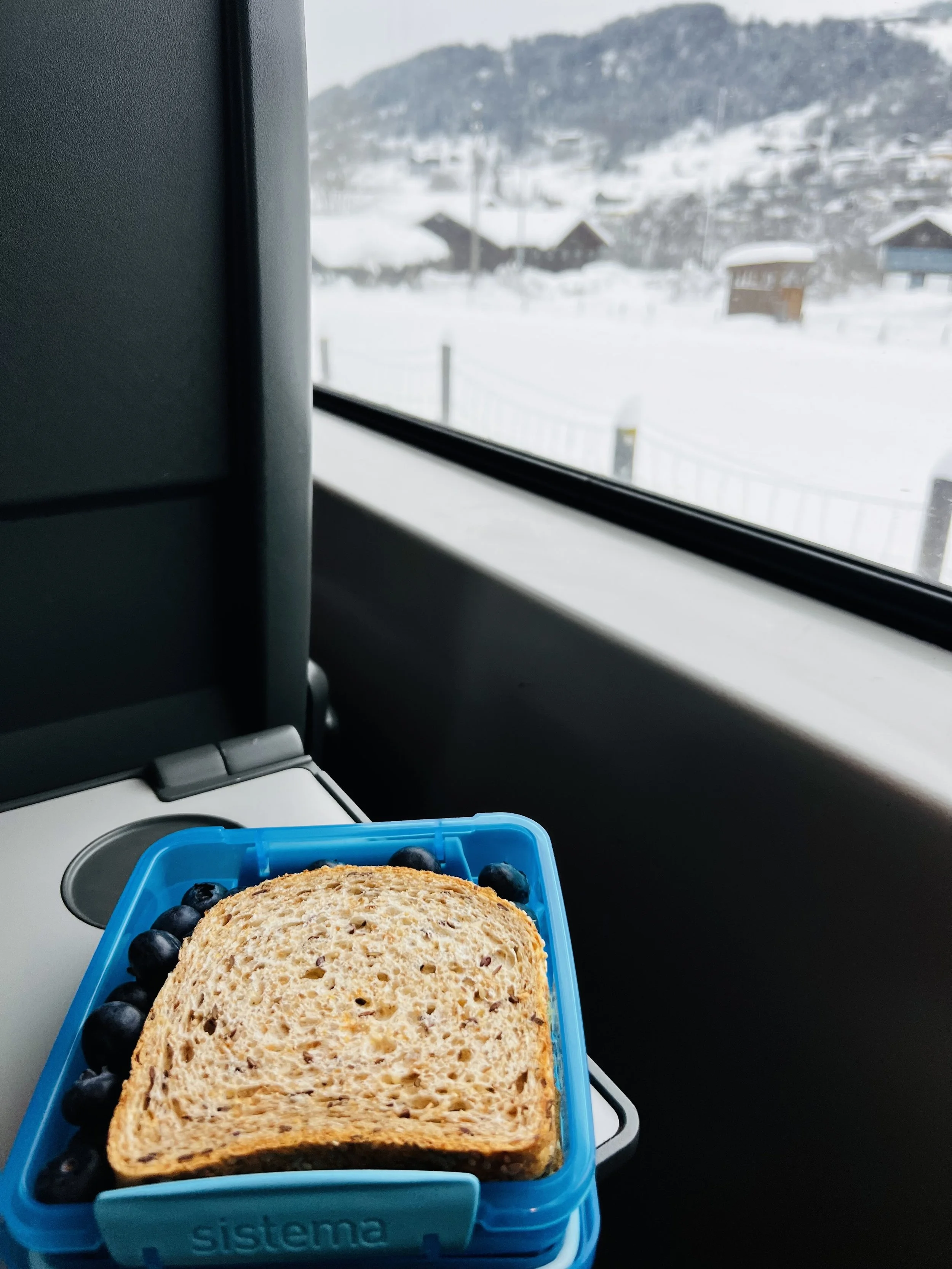
On the train from Oslo to Bergen. My favorite matpakke; bread, cheese, and fresh blueberries.
Matpakke are simple and allow for brief lunches. In Norway, employees only get 30 minutes for their lunch break, but the brief break is balanced with a short workday (Gorvett, 2019). Matpakke is a simple lunch, with no reheating or fuss; people simply eat their food and get back to work. It’s also important to note that there is no ‘work’ during lunch breaks. People eat and chat with colleagues, there is no photocopying, grading, or planning.
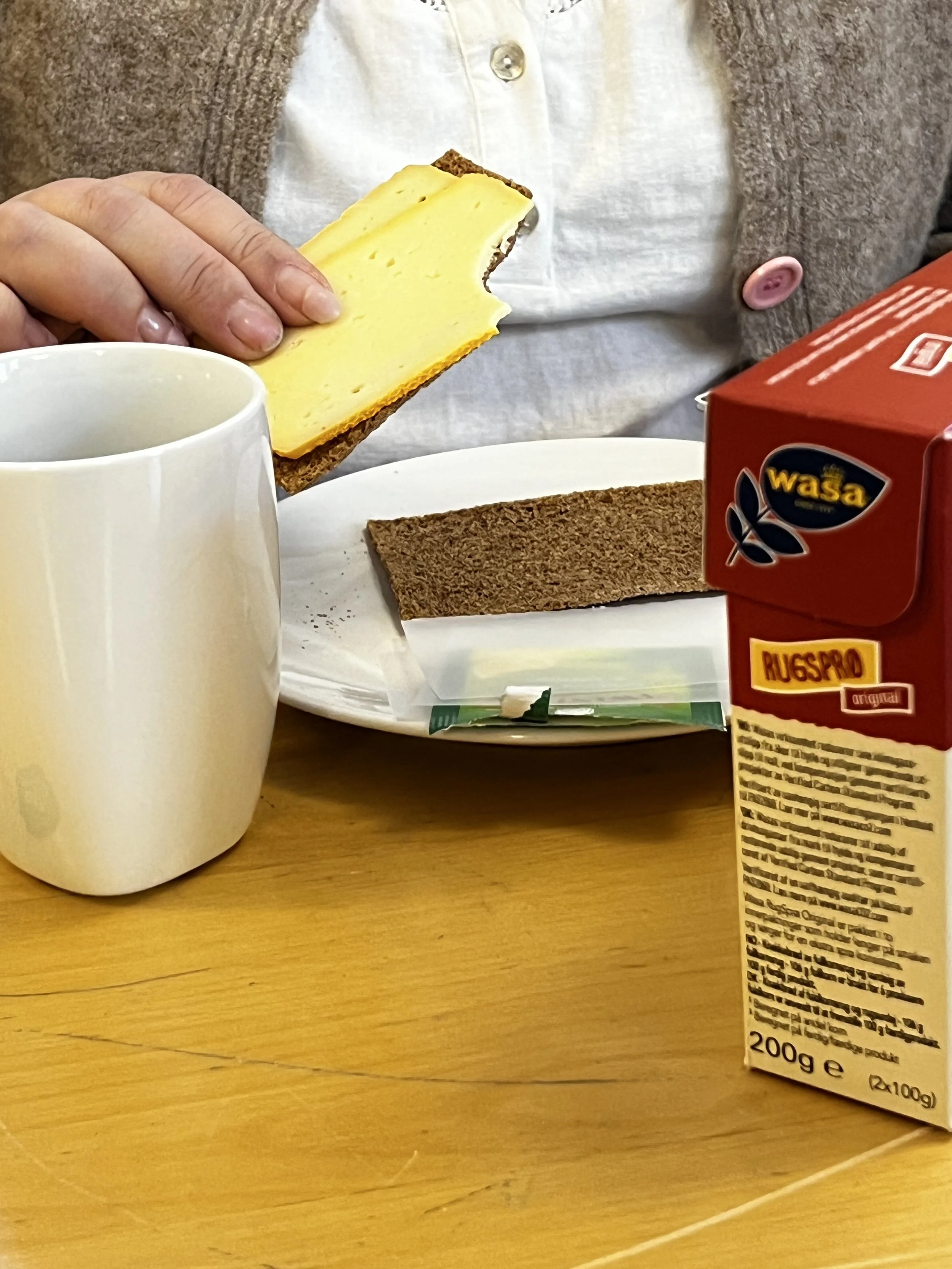
Matpakke: knekkebrød and cheese.
The matpakke tradition stems from the 1930’s with the introduction of the Oslo Breakfast, a government program that provided all children with a free meal each day. In efforts to reduce malnutrition, the meal included bread, milk, cheese, fruit, carrots, and cod-liver oil. The responsibility of this simple, but healthy meal was later transferred to families in 1963. Matpakke today reflect the simple, balanced meal that was provided as part of the Oslo Breakfast.
References:
Gorvett, Z. (2019). The Norwegian art of the packed lunch. BBC: World News and Stories. Retrieved from https://www.bbc.com/worklife/article/20190103-the-norwegian-art-of-the-packed-lunch
Bread (on the closed side) and fresh fruit.
