
One Plastic Bag
There are a few essential questions that you must recognize when shopping in Norway:
1. Trenger du en polse? Or just polse (Do you need a bag?)
2. Vil du ha en kvittering? Or just kvittering (Would you like a receipt?)
When you arrive at the cashier, they will always ask if you need a bag. Always. After you have paid for your items, they will usually ask if you’d like the receipt. So, for simplicity’s sake, when the cashier asks a question, just say ‘no’. Nei (no) to the bag question and nei to the receipt question. Easy enough.
Last week, however, I did something for the first time since arriving in Norway…When asked, “Trenger du en polse?” I responded with, “Ja, jeg trenger en polse, takk.” (Yes, I need a bag, thank you).
What’s the big deal? Why write about a plastic bag? Well…anyone who has traveled to Europe and Scandinavia knows that people are very conscious about the environment and use cloth bags for shopping.
I arrived in Norway with my handy-dandy pair of fold-up reusable bags (I’ve had them for years and I’ve used them during all my international travels). I usually carry them with me and if I’m going to buy more items or heavier groceries, then I also bring a backpack. I don’t have a car here to purchase large quantities of items; I only buy what I can carry.
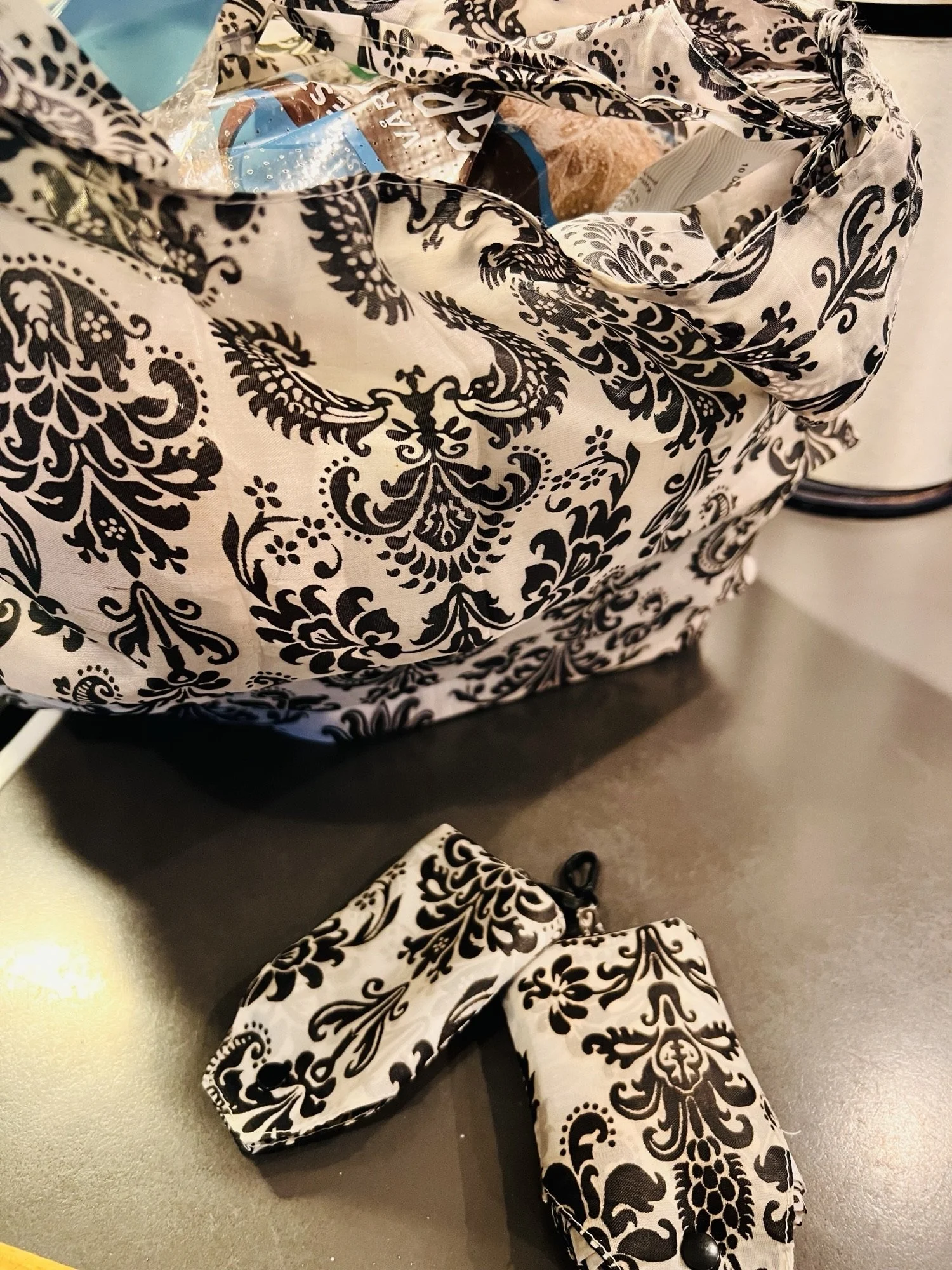
My go-to foldable, reusable bags.
This past week, I was in Arendal, and I took the two reusable bags out of my purse to make room for a gift that I was bringing for the classroom teacher. When I got back to the hotel after school, I dropped off my heavy backpack and set out exploring the town. I forgot to put the reusable bags in my purse, so, when I was lured inside a store with their discounted little Christmas trolls, I didn’t have a bag with which to carry the items.
Gah! “Jeg trenger en polse, takk”. Not only was it embarrassing to tote the blue plastic bag around Arendal, but I also had to pay for the plastic bag. Plastic bags are not free in Norway; seventy cents for a blue plastic Clas Ohlson bag. Gah!
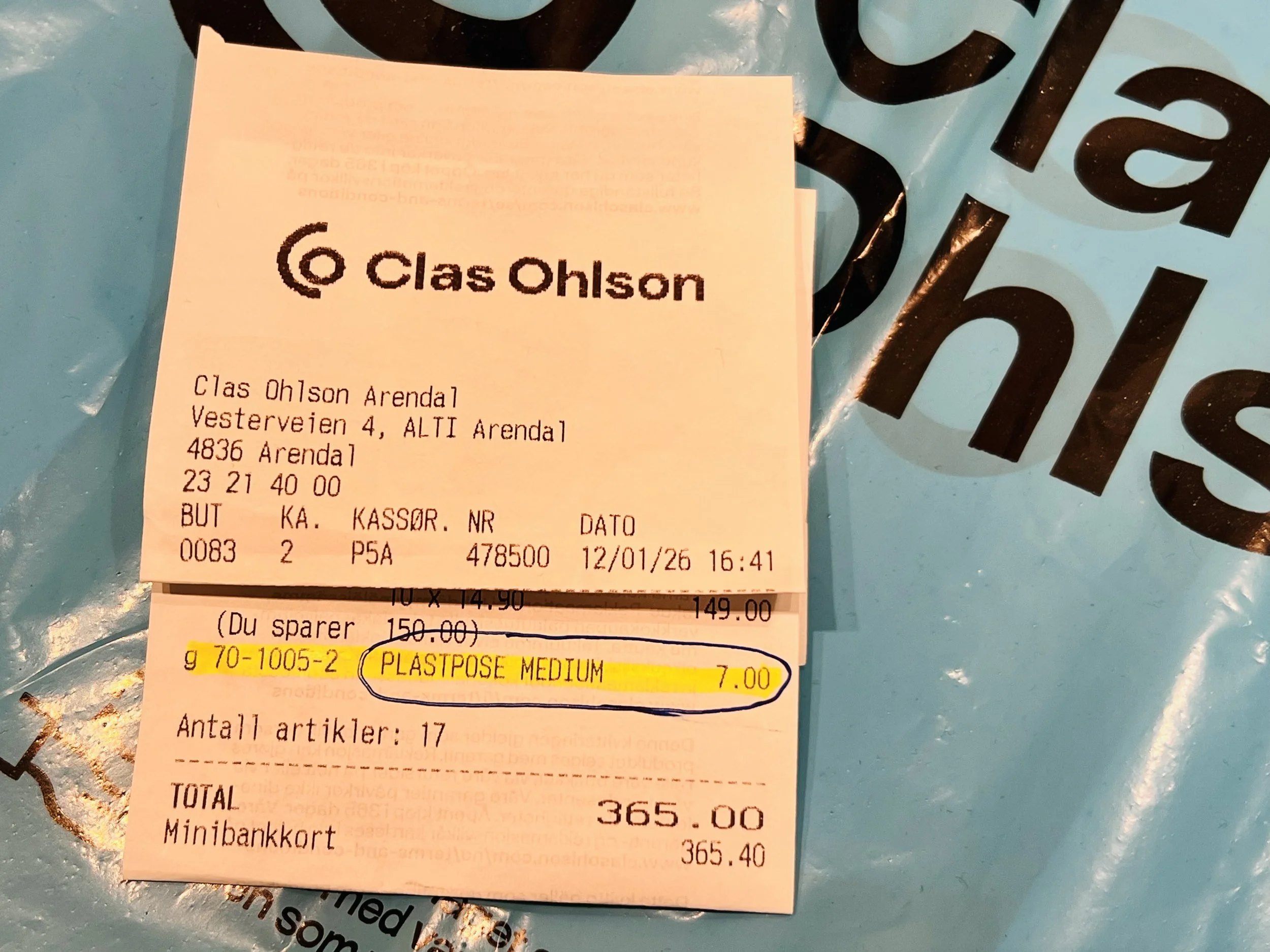
My Clas Ohlson receipt. Seventy cents for the blue, plastic bag.
While I am embarrassed to have purchased a plastic bag in Norway, I’m actually ashamed of my own shopping habits back in the United States. I always carried reusable bags when traveling internationally, but not when shopping in the US. Why? Perhaps it’s because it’s not expected.
Prior to COVID, I really did make an effort to use reusable bags, but when the pandemic hit, reusable bags were not allowed in stores. I never really got back into the habit of using cloth bags after that. In the US, it was not uncommon for me to leave a grocery store with 20+ plastic bags; some with only one item, because the store didn’t want bags breaking due to the weight of an item or overfilling them. I had reusable bags in the trunk of my car, but rarely did I remember to bring them into a store (Note: the bags probably shouldn’t be stored in the trunk…).
However, I always brought reusable bags for purchasing produce at ALDIs because they charged for bags in the US. It was expected that customers bring their own bags, and we did. There’s a theme here…if the expectation is that customers bring bags, customers bring bags. Image if all stores in the United States had this expectation? I’m confident that we’d see an incredible decline in the demand for plastic bags.
Sadly, I acquired volumes of bags over time, so I compressed the plastic bags together and brought them to a recycling center. That is how I quietly justified the use of the plastic bags; they were being recycled. But then I learned that the bags aren’t always recycled or repurposed, but sometimes burned in incinerators or shipped to third-world countries to be buried. Uff!
There is a lovely children’s book story about plastic pollution titled One Plastic Bag: Isatou Ceesay and the Recycling Women of the Gambia (Paul, 2015). It’s a charming story about women in Gambia who grew tired of the negative effects of plastic bag pollution, from killing cattle when consumed, to harboring disease. The women took the initiative to collect, clean, and transform the bags into purses and other longer-use items. The story showcases an important problem-solution example, promotes recycling, and prompts ecological awareness from the reader.
Prior to my departure to Norway last summer, a local community organization announced that they were repurposing plastic bags and transforming them into industrial park benches. I delivered my bags of bags there and look forward to seeing the park benches this summer. However, as I think about my return to Minnesota, I don’t want plastic bags being transformed into other things. I want to avoid repurposing plastic bags and reduce my use of them altogether. It isn’t difficult to bring and reuse bags and it’s certainly better for the environment. I do it regularly now, so I just need to make it a priority back home.
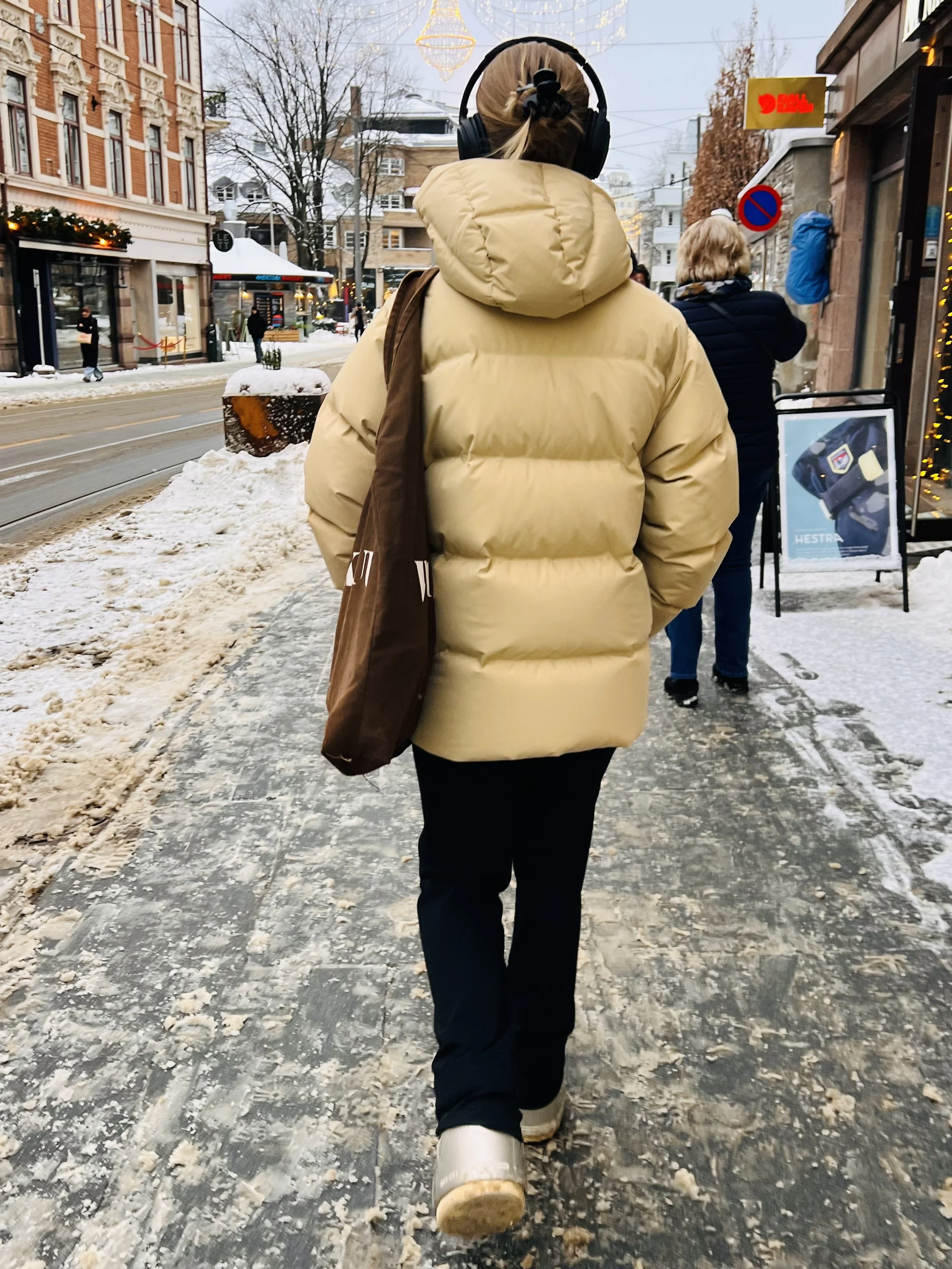
Most people can be seen carrying a cloth bag in Norway.
Reference:
Paul, M. (2015). One Plastic Bag: Isatou Ceesay and the Recycling Women of the Gambia. Millbrook Press.
