
Hjerter (Hearts)
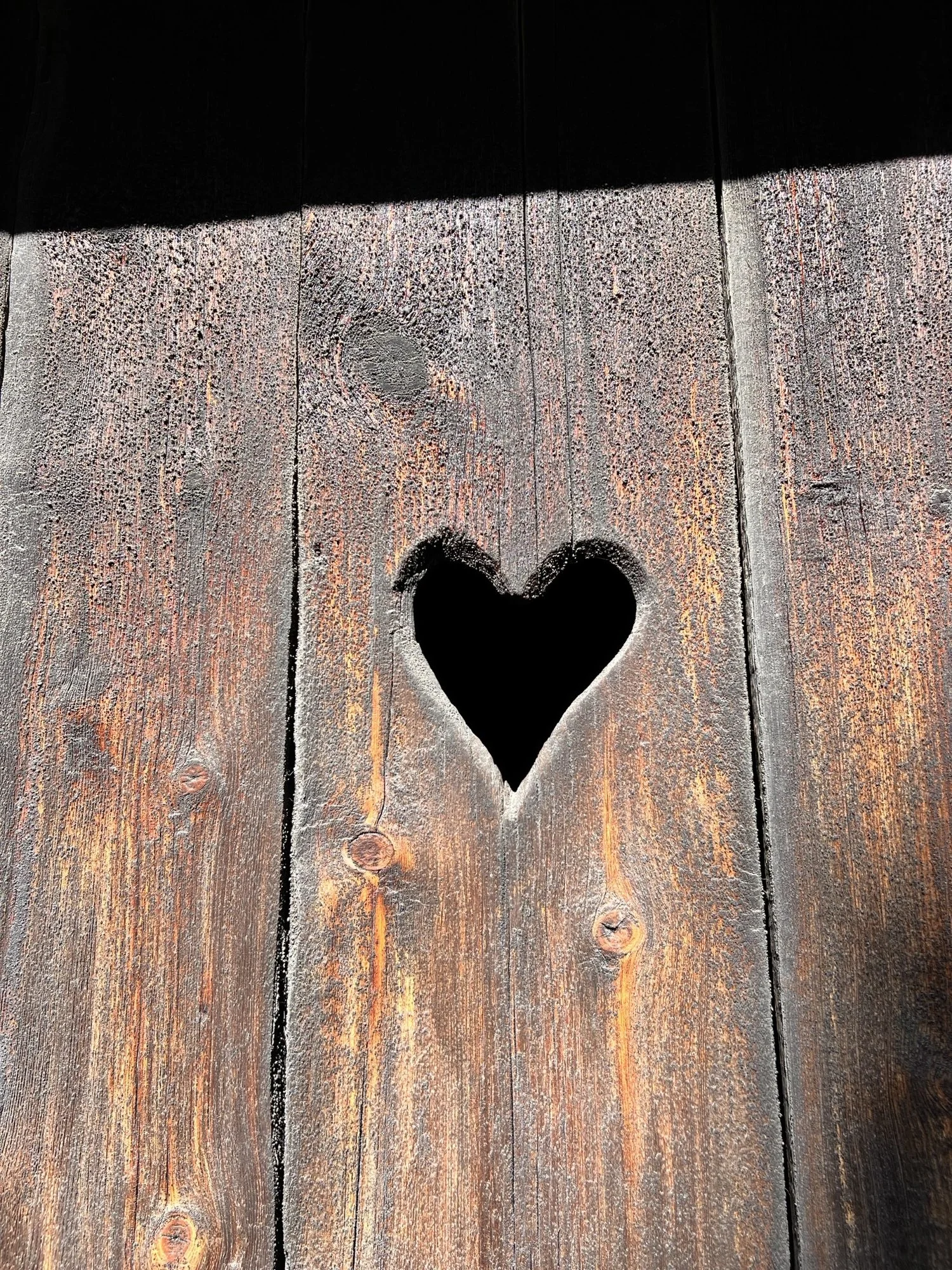
A wooden cut-out of a building at the historic Folk Museum in Oslo.
During one of my first school visits in Norway, I noticed that many businesses in Volda had the same heart sticker in their storefront windows. Walking through the town, there was a reoccurring heart theme with hearts on houses, buildings, and fences. I initially thought that the town had chosen the heart symbol as a type of mascot. However, I soon realized that the entire country is connected by the heart and its symbolism of love and kindness.
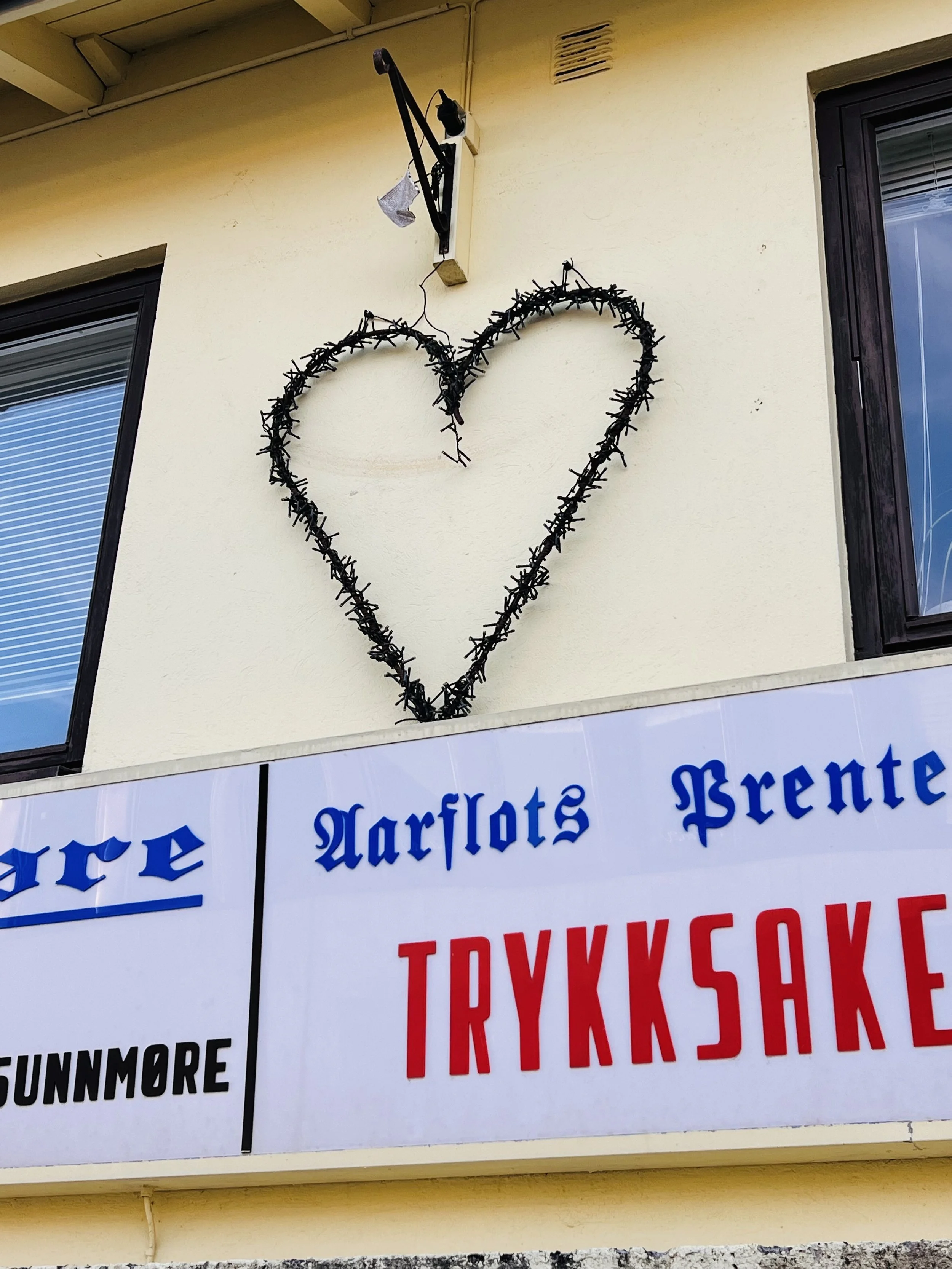
Businesses display hearts in Norway.
The heart is a visual metaphor for love, unity, and connection to heritage in Norway. The origin of the heart can be traced back to traditional folk art as a symbol of love and goodwill. The symbolism is still true today.
The Norwegians have a phrase, “Der det er hjerterom, er det husrom” that roughly translates to “where there is love, everyone is welcome.” It is similar to the United States’ expression “home is where the heart is.” However, the Norwegian expression is more inclusive, as it is not just limited to a physical space; love is open for everyone in both physical and emotional spaces.
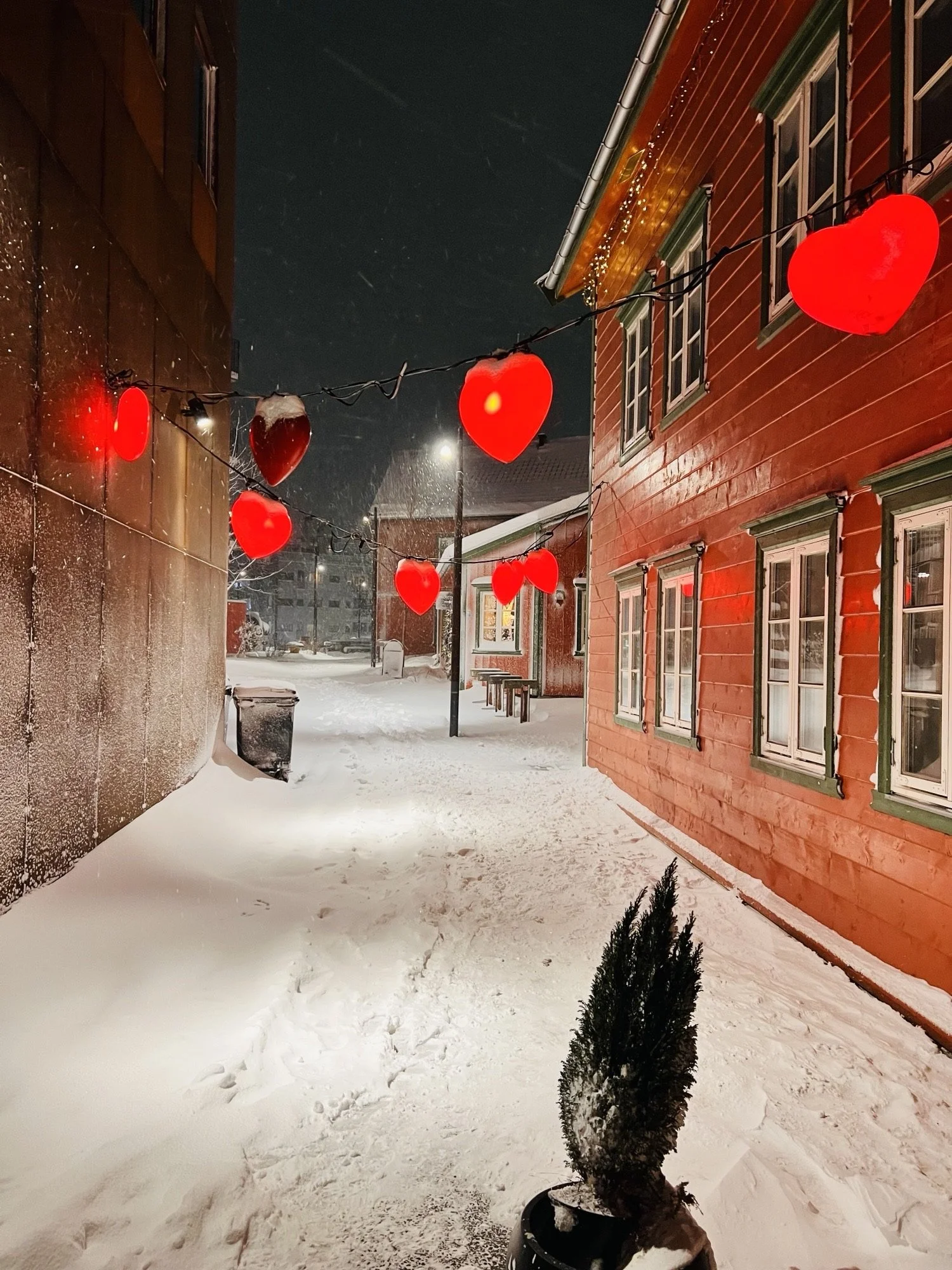
Decorated street in Tromsø, Norway.
Hearts can be seen in festival or holiday decorations, indoor outdoor décor, jewelry (brooches), and food (waffles). Hearts are cut out of wooden window shutters and outhouse doors. They are embedded in floors, printed on napkins, and displayed on the outside of homes and businesses.
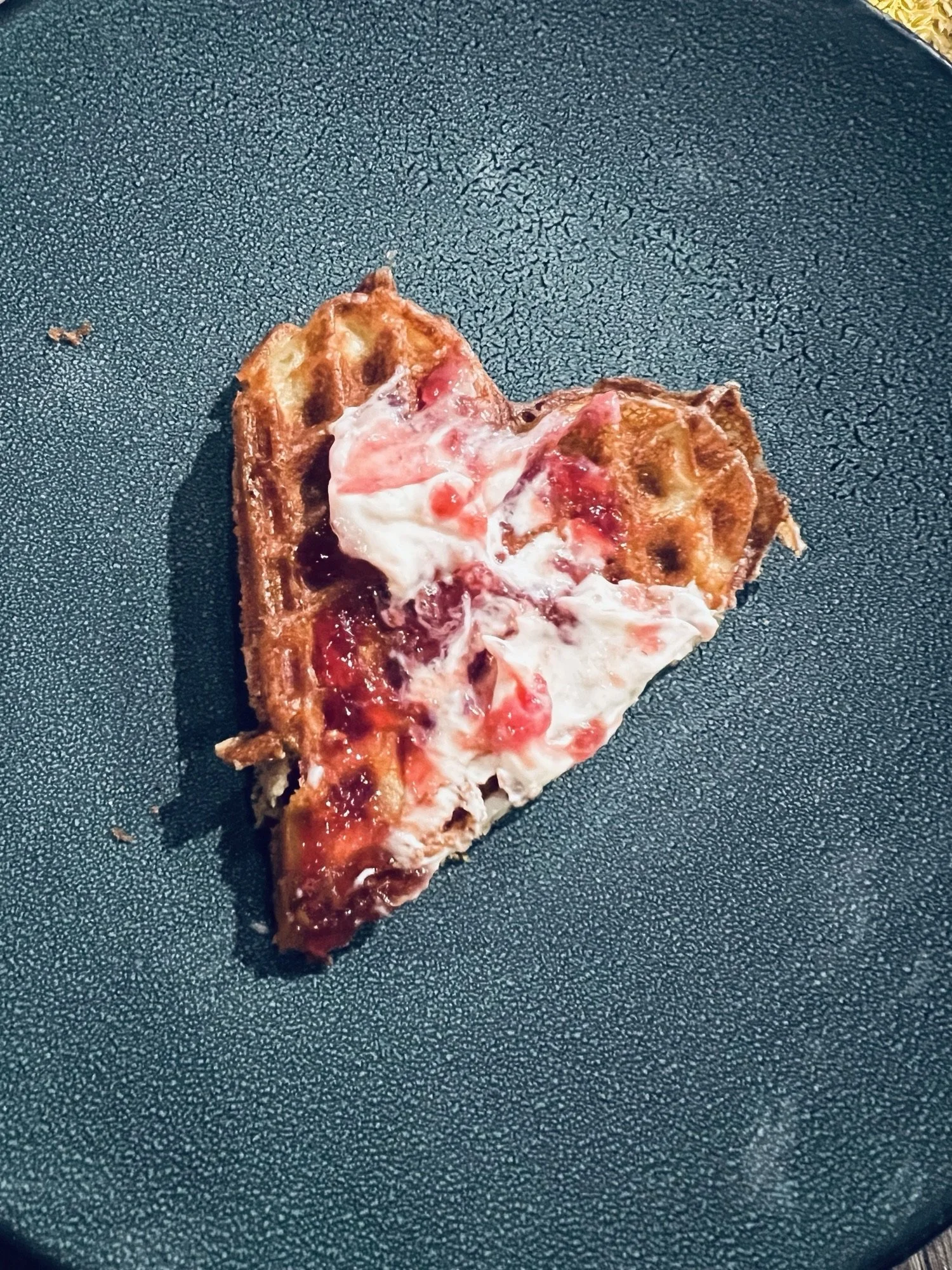
A heart-shaped waffle with sour cream and raspberry jam.
It’s easy to see how a heart could become symbolic of Norway because the people are so loving and kind. Last week, when my husband was learning how to cross-country ski, a Norwegian man stepped behind my husband and helped him up when he fell. Just this past week, a teacher ordered lunch for me so that I wouldn’t need to buy anything from the grocery store before school. Another teacher printed off their sourdough starter directions for me because I had mentioned to the class that I was on a mission to learn how to bake Norwegian bread. A student even gifted me a chocolate bar and encouraged me to try all of the great Norwegian chocolates. I could go on and on with examples such as these.
I’ve been attempting to post examples like this each day on Instagram to document my observations and admiration for all things Norway. It helps me to seek out new and interesting things every day. One day, when I was writing hashtags for a post, I saw the hashtag #Oslove and learned that it is a very popular label. Oslo + Love = Oslove is used as an endearing label when referencing things in the capital city of Norway. In fact, it is one of the top 10 hashtags referring to Norway.
However, the Norwegian term for love (with strong connection or emotion) is actually elsker. If you really like something, like a friend, the correct verb is glad. Interestingly, the Indigenous Sami name for Oslo is Oslove (nrk, 2025). I find it fascinating that a hashtag used to label things with adoration in Norway is the same printed word used by the Sami peoples to refer to Oslo.
As I continue to travel throughout Norway and visit with ungdomsskole pupils and teachers, I know that I will see more hearts and be the recipient of caring sentiments and acts of kindness. There is so much love in and for Norway, and I am forever grateful for the opportunity to be here serving as a Fulbright Roving Scholar. Jeg er så glad for å være I Norge.
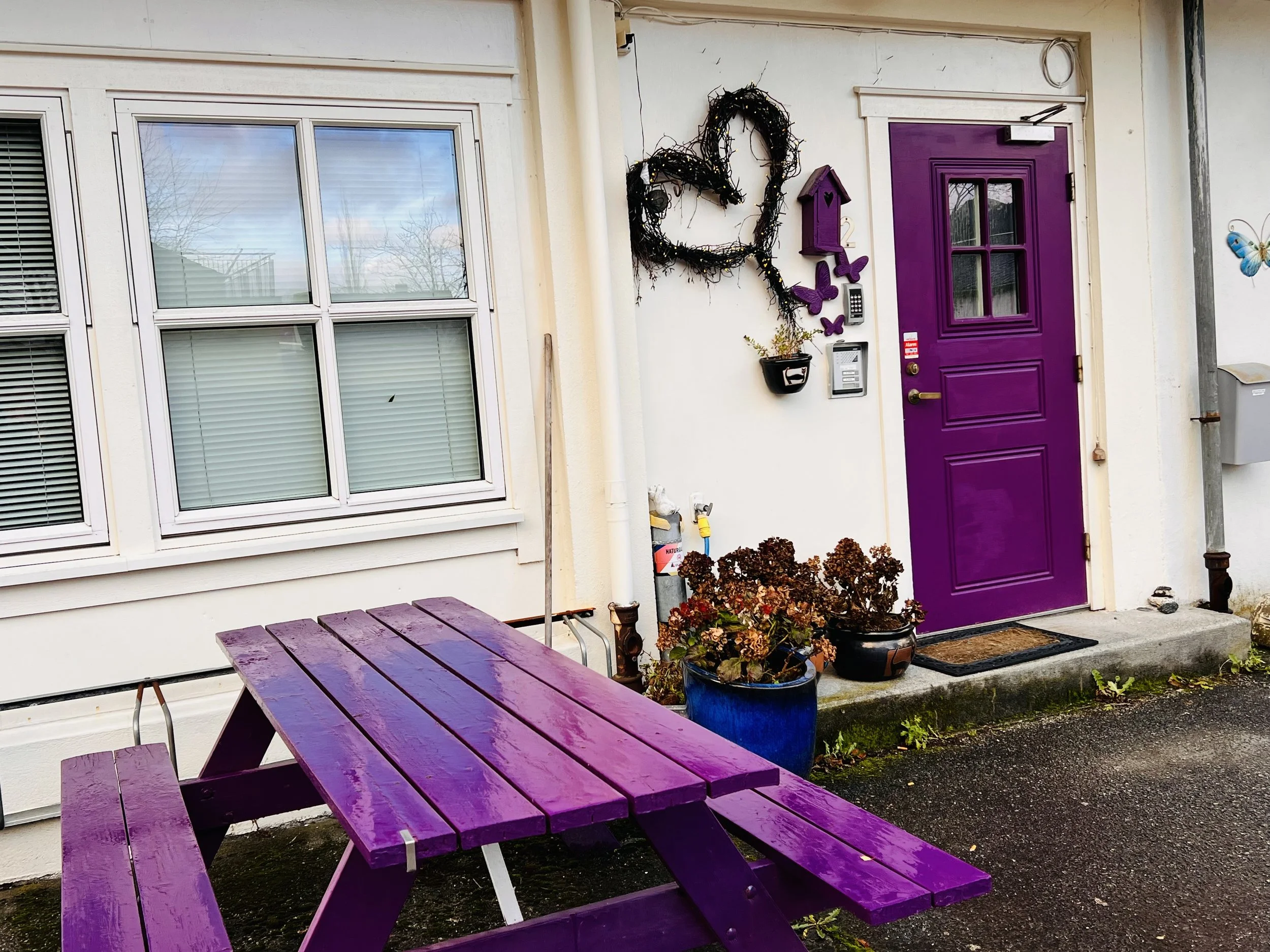
A heart on a home in Nordfjord, Norway.
Reference:
nrk. (2025). Oslo commune har fått samiske navn. Retrieved from https://www.nrk.no/stor-oslo/oslo-kommune-har-fatt-samiske-navn-1.17547071
