
Offentlig Transport (Public Transportation)
Appen EnTUR (The EnTUR app)
Norway has an incredibly efficient public transportation system. The EnTUR app allows one to enter location and destination and the app will generate a travel plan using all modes of travel, except planes. The app is incredibly useful for checking accessibility and availability of travel. In some areas, such as Vadsø, for example, buses don’t run on Saturdays. Knowing that ahead of time helps plan properly for travel. The app is always up to date, with delays and changes in tracks. Tickets are also purchased on the app, which makes it very convenient.
Taxien (the Taxi)
I’ve only used a taxi three times in Norway. The first time was to get from the airport to my apartment, with 6 bags, when I arrived in Norway. I could not have managed that on the train or bus, but the cost was over $100.
The second time I used a taxi was due to the lack of bus transportation to a small town that I was visiting. There was no bus line, so a taxi was necessary. The third time that I used a taxi resulted from exiting a train too early. I needed to get to a meeting on time and since there were no buses or trains arriving quickly, I needed to call a taxi. It took 40 minutes for the taxi to arrive at the remote train station, and the ride cost $220. Needless to say, the taxi is not something that I would use unless absolutely necessary.
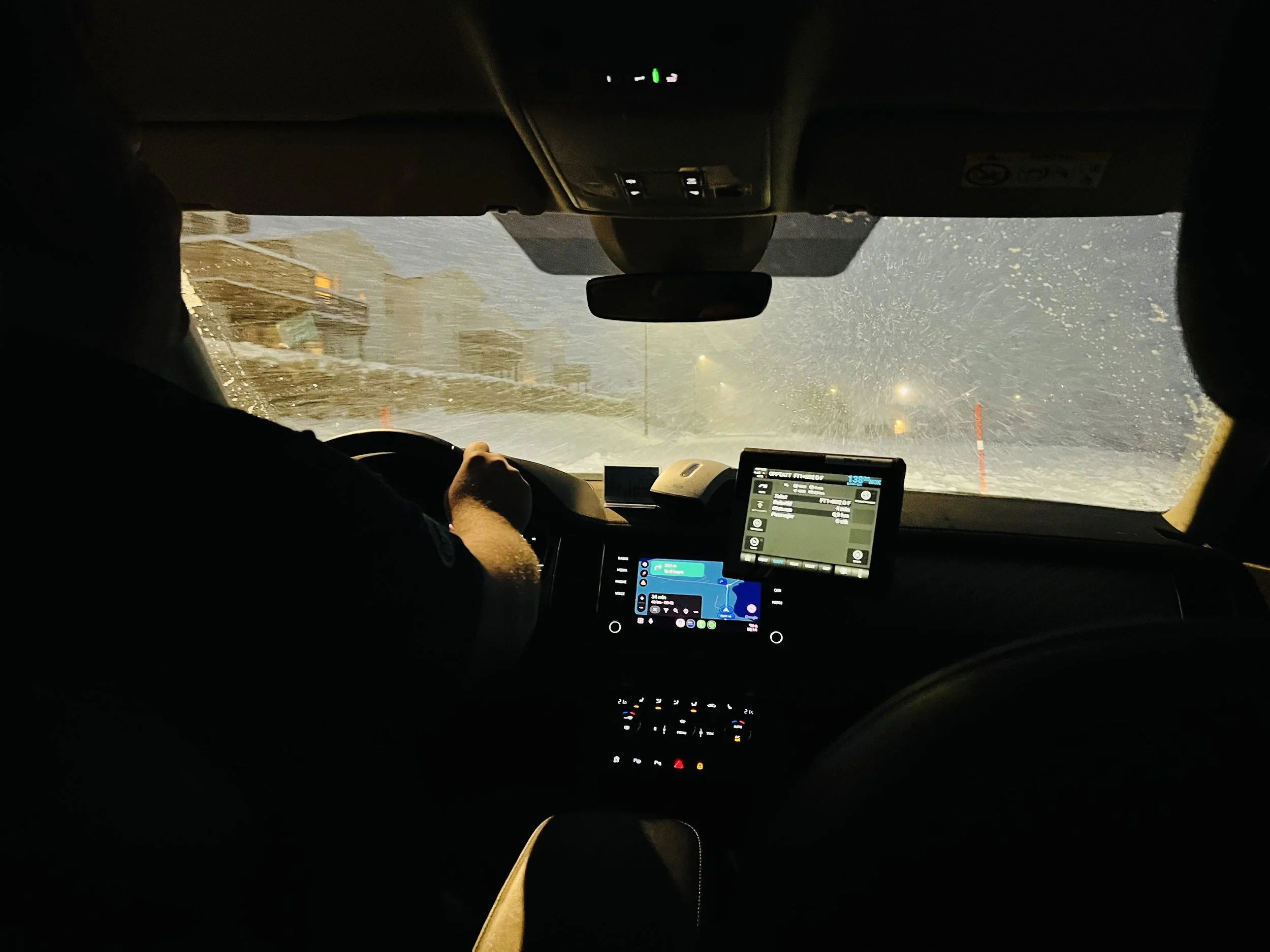
Taxi ride in Flatanger.
Flyet (The plane)
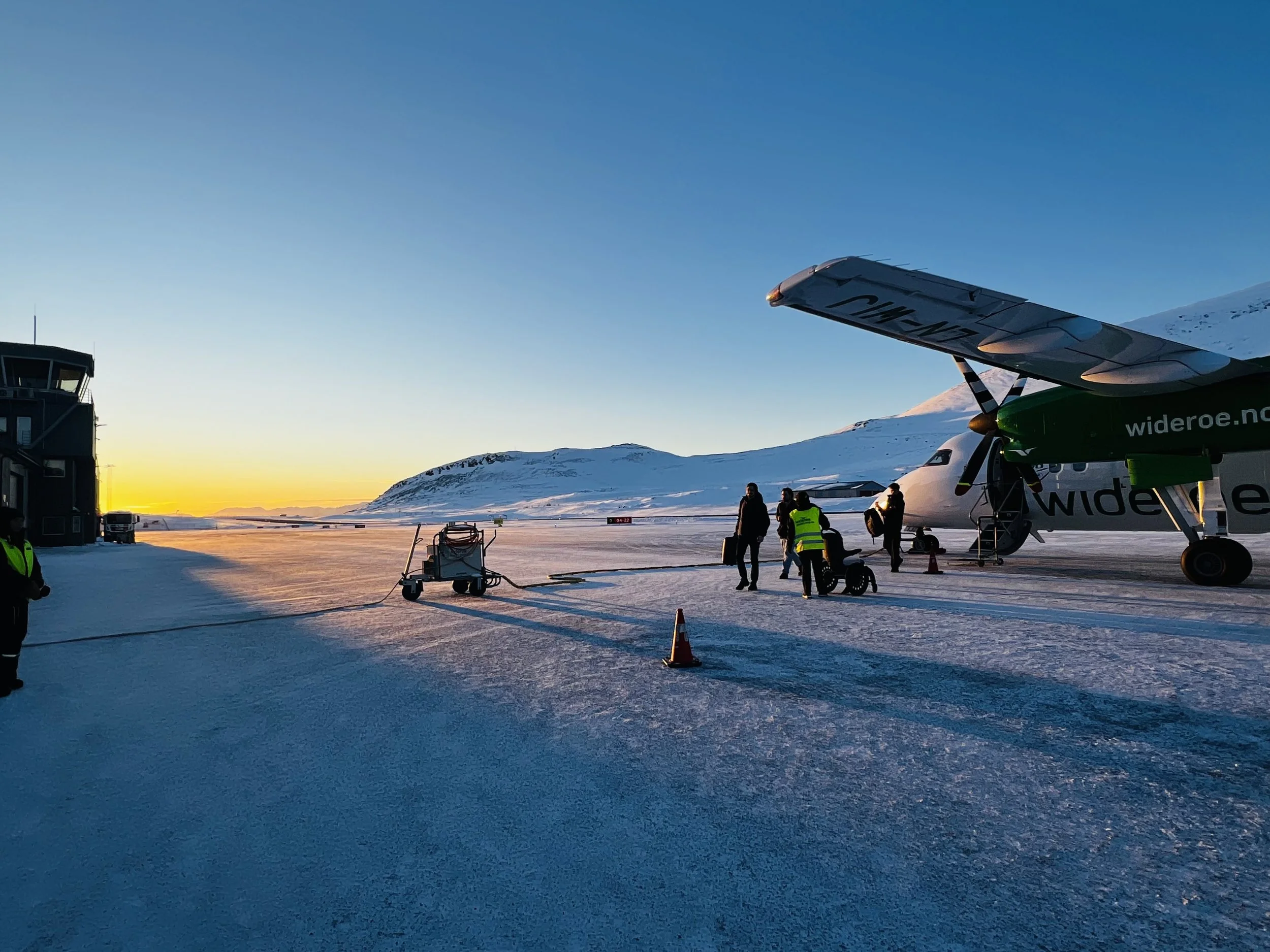
Sunset at a small, regional airport in Norway.
Truth be told, I don’t like flying anywhere. However, 20+ hour train and bus routes are not ideal and the flights in Norway are typically very efficient. When you arrive at the airport, approach a ticket kiosk and enter your information, where a boarding pass and baggage tickets are printed. You place the baggage ticket on your suitcase and load it on a flat track or place it in a grey, metal breadbox-looking bin and scan the bag tag. The scanner registers the bag is either transported along the track or the metal breadbox closes, and your bag is on its way!
Head to security where you must scan your boarding pass in order to stand in cue for security. There is the usual scramble to unpack electronic devices and remove coats, scarves, and oversized anything. However, the Norwegian security workers don’t yell. They point a lot and are quite patient.
From security, head to the bathrooms and find a water bottle filling station. There is usually a line at the water station, but it is well worth the wait. First, the water is free. Secondly, the water is cold and completely tasteless - incredible!
Norwegian airports don’t tend to have a lot of seats in the waiting areas, but the facility is incredibly quiet, so even if you are left standing, it’s rather peaceful.
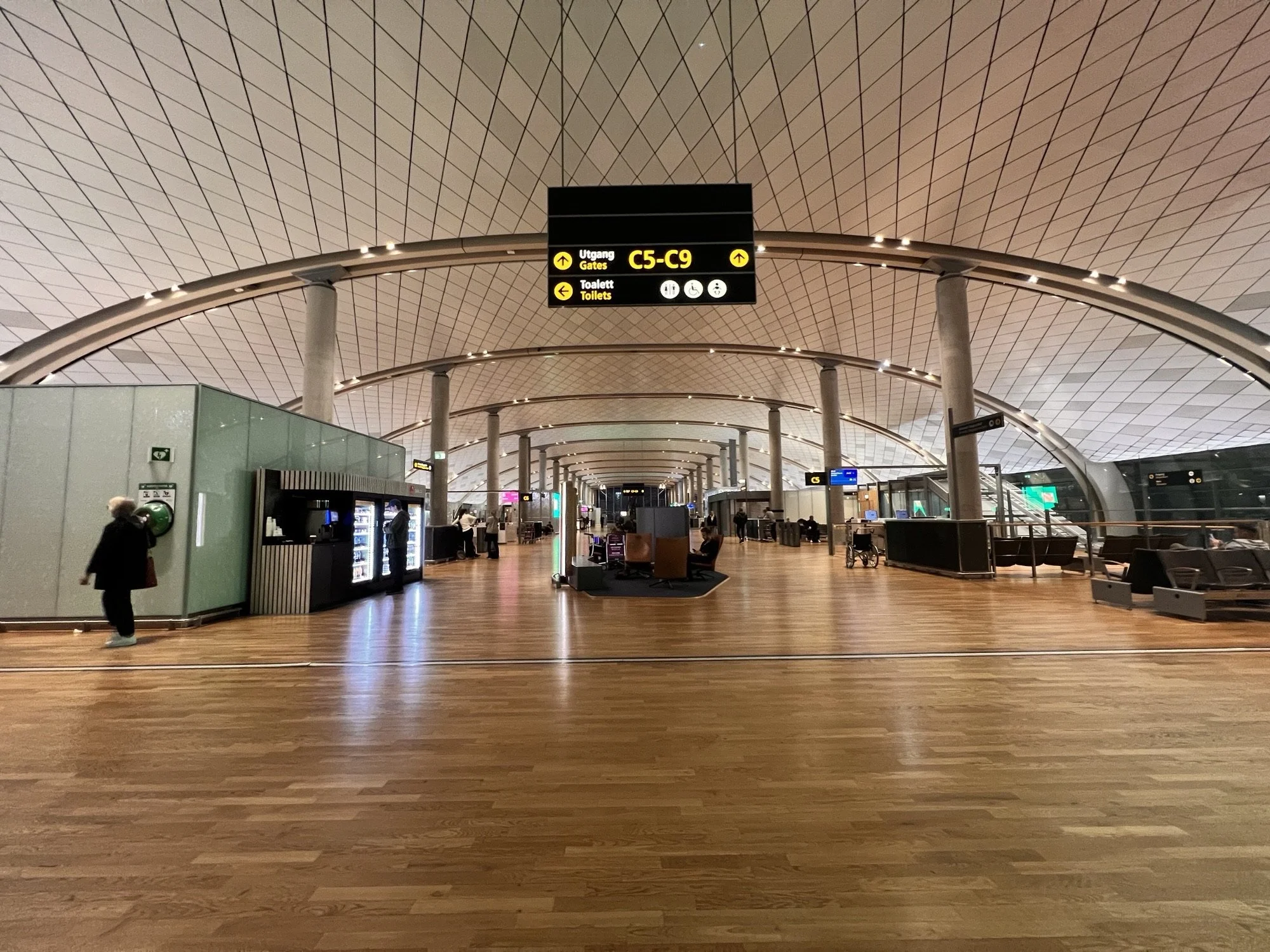
Oslo airport.
Again, for efficiency, groups are called using a recorded message and people gather in cue to scan their boarding passes on an electric sensor. If your group has not been called, or you are attempting to get on the wrong flight (oops), the gate will not open for you. If your seat is number 21 or higher, you may board the plane from the back of the bus. That means that you need to take the stairs that lead outside and climb the external stairs to board the plane. Boarding from the front and back of the bus; boarding time is cut in half! When the plane lands, there may be two exiting options as well.
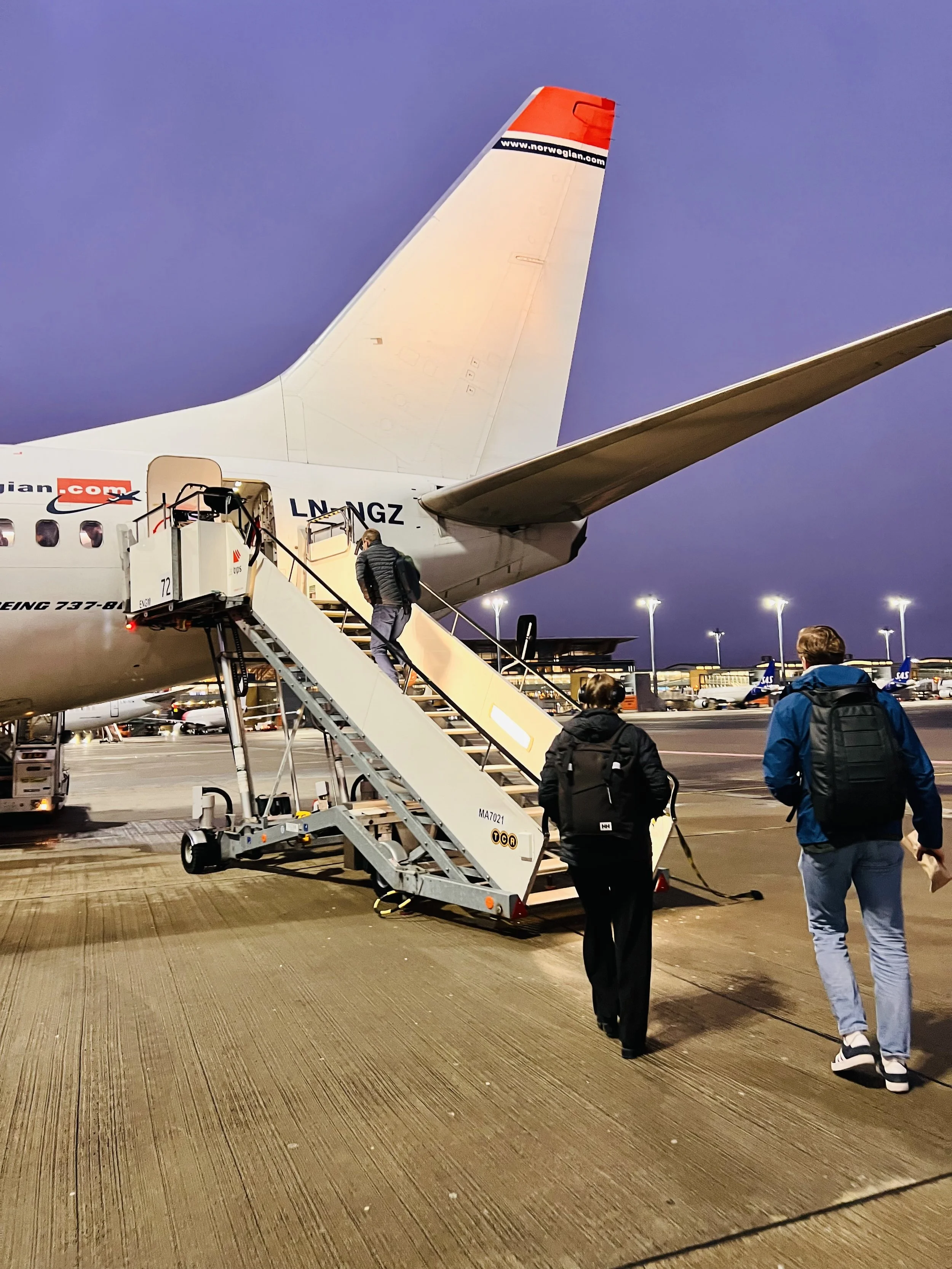
Boarding the plane from both the front and back doors.
The flights are absolutely no fuss. There are no fancy, first-class seats and no fancy meals. The only difference I’ve noticed is that priority seats can choose from coffee, tea, water, and soda while those in the regular seats are offered coffee, tea, and water. If you fly on a small, little plane with Wideroe, you are offered a cute little chocolate.
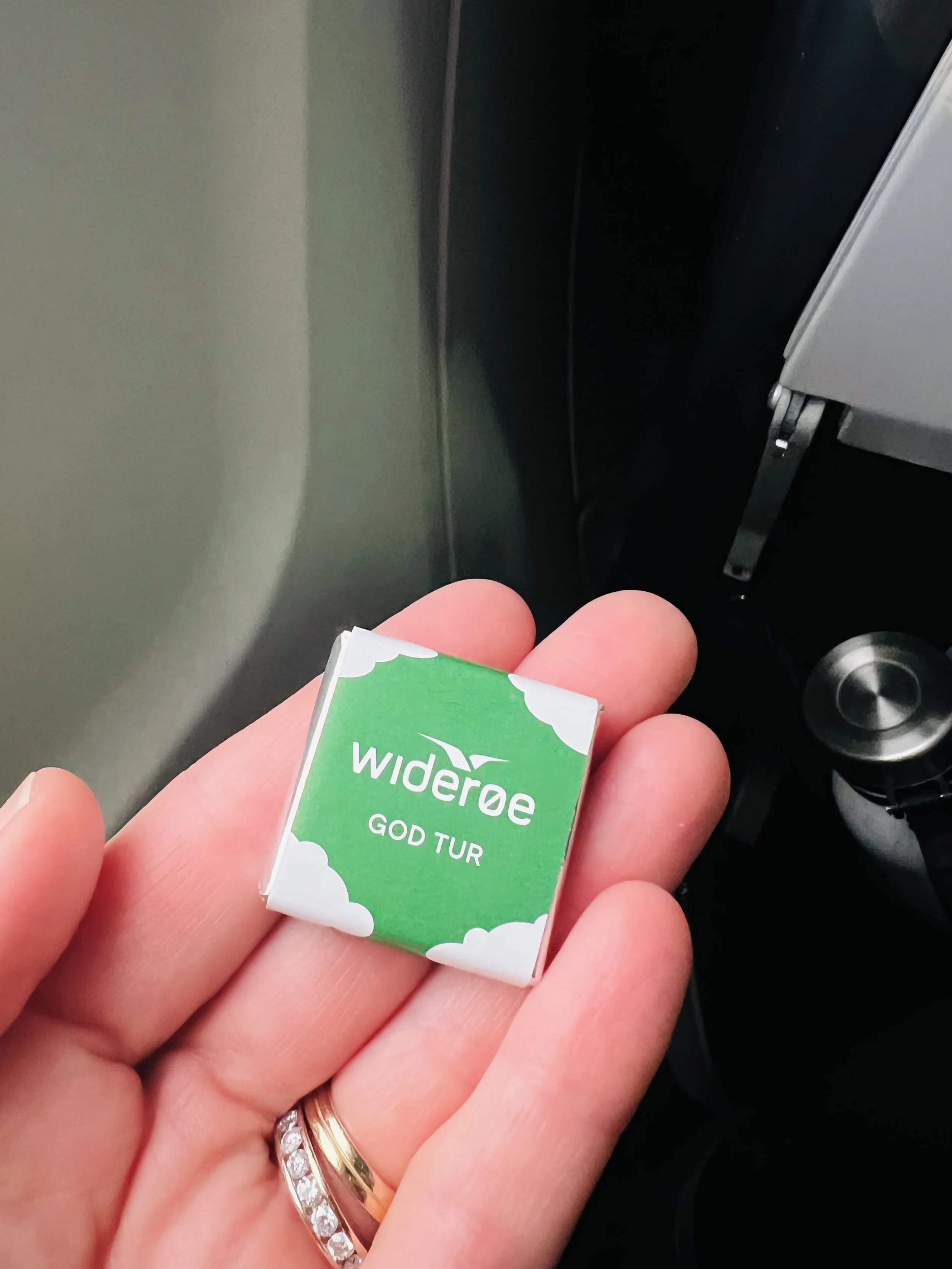
A little chocolate from Wideroe.
Fergen (The ferry)
The ferries are an incredibly fun mode of travel in Norway.

Ferry in Hisøy. The boat captain was sure to tell me that it was the OLDEST ferry boat operating in Norway.
In Arendal, the ferry ride is a quick 5-minute trip across the waterway and in Volda, the ferry is a 10-minute trip across the river. In Risør, the ferry is a longer, 20-minute, scenic ride to a remote pick-up/drop-off point. In Kristiansund, the ferry system transports people between four different islands.
In Arendal, step aboard the boat using a little step ladder. I was never asked for my pass in Arendal, although I always paid in advance using the EnTUR app. In Risor, one of the boat captains collects payment with a credit card machine. In Kristiansund and Volda, the ferries are free.
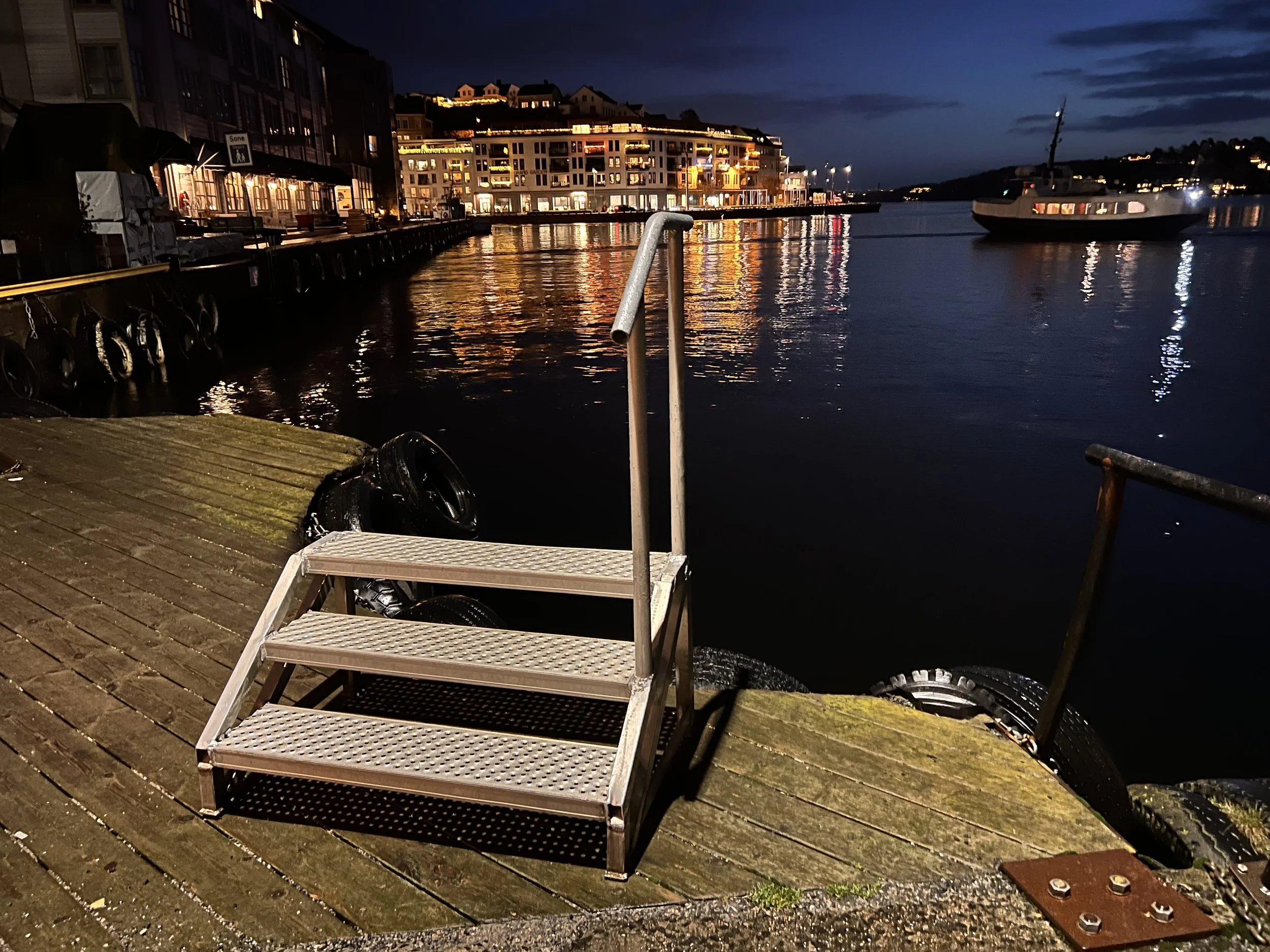
Ferry platform in Arendal.
I really do enjoy the ferry rides. While most people head below deck or ride inside, I tend to be the (only) one outside gazing at the scenery and taking lots of pictures. People board quickly and quietly and converse in hushed tones. This would be my preferred daily commute, if given the chance.
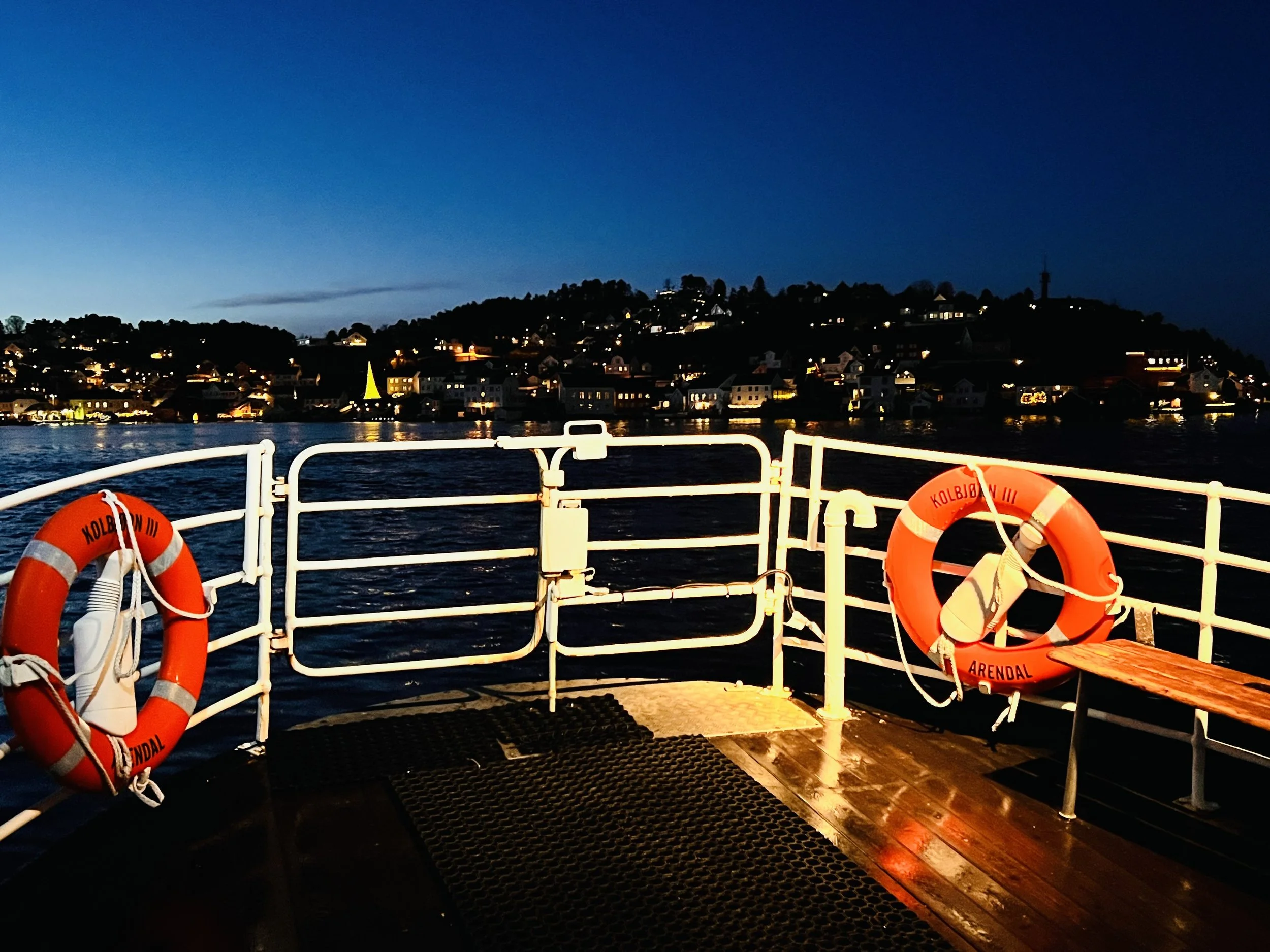
Morning ferry commute in Arendal.
Bussen (The bus)
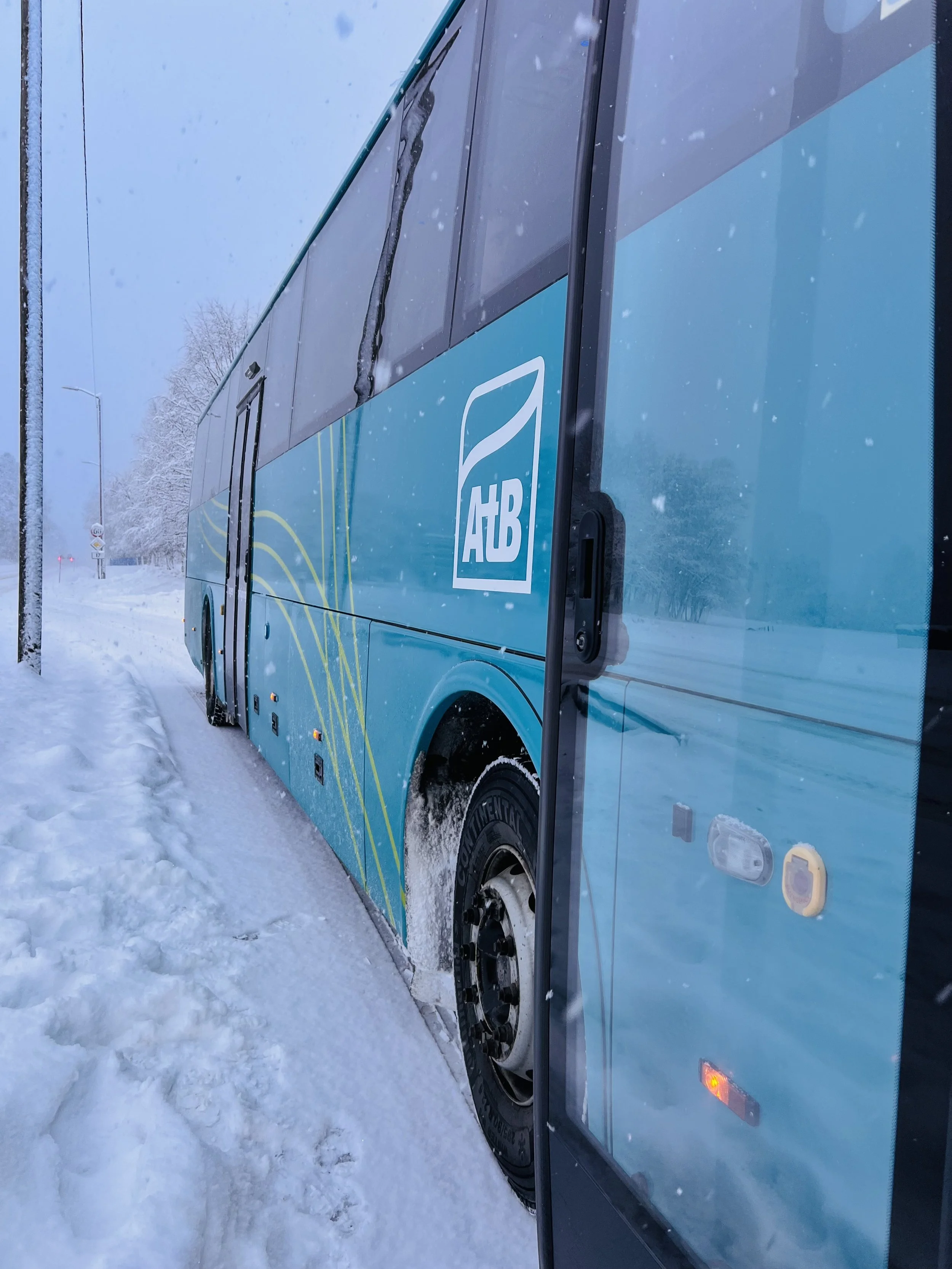
A public bus in Norway.
The bus is my least favorite mode of transportation in Norway due to the variation in rules and protocols. Sometimes you board the bus at the front door by showing your EnTUR ticket (bus trips leaving the city), while other times the expectation is to board from the side doors (buses within the city). If a ticket inspector boards the city bus and asks to see your ticket, you must immediately show your ticket.
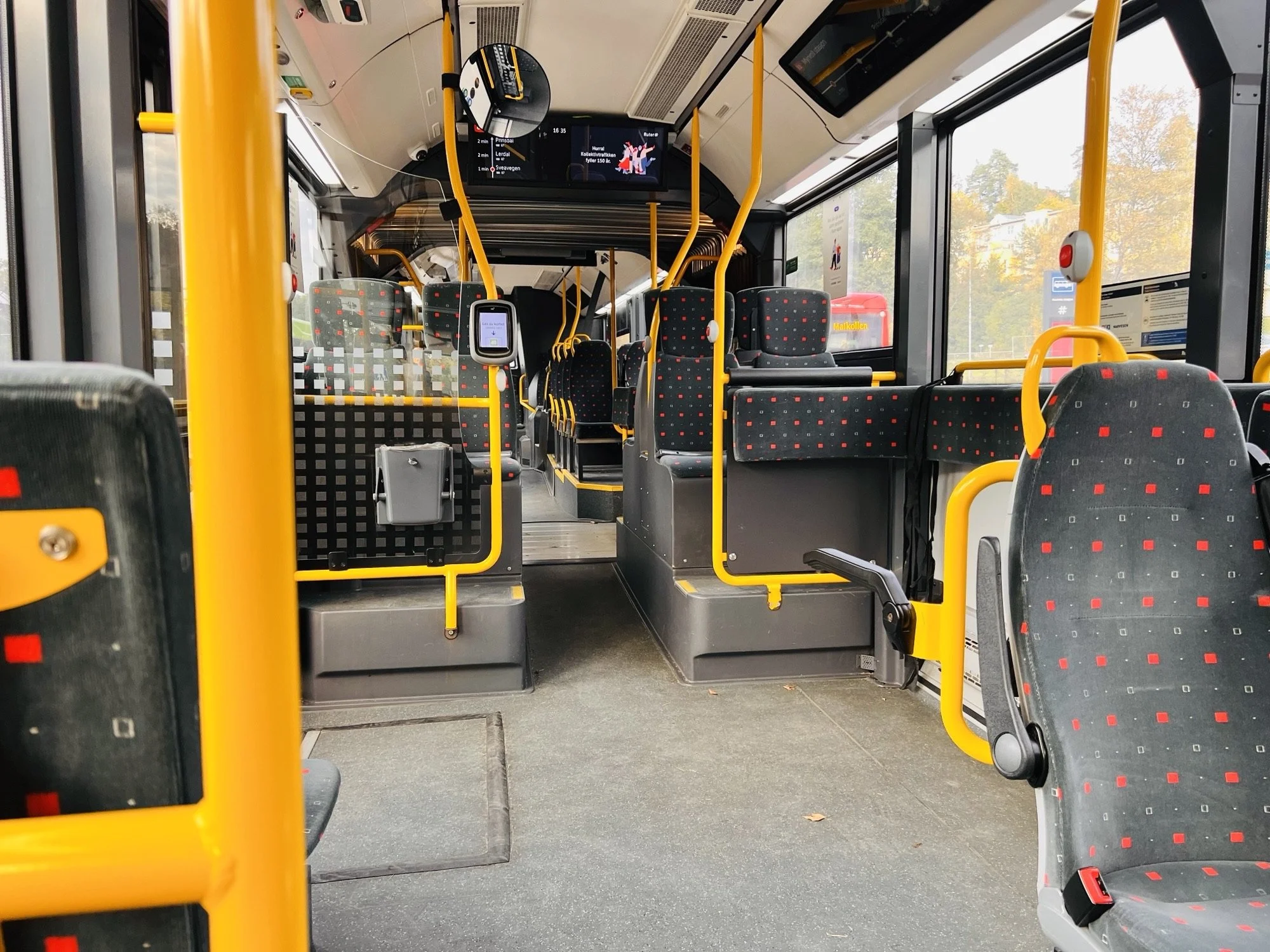
A city bus.
Baggage can also be an issue. For regular city buses, bring them on the bus as you board from the side door. For buses leaving the city, sometimes the bus driver wants you to place your suitcase underneath the bus and other times you just bring it with you on the bus. Sometimes you bring your suitcase on the bus, but the bus becomes so overcrowded that you’re asked to put the baggage underneath the bus.
When you ride the bus, you need to be extra-alert. Most buses have screens that indicate upcoming bus stops. When you see that your bus stop is the next one in cue, you need to push the STOP button closest to you or the bus driver may not stop. This sounds easy enough, but sometimes there are no screens, and you don’t know which bus stop is coming next. In those cases, you will need to check the EnTUR app to view the live map showing where the bus is going and where it is in relation to your stop.
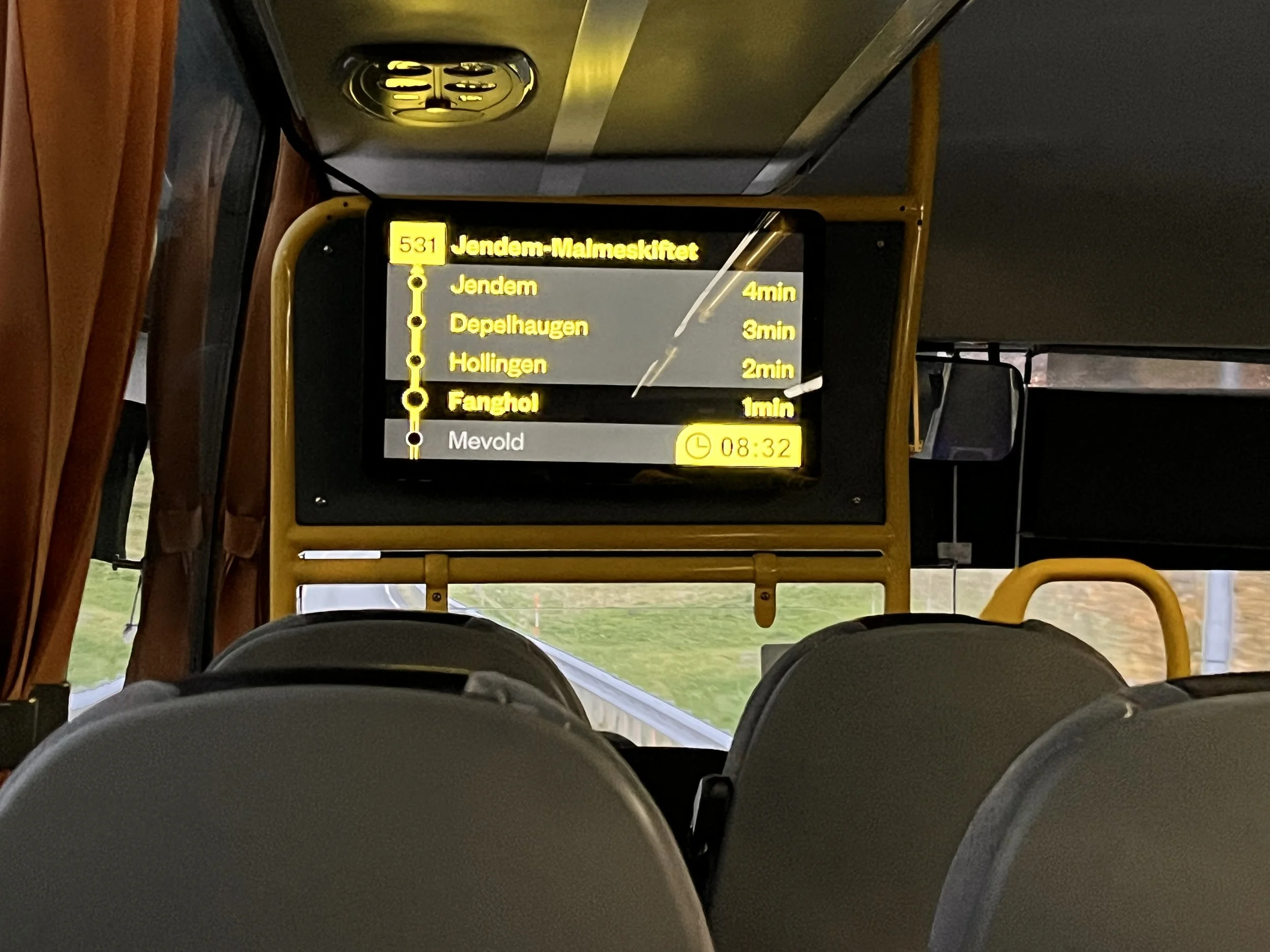
The bus route and schedule.
The EnTUR app isn’t always accurate either, so leave early and be flexible. I recently took a city bus in Trondheim and ended up at the bus drivers’ ‘resting lot’. The driver asked me what I was doing (still on the bus). I asked what he was doing (the EnTUR app said that we were off the route). He directed me to get on the bus next to us. Fortunately, the new bus stopped at a familiar spot, and I took the correct bus (same number bus as the one that just kicked me off) to the school destination. If ever in doubt, politely ask for help and someone will assist you.
Even though the buses may not be my favorite mode of transportation, the views are spectacular and even the bus stops can be quite lovely.
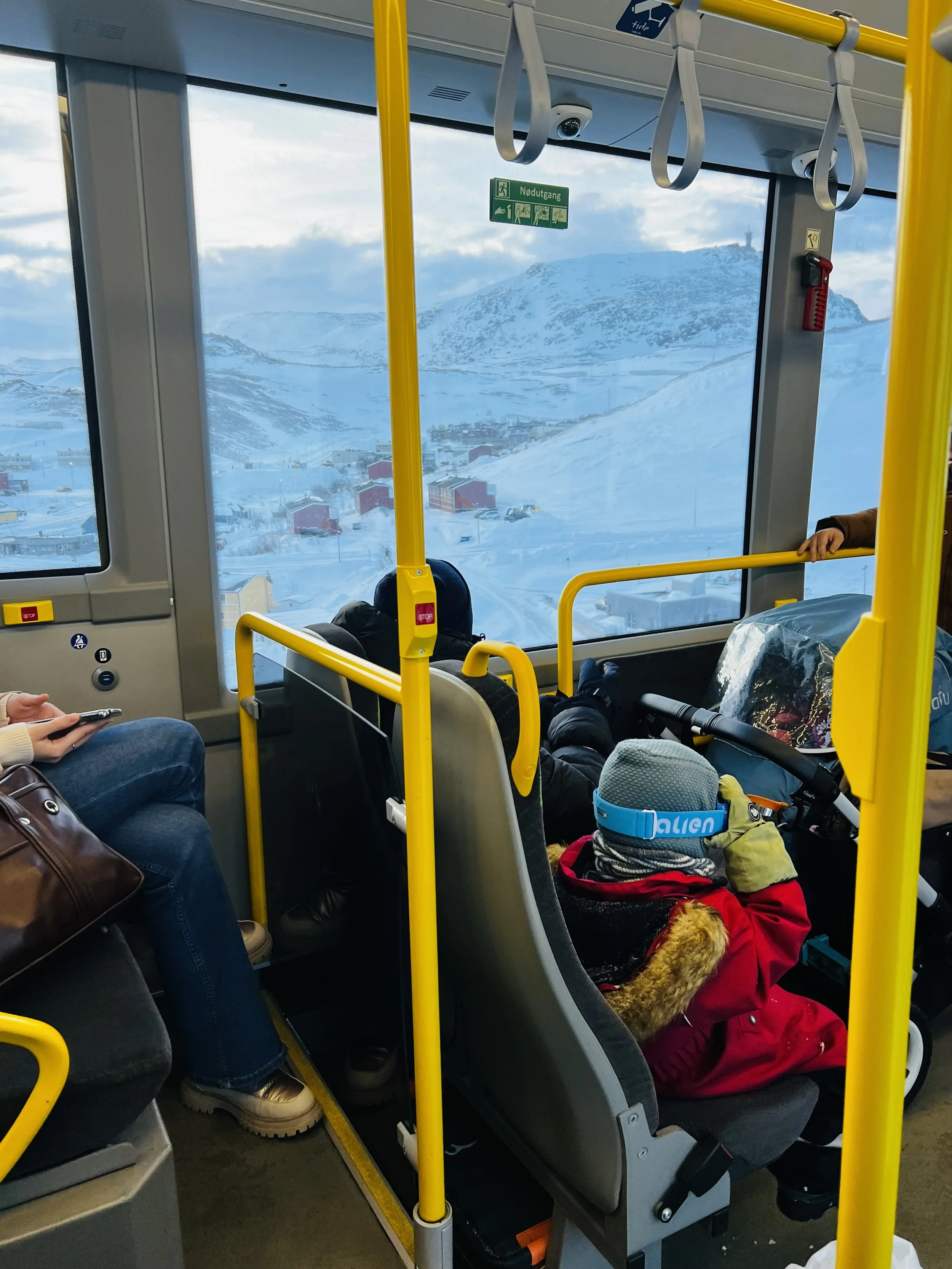
Incredible views from the bus in Hammerfest.
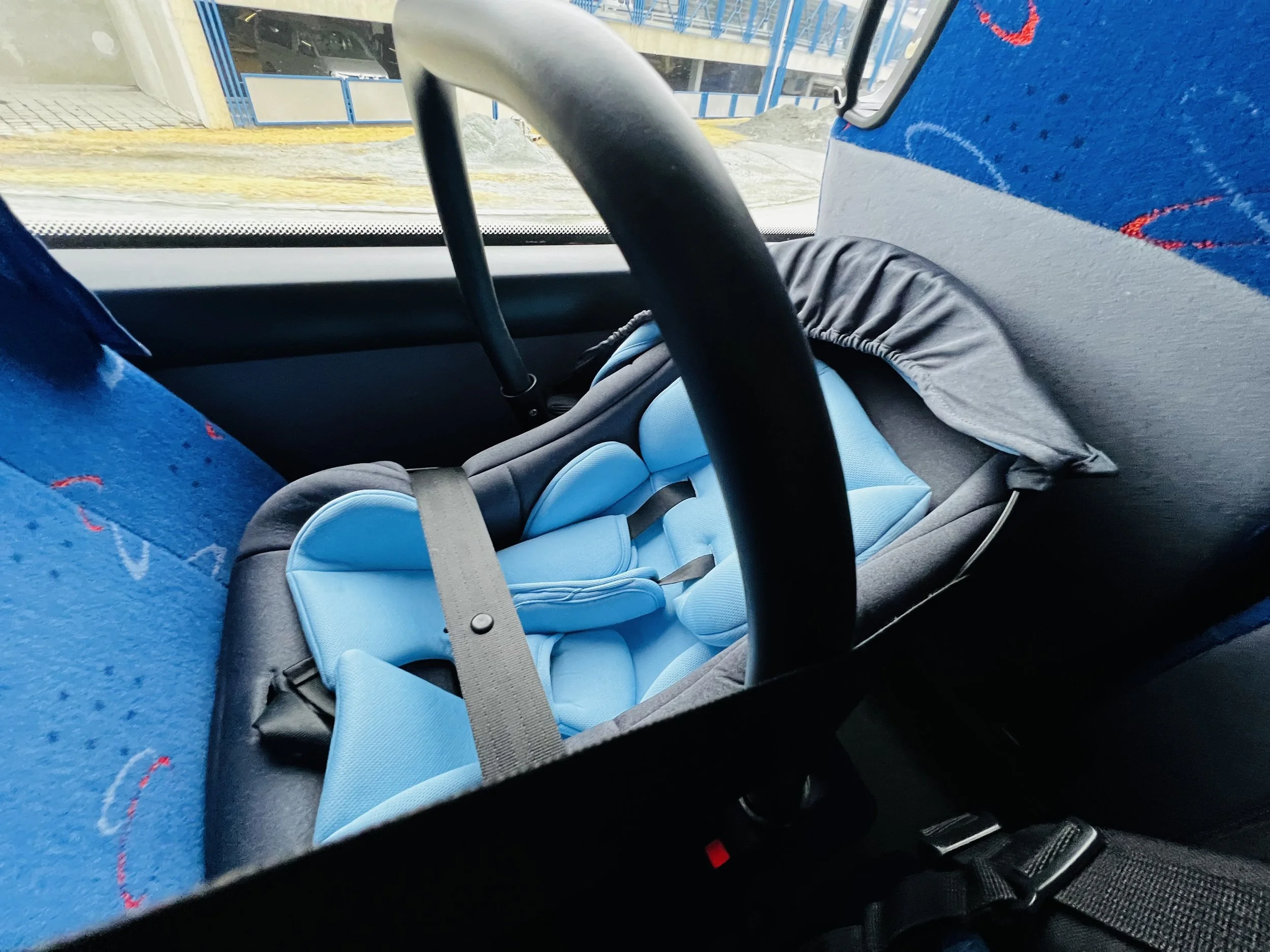
An infant car seat was available on this airport shuttle bus.
*When you are traveling on a bus outside of the city limits, be sure to wear your seatbelt.
T-Bane (City subway)
My apartment in Olso is conveniently located nearby the Majorstuen T-Bane terminal, so I can essentially hop on any subway headed east and arrive at the main train station, Oslo S. This ideal location makes it my go-to mode of traveling within Oslo, if weather conditions are poor. If the weather is fine, I prefer to walk from place to place.
I purchase a monthly pass from #Reuter (yet another app), and have it ready for inspection should I need to present evidence of purchase. This doesn’t happen a lot, but if an inspector asks for your ticket and you don’t have one, or if it’s expired, you can be fined 1,500 kroner (about $150).
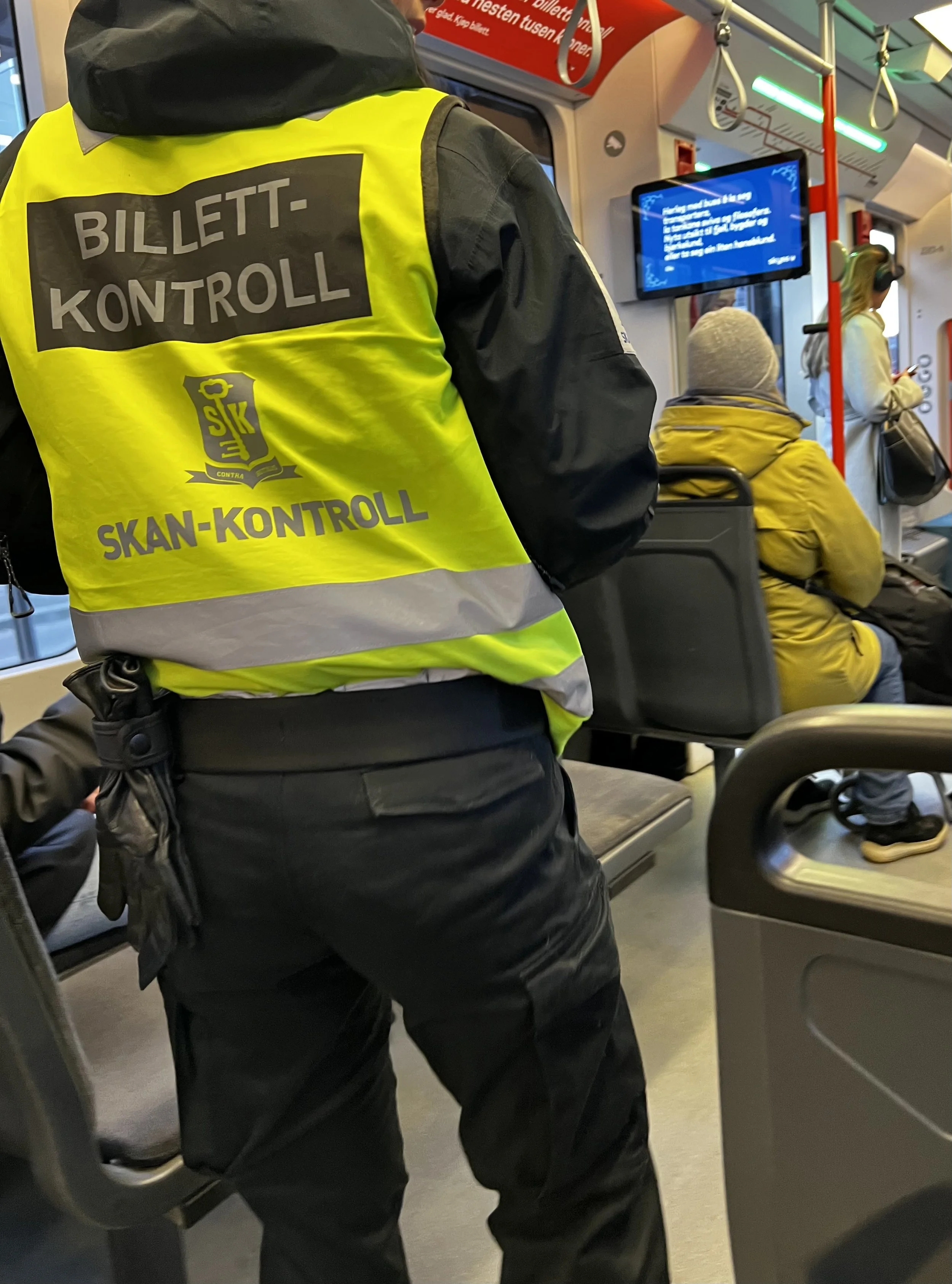
Tickets are purchased online. Passengers must always be ready to show their tickets.
When traveling on the T-bane and buses, it’s important not to sit next to anyone, if at all possible. Secondly, don’t initiate small chit-chat with anyone. Exceptions might be smiling at a child or dog. When you arrive at your station, push the circle button on the doors to initiate opening. The crowd outside will allow train passengers to exit first – so remember to step aside when boarding the train.
Trikken (The tram)
This is the mode of transportation that I have used the least. Not because it isn’t fun or interesting, it’s just that the T-bane station is so close to where I live that it’s the most convenient for me.
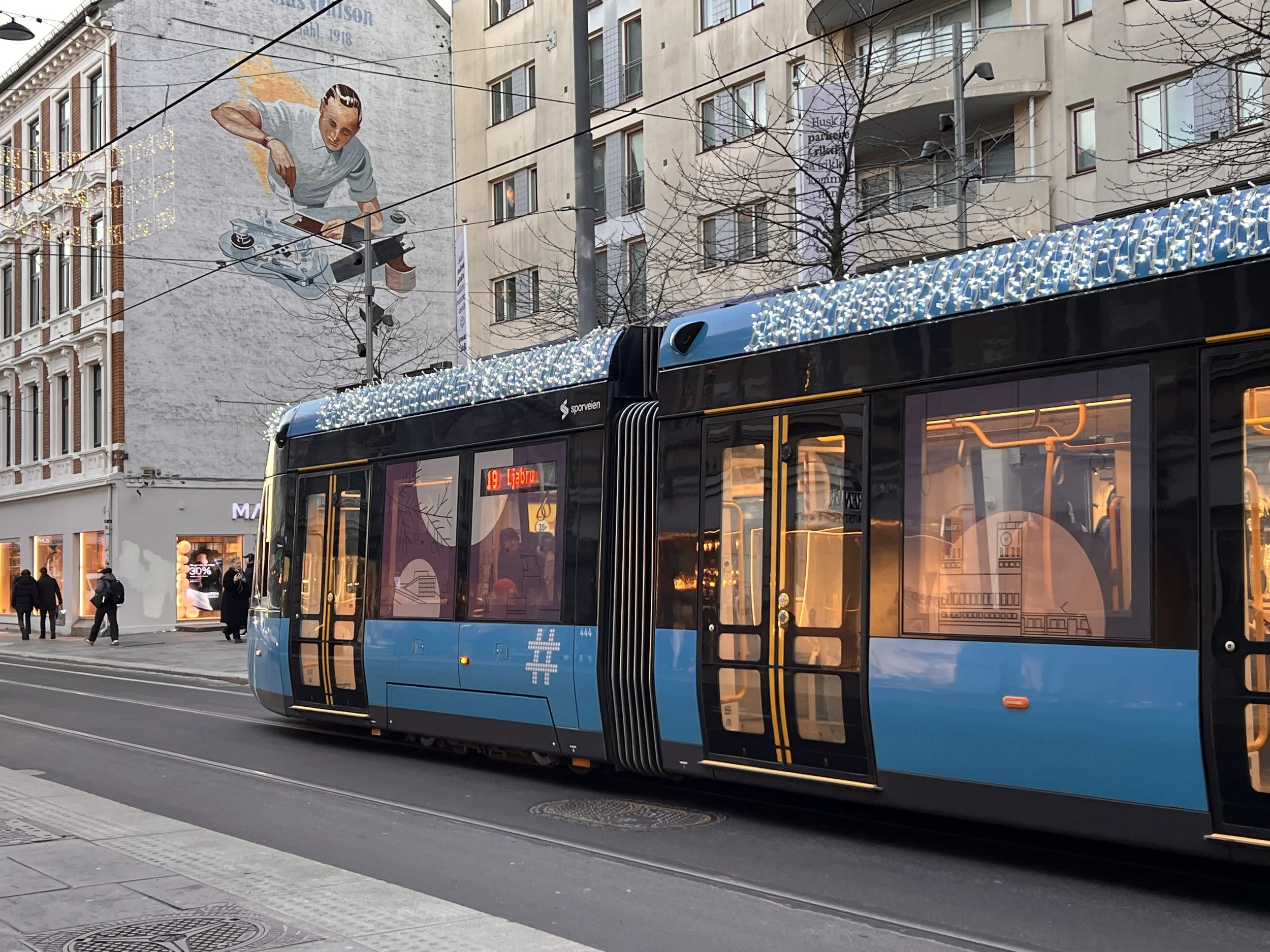
This tram in Majorstuen, Oslo, had lights for the Christmas season.
The same ‘rules’ that apply to the T-bane also apply to the Trik.
Toget (The Train)
The train is my all-time favorite mode of transportation in Norway.
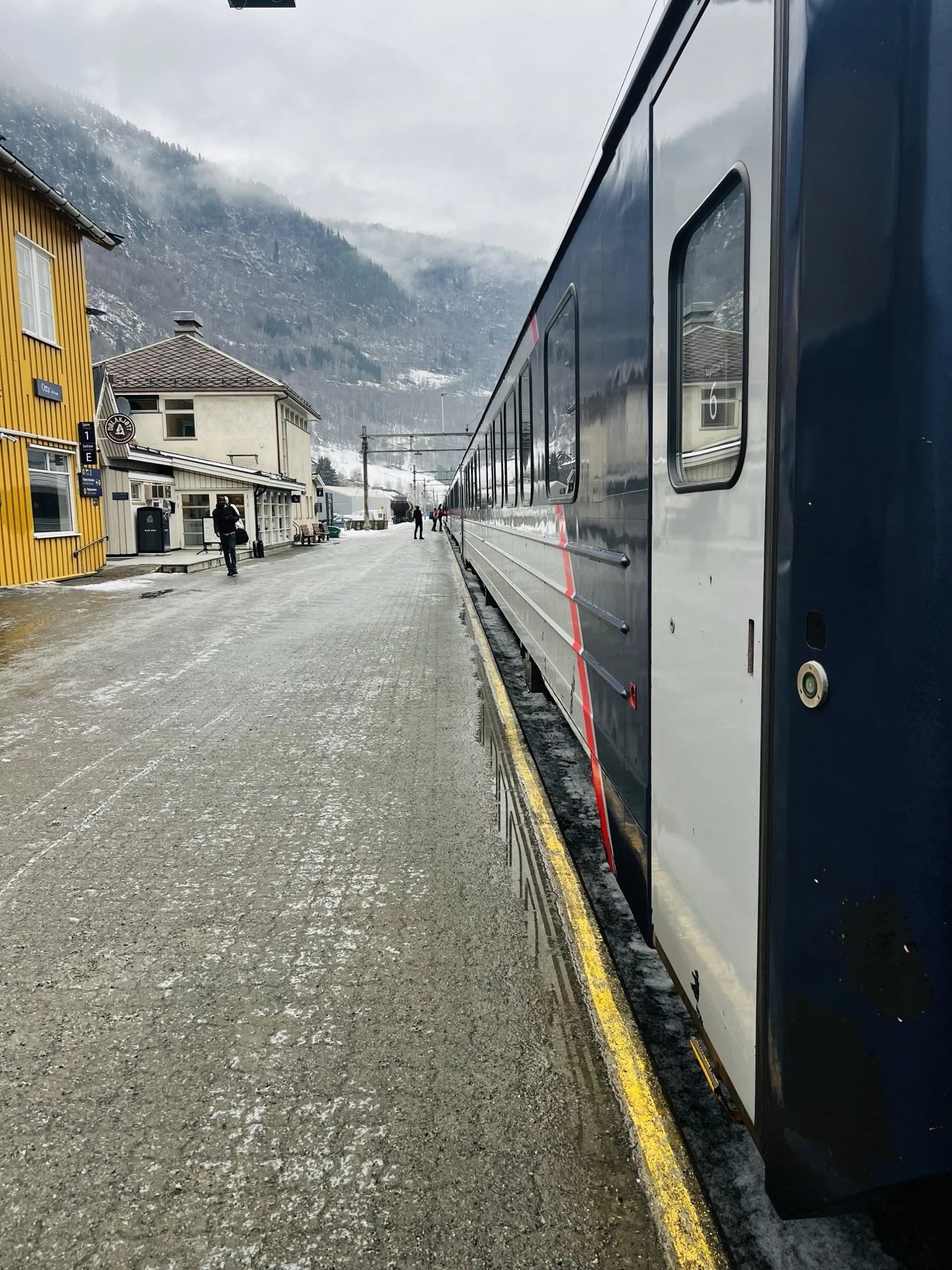
The train station in Otta.
Trains to and from the airport are hit-or-miss with congested chaos. Sometimes you find yourself on a quiet train with a seat apart from anyone else and ample space to read and relax. Other times, the train is packed like sardines and you struggle to find an orange bar to which to hold so that you don’t bump into the person next to you as the train trudges along.
At some point in the journey, a conductor will ask for your online ticket. Tapping on the EnTur app, a QR code and a moving image will appear to validate the ticket purchase.
The longer distance trains are my favorite. When I book the ticket online, I try to purchase a window seat that is not next to anyone (Norway is rubbing off on me!). I use the extra space to spread out my computer and work items.
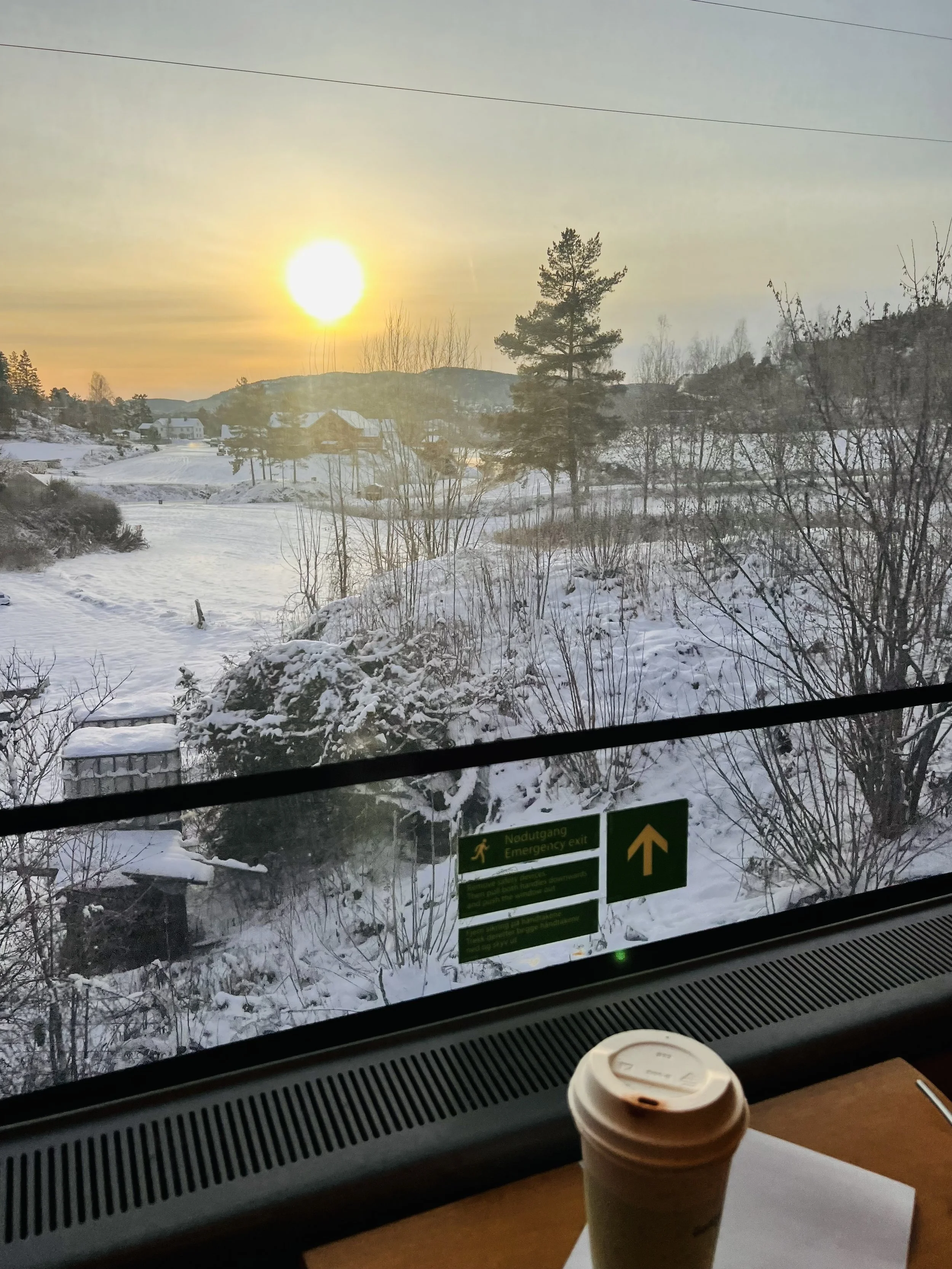
More incredible views from the train.
The train is nice because you can get up and walk to the bathroom (which is always clean!). You can also go to the café car and enjoy a coffee, hotdog, or waffle, while leaving your things at your seat. You don’t need to worry about anything being stolen or disturbed. The best part is the view. As the train meanders through mountains or passes parallel to rivers, it’s like a movie playing in front of you. The downside of this incredible view is that (truthfully) not a lot of work is accomplished on train rides and if one is not careful, they may exit at the wrong stop… requiring a $200 taxi to get to a meeting on time.
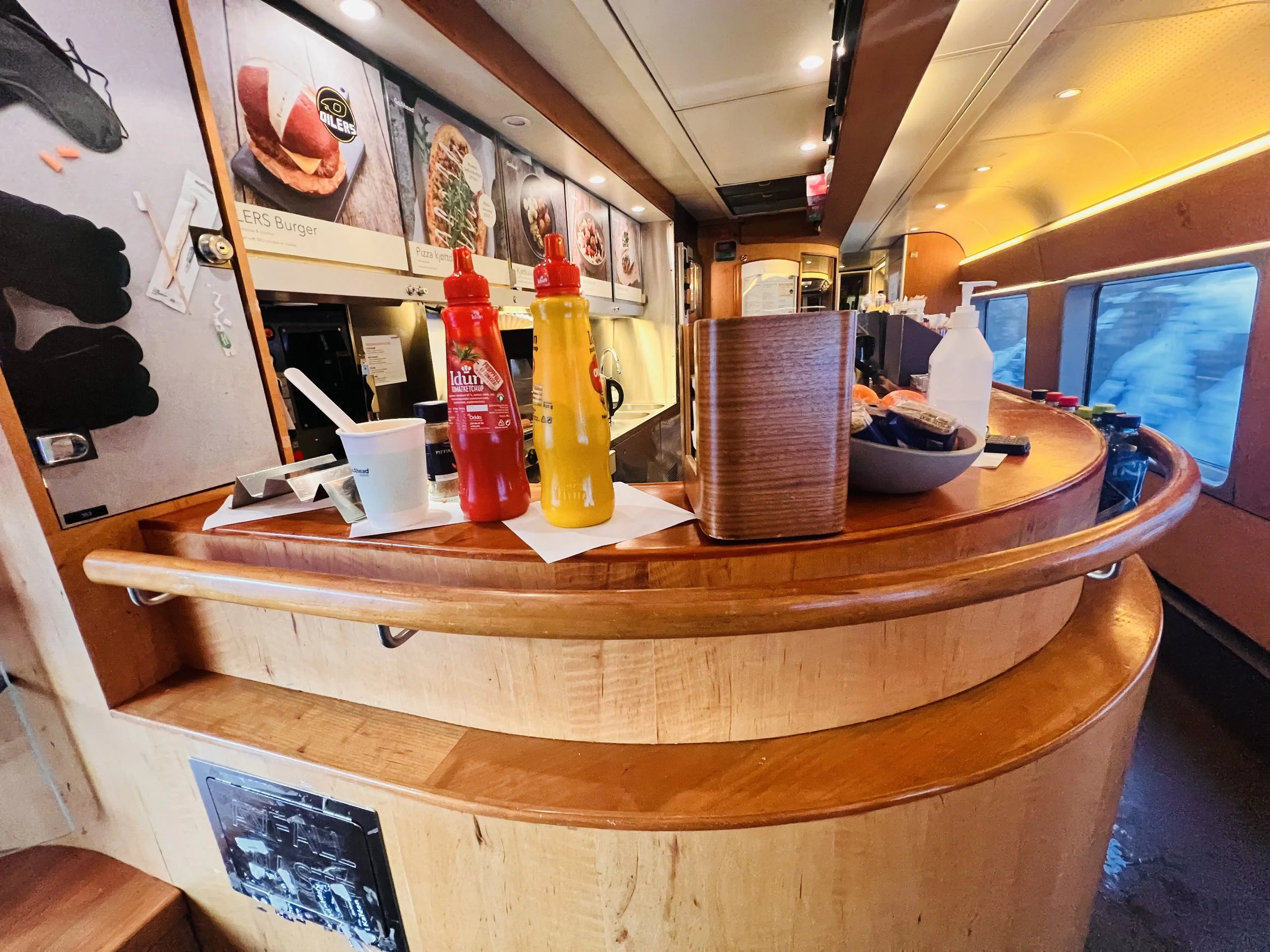
The café car on the train.
The public transportation system in Norway makes it very easy to travel affordably to nearly any destination. As someone who lives in rural Minnesota and depends on car travel for everyday navigation, it certainly has been fun exploring all these modes of transportation to access schools for my Fulbright visits.
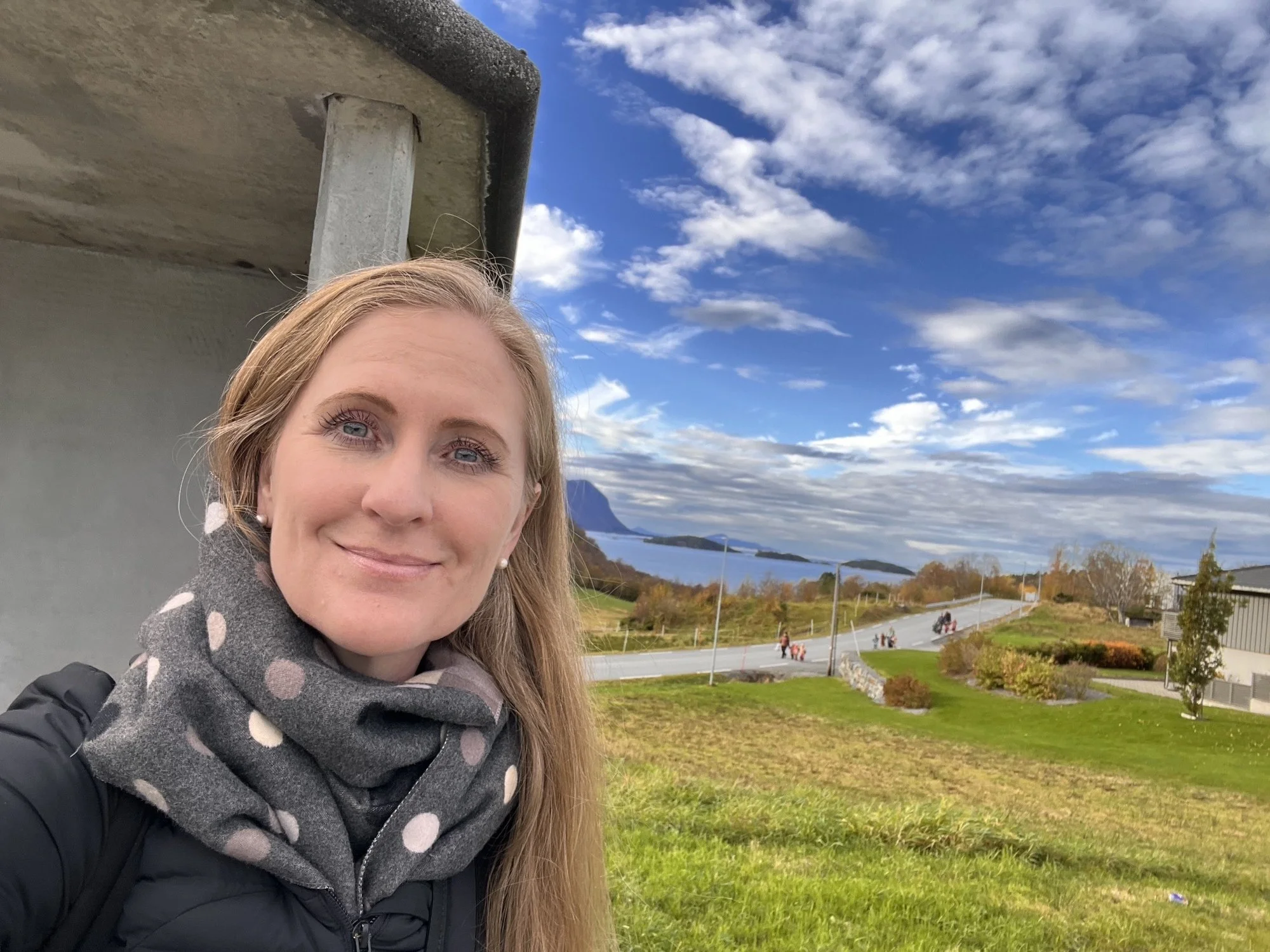
Waiting at the bus stop outside of Molde.
