
Tilsetningsstoffer i Mat (Food Additives)
I have been roving throughout Norway for nine months, and every time that I visit a school, I bring snack-sized Salted Nut Rolls to give to the classroom teachers. The sweet and salty treats are a little ‘gift’ from Minnesota and are always well-received. However, there is always a little hesitation to eat the candy. Let me explain…
I have yet to meet a teacher who has heard of the candy, so I always expect the same reaction, an immediate inspection of the ingredient list. Just last week, I gave the Nut Rolls to two teachers, who, at the exact same time, read the front label and then turned it over to read the ingredient list. This happens every, single, time.
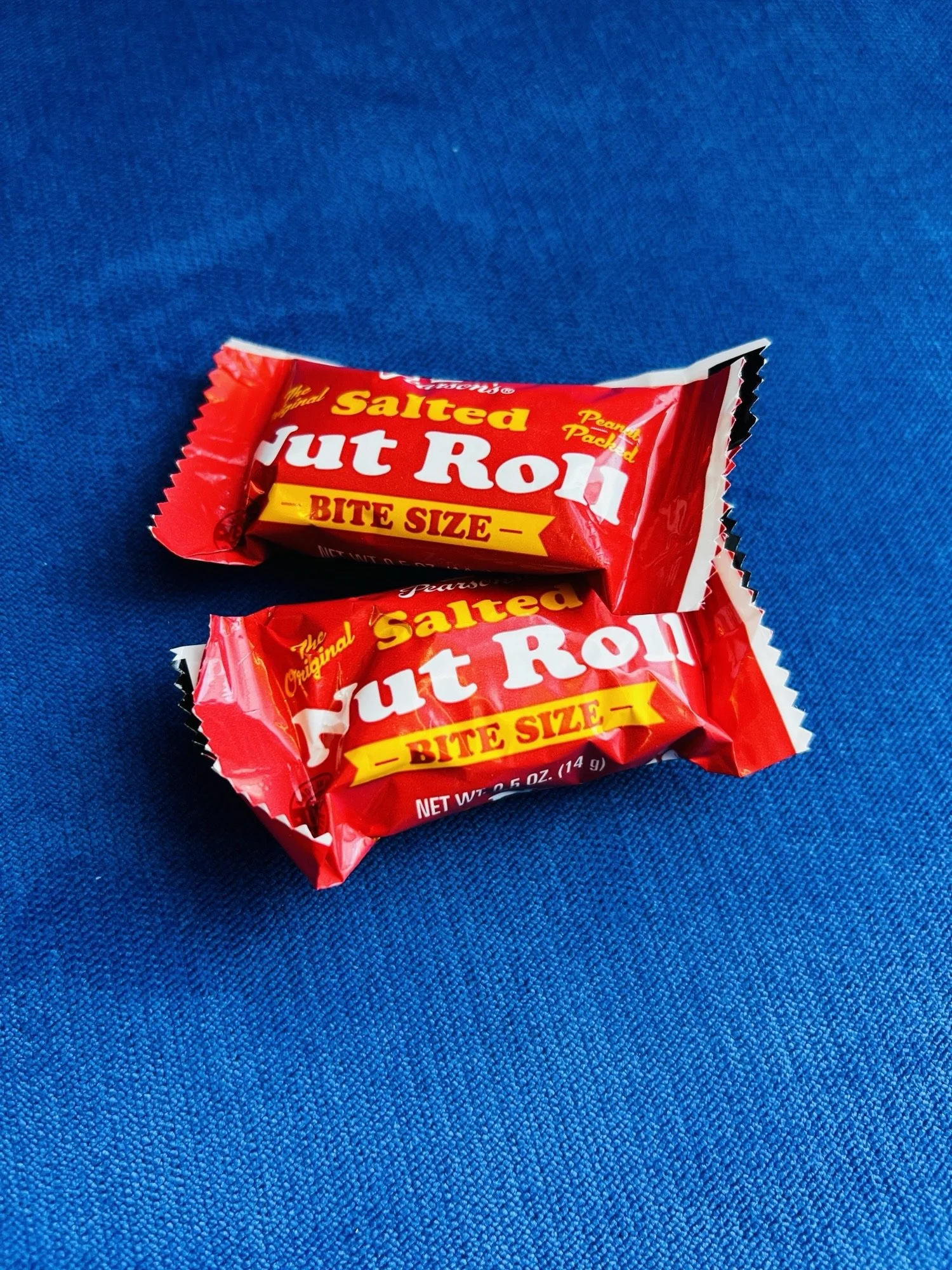
Minnesota made- Salted Nut Rolls.
The teachers aren’t the only ones who are leery of American food products. Pupils ask me regularly why the United States adds so many chemicals and additives to the food. They note the differences in soda colors, from Fanta and Mountain Dew, and the waxy taste of Hershey’s chocolate.
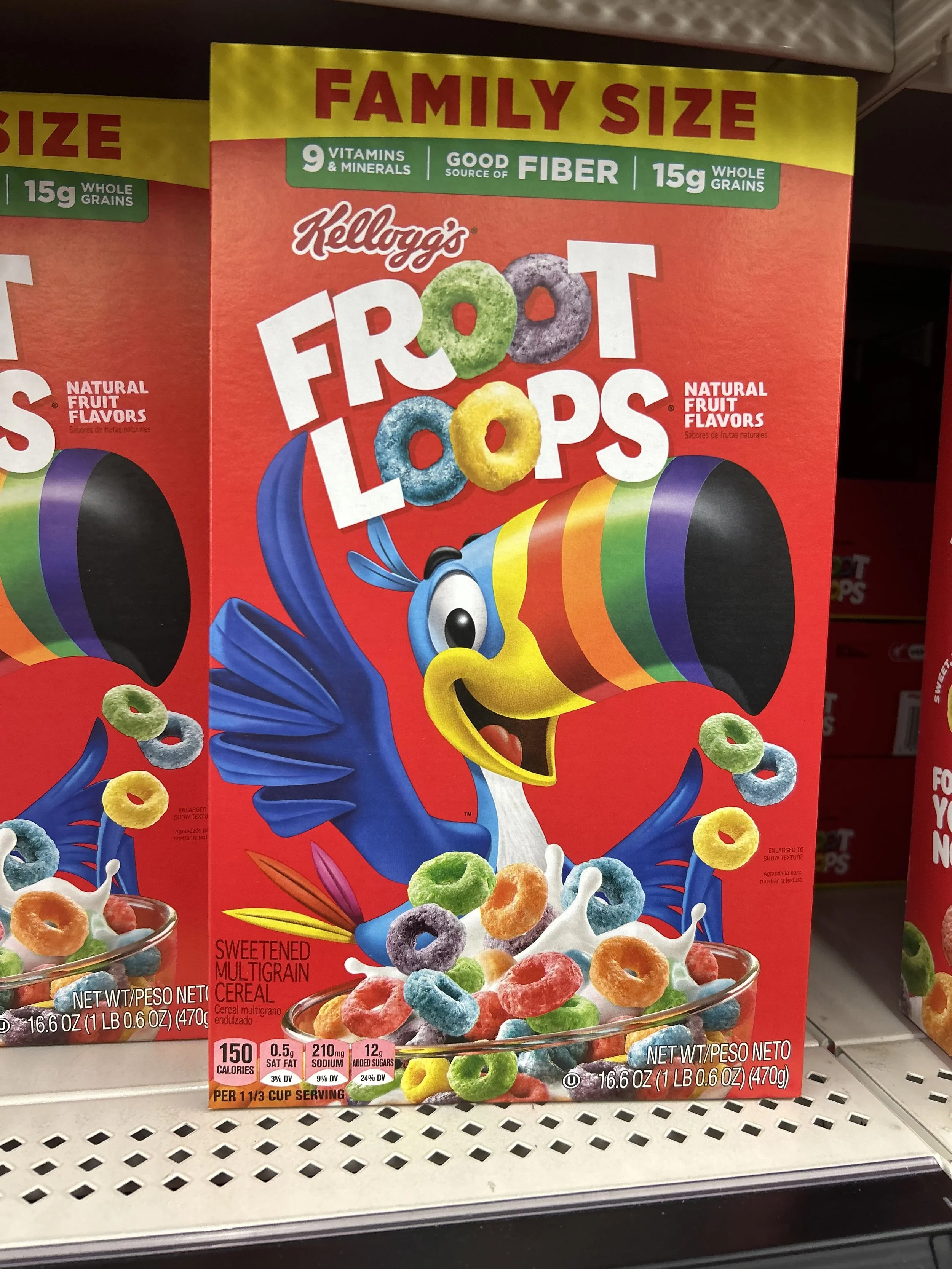
Fruit Loops cereal sold in the United States. The colors are created by using red 40, yellow 5, blue 1, and yellow 6.
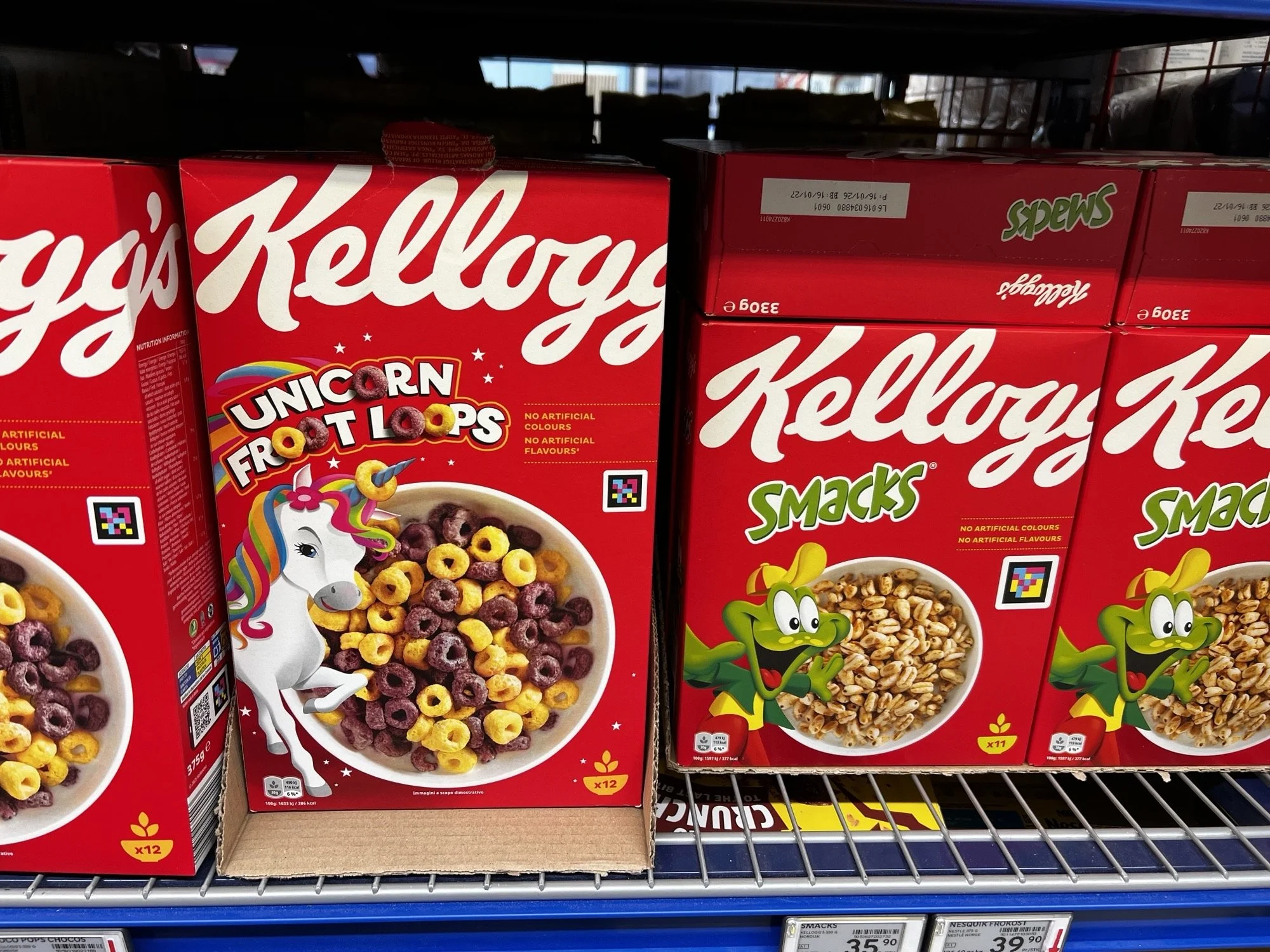
Fruit Loops cereal sold in Norway. The coloring is derived from carrot and blackcurrent fruit concentrate.
The students regularly watch videos comparing chemicals, sugar content, and additives from food in the US and in Europe. An example is a video comparing two loaves of bread baked at the same time. A week later, one is a moldy loaf of European bread, and the other is a pristine white loaf of American bread. This video is meant to illustrate the stark contrast of using chemicals and additives in different countries. Bread should have mold on it after a week; it’s not supposed to last a long time. However, longevity, appearance, and profit seem to be prioritized over health in the US.
This week I’m visiting a geographically isolated school with 20 students in grades 8-10. I don’t normally bring treats for students, but with this small group I was able to pack a bag of Reses Peanut Butter Cups that I had brought from the US. While the students were excited to try the US version of the candy, they were also leery about consuming it. One student rubbed his belly and joked that he really shouldn’t ingest the extra chemicals.
It didn’t help that a recent news report documented the Hershey company’s decision to use ‘cheaper ingredients’ instead of chocolate in their iconic peanut butter cups (Durbin, 2026). The candies that I brought had ‘real’ chocolate, but still…students abroad are much more aware of and question food quality in the US. However, I’ve never heard a student in the US discuss the topic.
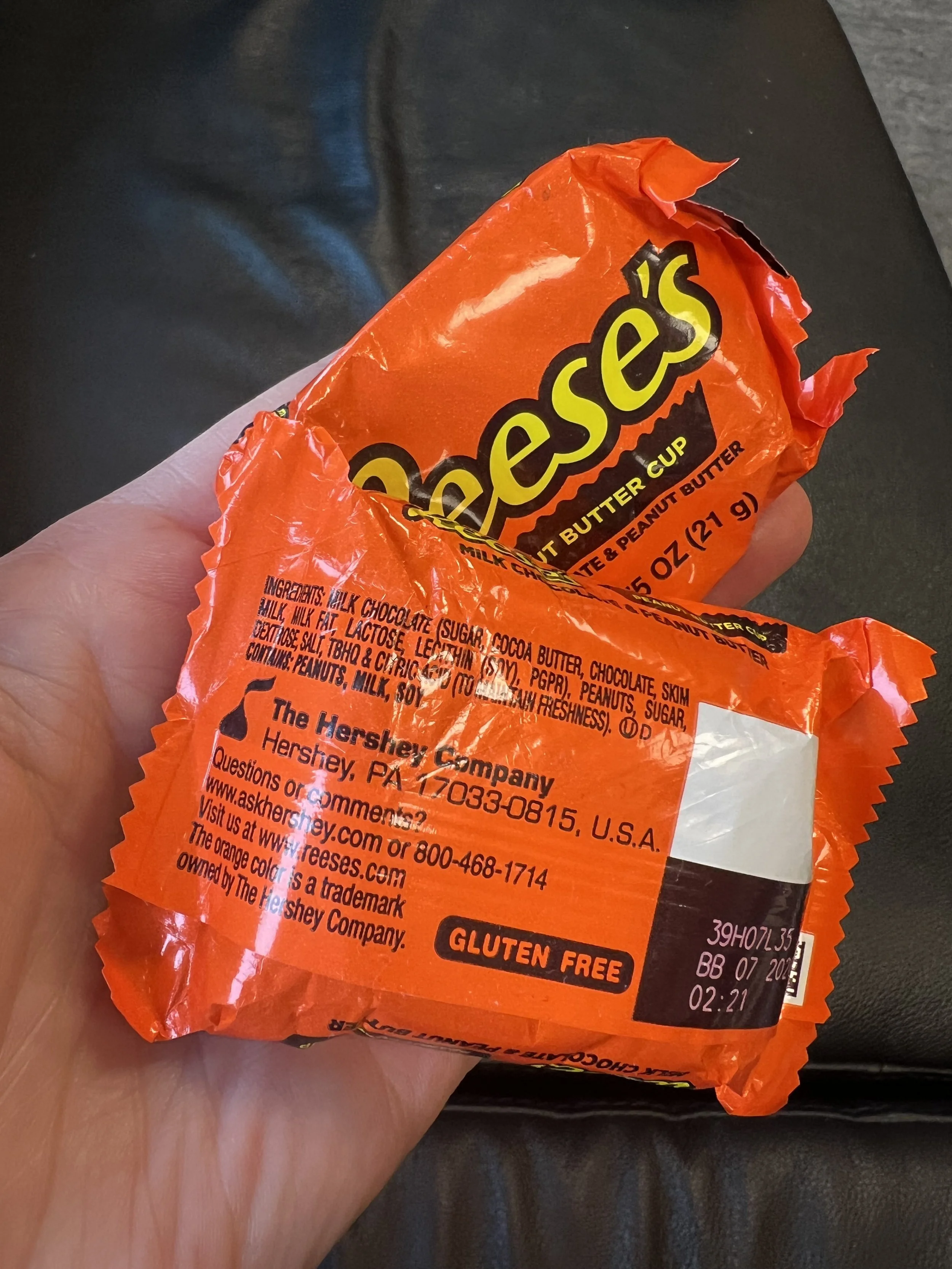
Reese’s Peanut Butter Cups from the United States.
The United States and Europe take different steps for food quality assurance. Europe is proactive in prohibiting potentially dangerous substances while the US is reactive, responding only when a product has been shown to be harmful. An example of this is the list of food products banned in Europe while regularly used in the US, to include Titanium Dioxide, Potassium Bromate, and Brominated Vegetable Oil (Schirn, 2025), and food colorings (University of Kentucky, nd).
I mentioned in an earlier post that bread and many other foods make me ill back in the US. However, in Norway, I can eat anything without fear of bloating, intestinal discomfort, and an overall sickly feeling. Truthfully, my stomach hasn’t felt this well in over 8 years. The problem now is figuring out just how many bags of Norwegian flour that I can pack in my suitcases and bring back to the US this summer…
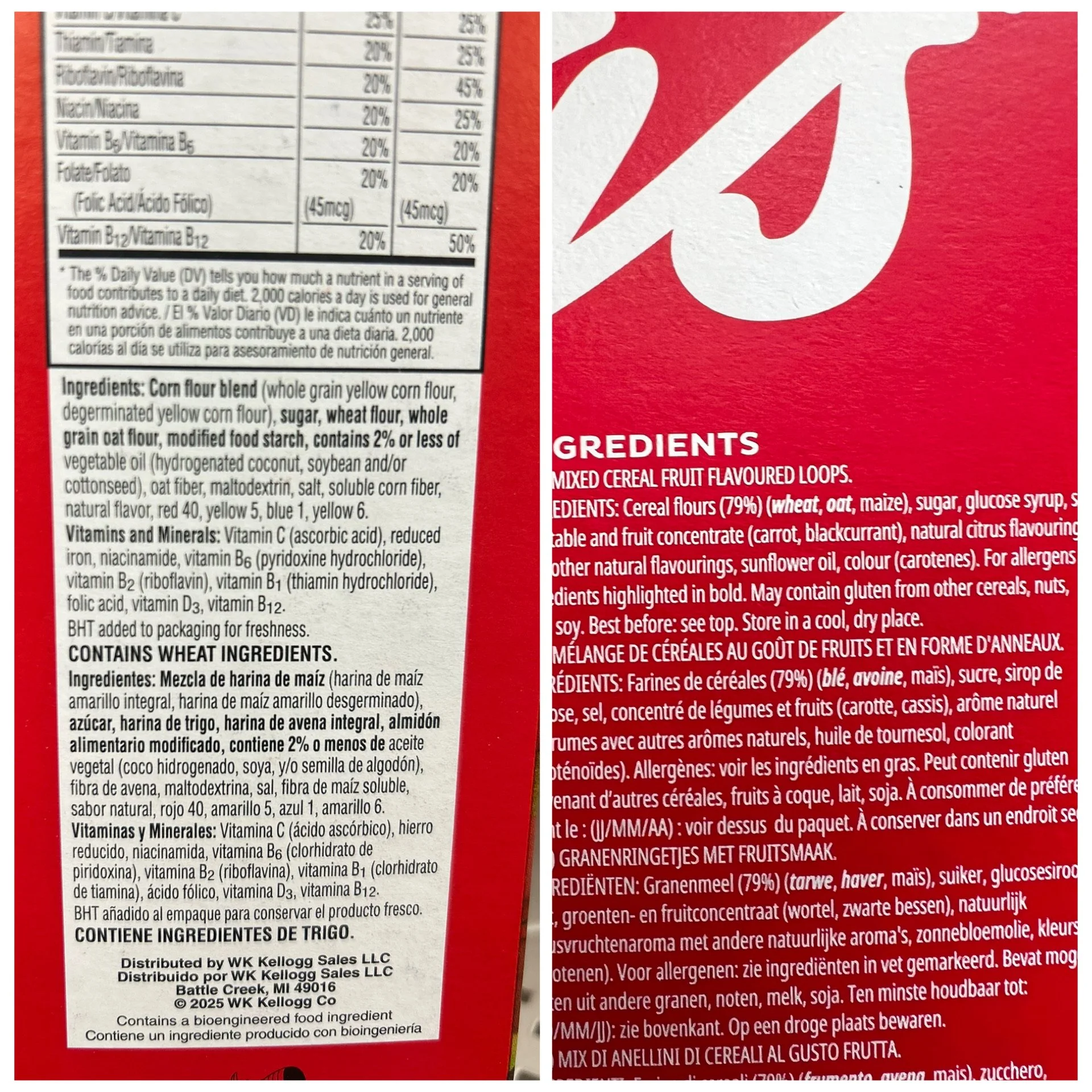
Fruit Loops cereal ingredients list. Left- cereal from the United States. Right- cereal sold in Norway.
References:
Durbin, D. (2026). Hershey’s says it will shift back to classic recipe for all Reese’s products after criticism. AP News. Retrieved from https://apnews.com/article/hershey-reeses-chocolate-peanut-butter-cups-recipe-1c17247e190eb03952e1c197b6f872ce
Schirn, A. (2025). Differences between European and American food standards. American National Standards Institute. Retrieved from https://blog.ansi.org/ansi/differences-between-eu-and-us-food-standards/
University of Kentucky. (nd). United States vs. Europe: What’s in your food? Retrieved from https://eatwell.uky.edu/sites/default/files/2024-08/foods-us-vs-eu-2.p
