
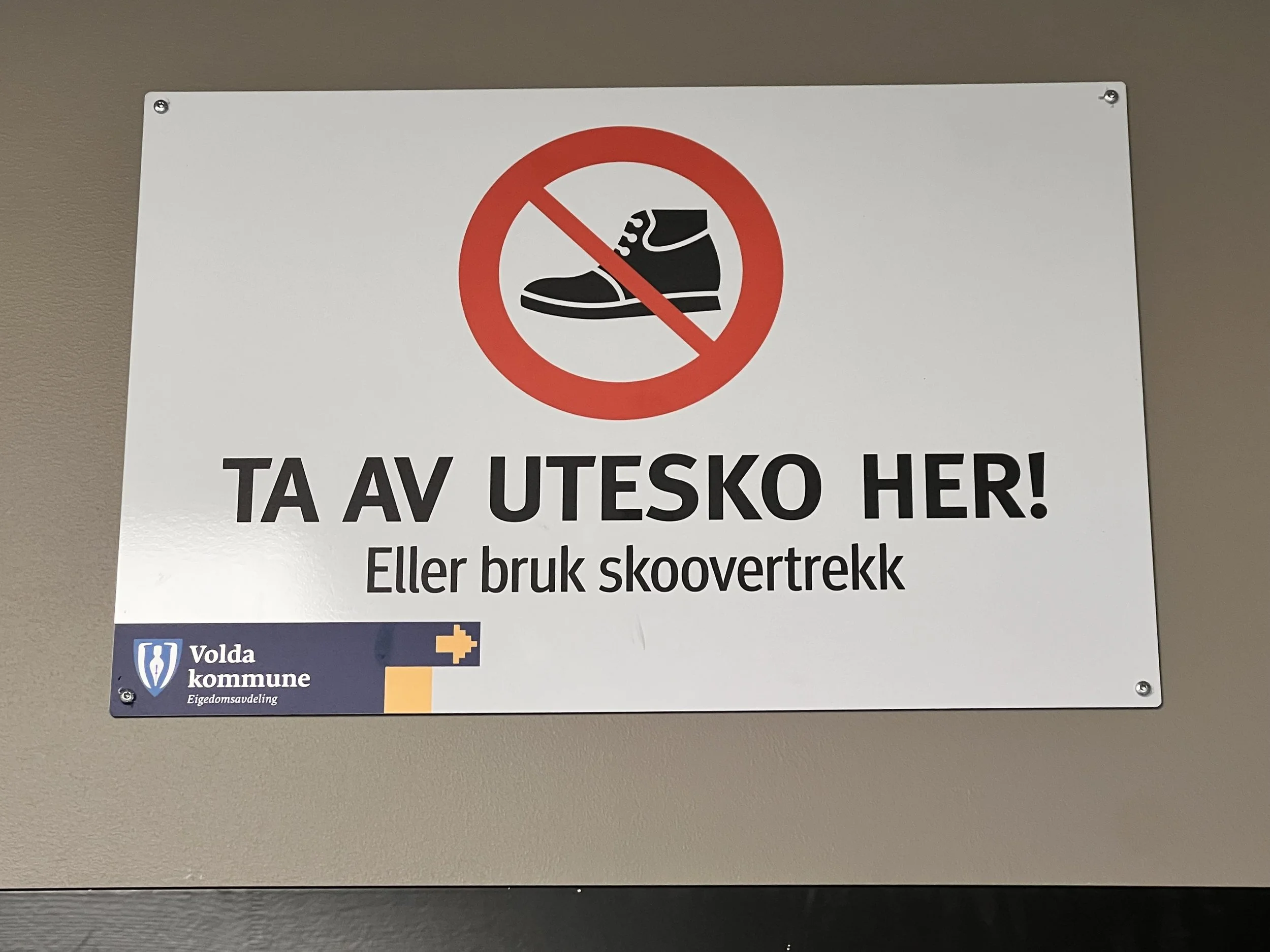
School sign: Take off outdoor shoes here or wear shoe covers.
I know that this concept is not unique to Norway, but it is something that I’ve enjoyed experiencing in Norway; the absence of outside shoes inside school buildings. Not all, but most of the schools that I’ve visited have had some kind of outdoor shoe policy.
Shoe policies are communicated by posting signs on the school doors. Sometimes shoes are removed immediately in the entryway and sometimes they are removed in the proper garderobe (wardrobe). If a visitor does not have indoor shoes, there are usually plastic covers available to be worn over the outdoor shoes. This is something that I have experienced in clinic settings as well.
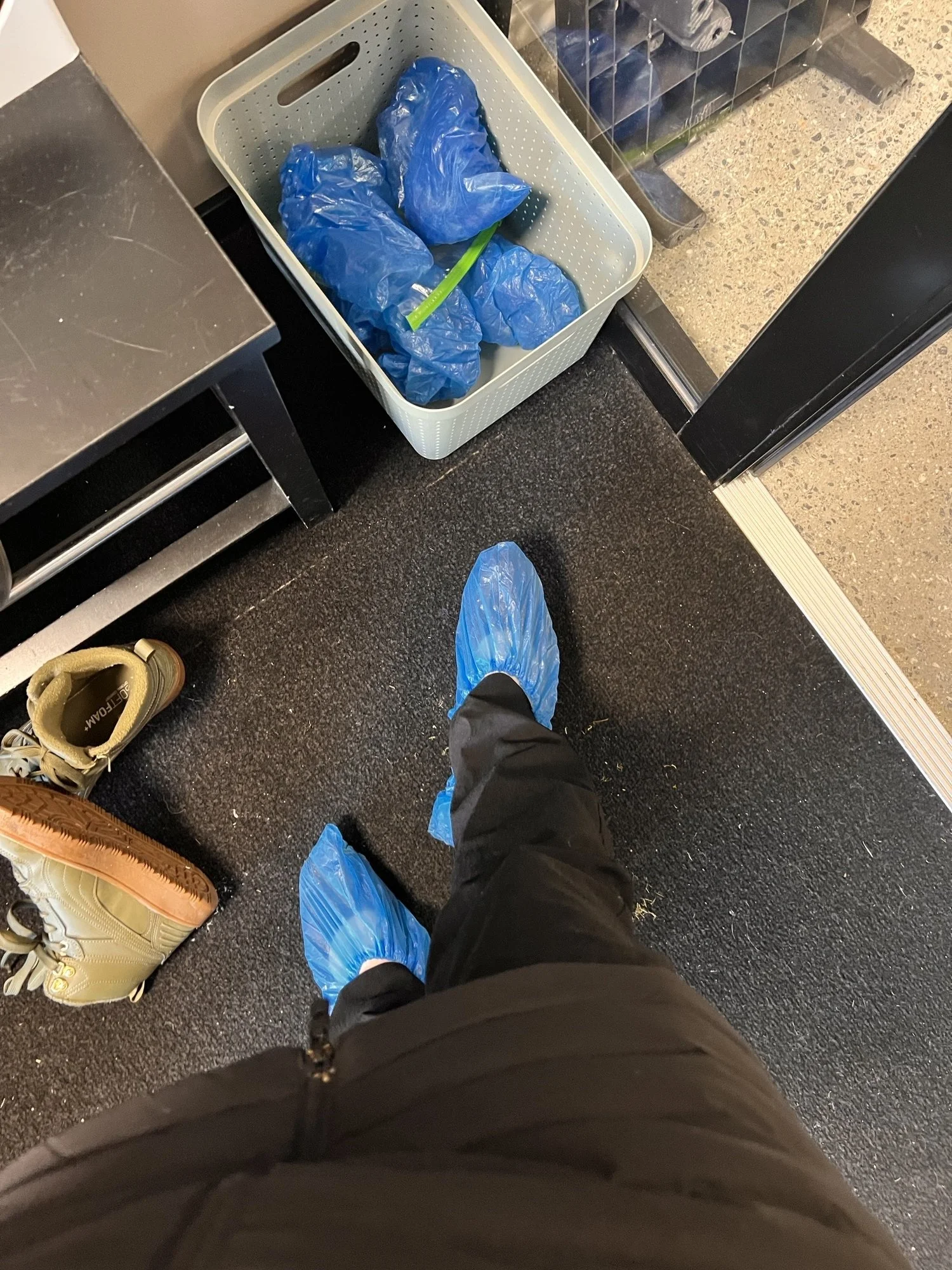
I wore shoe covers inside until I could find the staff garderobe.
The students often have an area for their shoes and coats. They remove the outdoor shoes and either wear socks or socks with slip on shoes in the building. In addition, schools often have separate garderober for men and women staff, often with bathrooms. They’re like locker rooms for staff.
Many teachers have justified this practice by first emphasizing the health benefit for students. The teachers assert that it’s not healthy to be wearing shoes all day; students need their feet to breathe so they are not sweaty (and stinky). The secondary benefit is a cleaner school with fewer outside germs and dirt entering the learning space. This results in reduced cleaning required by custodial staff.
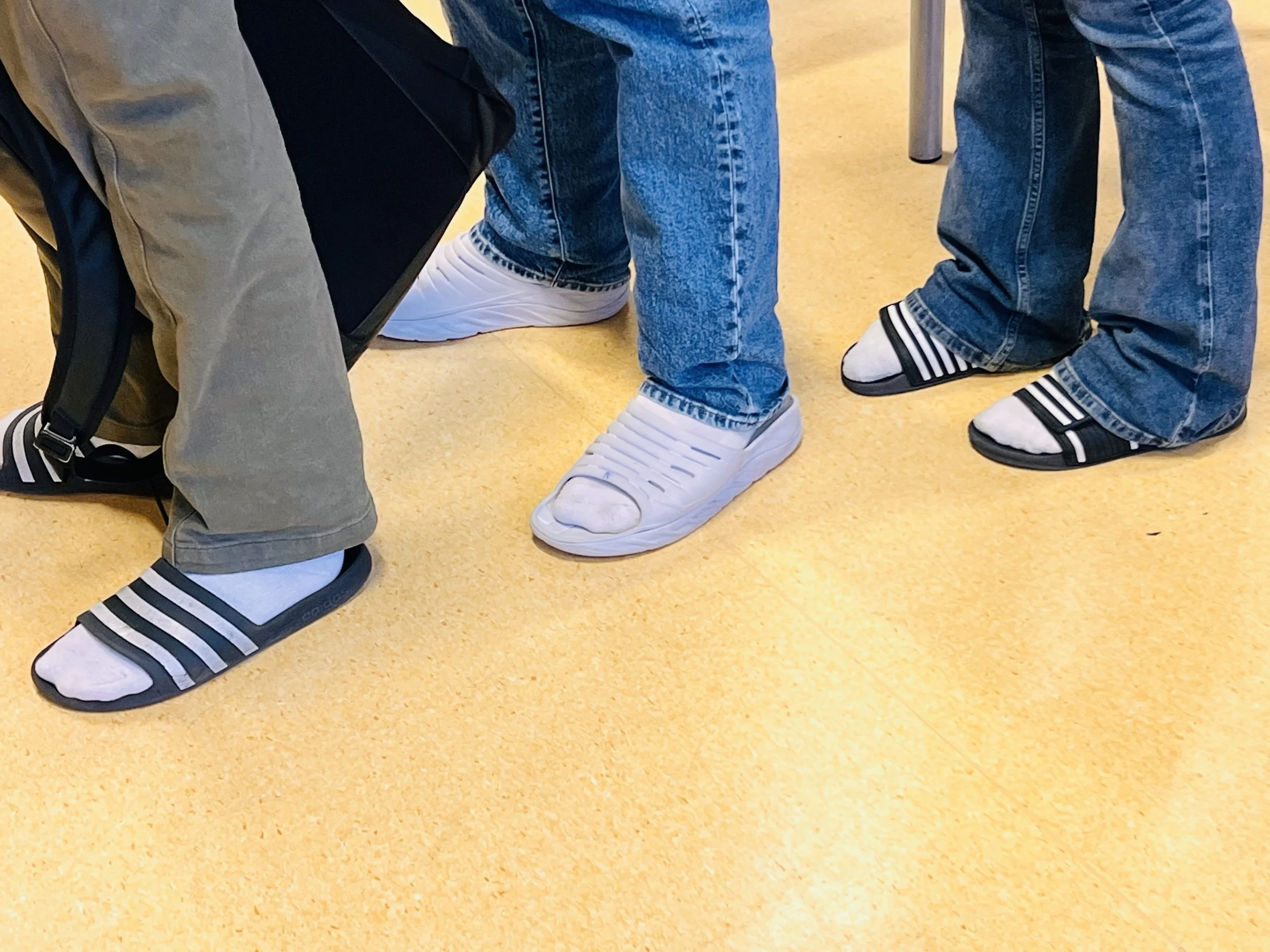
Students change from their outdoor shoes to their inside shoes when inside the school building. The shoe changing process happens every hour, when students go outside for their reguar breaks.
Some of the schools are located in regions that have snow from October until May, so the use of indoor shoes provides for a clean and dry learning space all year. For students who only wear socks, there is little evidence that shoes were not worn. That is because students and staff don’t walk around the building with dusty, snowy, or wet footwear, so there is minimal dirt on the floors. In fact, students take turns sweeping their classrooms each day to keep their learning space clean and tidy. A teacher told me that the responsibility builds a sense of community; that everyone has an important role and they all work together.
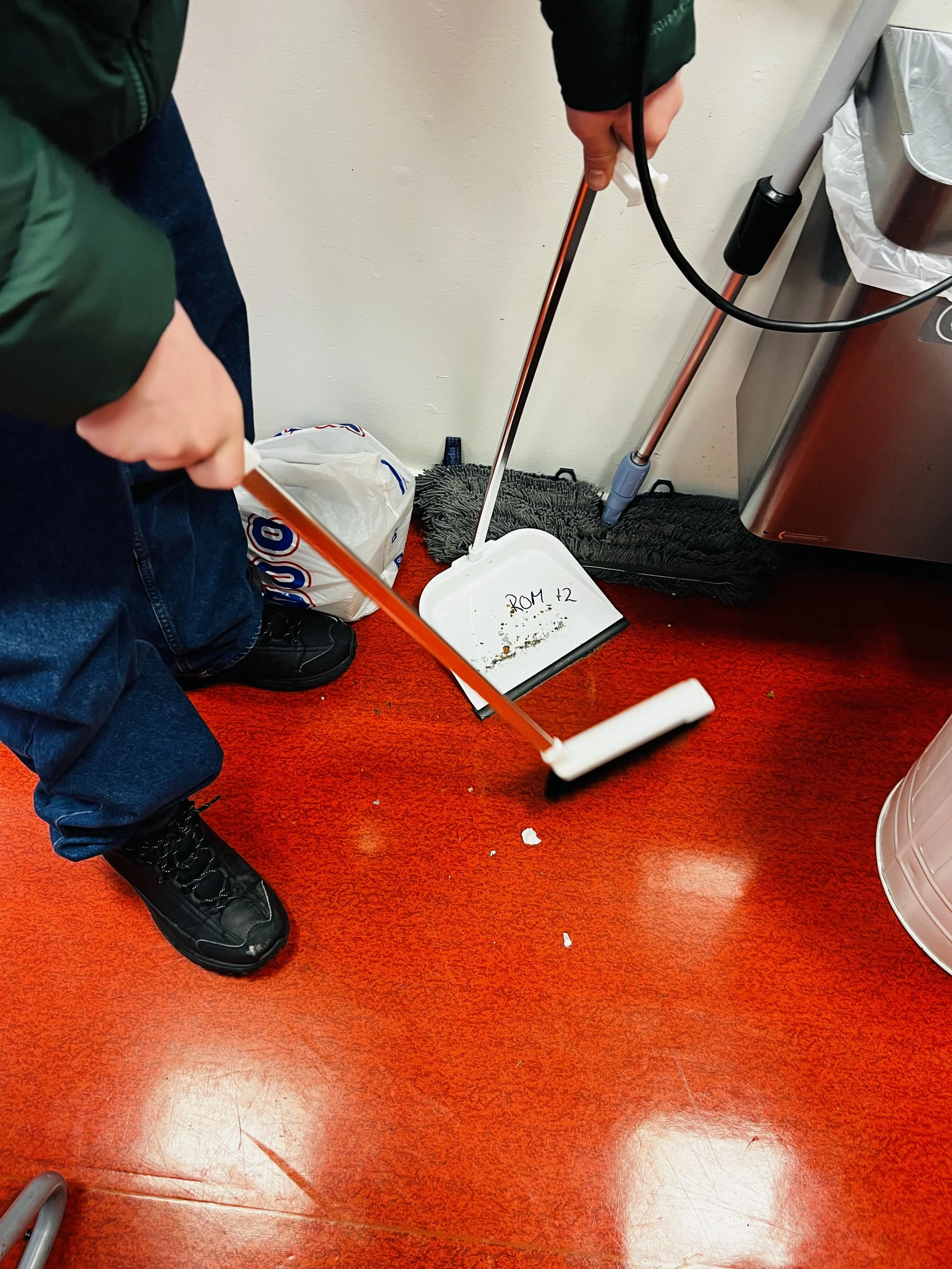
At the conclusion of each school day, 1-2 students from the class clean up the room by sweeping and taking out the garbage/recycling. Students all take turns and the teacher does not need to remind them of this task.
When I first learned about this, I wondered how the students would manage to change their shoes and still have time to go outside for their break every hour. They manage to do so just fine. The students want to get outside, so they get moving. Plus, they’ve had lots of practice. The hourly shoe exchange that occurs over weeks, months, and school years promotes efficient transitions.
During a recent question-answer moment with 10th graders, one of the students asked, “is it true that Americans actually wear outdoor shoes in their houses?”
The student was aghast when I told him that it depends on the expectation of the household.
On a similar note, when I visited the Reconstruction Museum in Hammerfest last week, I saw a sign prohibiting shoe spikes in the building. Instead of removing the shoes, the sign specifically asked that visitors wear woolen house shoes over their outdoor shoes so that the spikes (needed for walking in ice and snow) would not damage the floor. The receptionist said that it would be unsanitary to wear shared shoes, so they had extra-large wool slippers to fit over outside shoes.
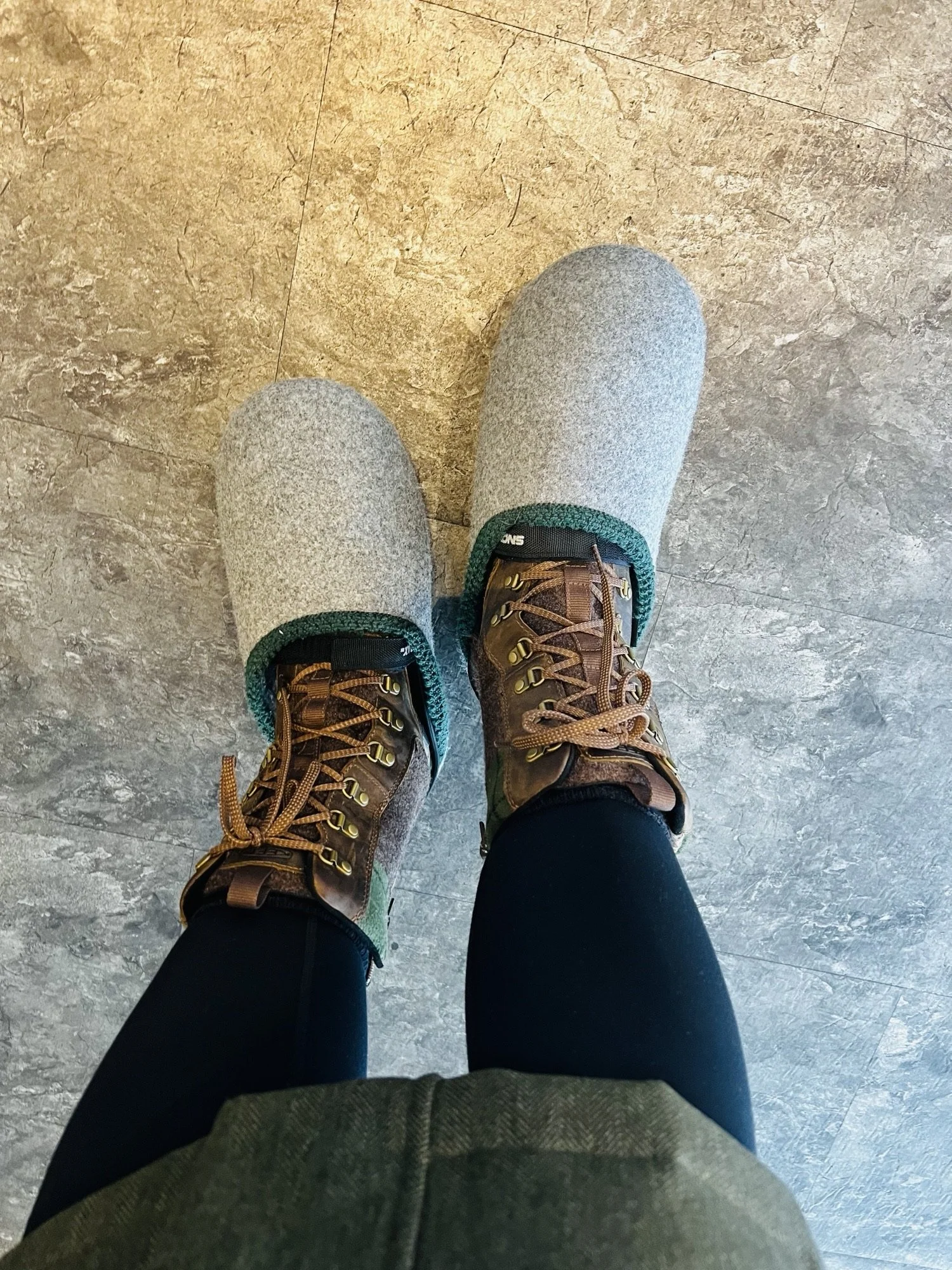
I was wearing ice spikes on my boots, so I needed to wear woolen house shoes over the boots. Now I realize that the house shoes were on backwards…
In the town’s shopping center, and in many similar shopping centers in Norway, there are benches and chairs by the doors so that shoe spikes can be removed before walking around and resecured before venturing back outside. It’s a shared mindset of keeping things clean and not damaging property.
I can’t help but wonder how this would impact schools back in my rural community in Minnesota. How could this possibly work when school hallways are lined with lockers? How would schools ensure that all students have access to slides/indoor shoes? Or would schools just require socks? As a classroom teacher, I worried about students slipping and sliding in their socks when they changed from their winter books to tennis shoes after recess. However, I’ve never seen an issue with this in Norway. The students are just accustomed to walking in their socks.
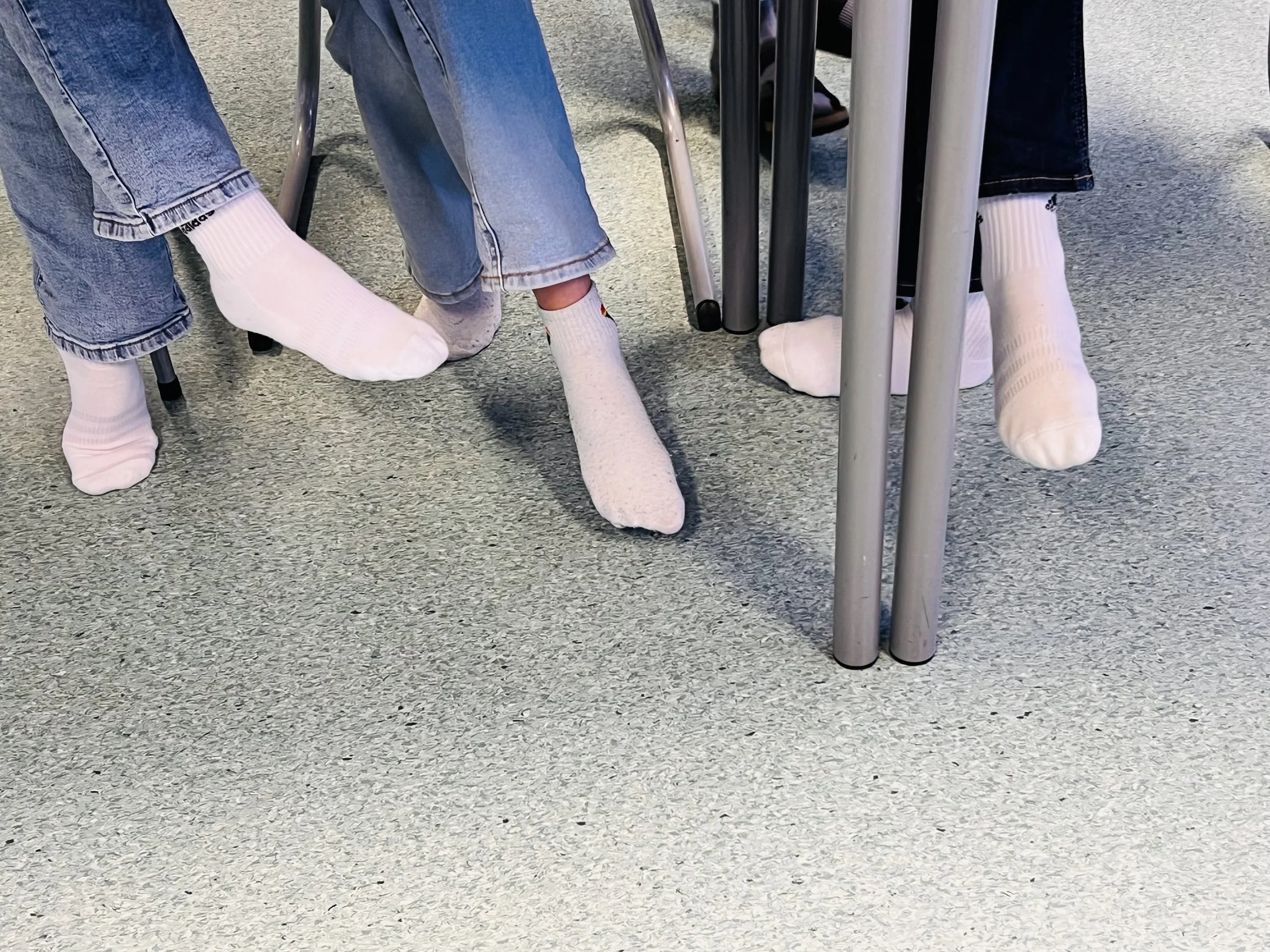
These students opted not to wear inside shoes and just wear their socks. At the end of the day, the socks will still be white.
I’d also love to hear thoughts from custodial staff, espeically those in states that receive regular snowfall…how much time, energy, and money would this practice save school districts? How much cleaner would the learning spaces be if there were no snow, mud, or water regularly finding its way inside from outdoor footwear?
The concepts of student health, cleanliness, and respect for property are prioritized and widespread in Norway. The outdoor shoe policies of schools just reinforce that. It’s a shared community mindset of keeping the learning space clean and healthy that requires little financial cost but reaps significant savings and overall wellness.
